
Will Hi-Fi Become the Mechanical Watch of Music?
As technology makes music more personalized, automated, and invisible, could traditional hi-fi become the mechanical watch of audio? We explore whether better sound will remain a living part of music culture or retreat into an exclusive luxury hobby.
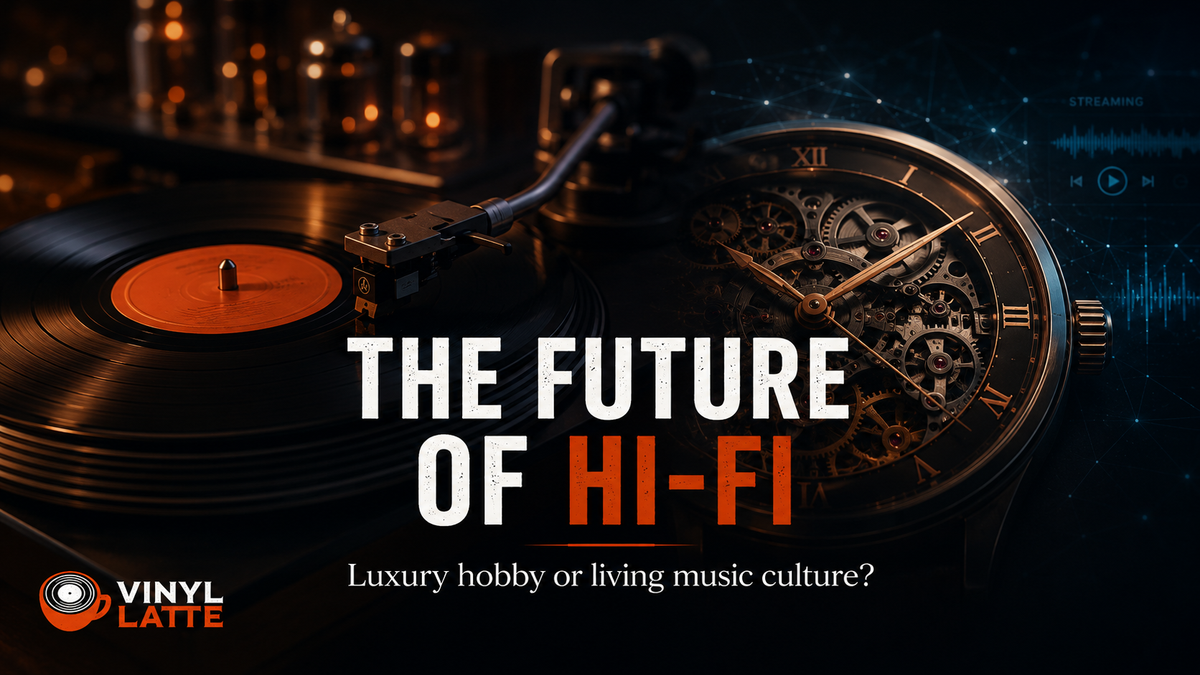
The future of hi-fi has never sounded more technologically impressive.
Imagine a system that automatically understands your room, identifies where you are sitting, compensates for your hearing profile, and adjusts itself before the first note begins. Artificial intelligence could select music based on your mood, while spatial audio surrounds you with sound that is no longer confined to two speakers at the front of a room.
Fifty years from now, we may not even need to choose what to play. Music could become an adaptive environment, generated or selected according to the time of day, our activity, or even biometric information collected by the devices around us.
That vision recently emerged when What Hi-Fi? asked several influential figures in the audio industry to predict how we might listen to music in 2076. Their answers suggested a future dominated by artificial intelligence, personalized sound, immersive formats, and equipment that largely disappears into our homes.
Traditional hi-fi would probably survive, they argued, but perhaps as a smaller specialist pursuit.
Vinyl might endure in much the same way that film photography has survived the arrival of digital cameras.
There is another comparison that may be even more appropriate.
Hi-fi could become the mechanical watch of music.
A Better Product That Fewer People Need
A mechanical watch is frequently less accurate than the phone in your pocket. It requires maintenance, costs more, and performs a task that technology has already made nearly effortless.
People still buy them.
They buy them because a mechanical watch is not merely a device for telling time. It represents craftsmanship, ritual, engineering, history, and personal identity.
That should sound familiar to anyone who owns a turntable.
Playing a record is slower and less convenient than opening a streaming app. The format can introduce surface noise. Records require storage, cleaning, careful handling, and an entire playback system.
Yet none of those inconveniences has prevented vinyl from returning.
In some ways, they are part of its appeal.
Selecting an album, removing it from its sleeve, lowering the stylus, and listening to an entire side creates a relationship with music that an endless stream of algorithmically selected songs rarely reproduces.
Traditional hi-fi offers something similar. Choosing components, positioning speakers, learning about recordings, and sitting down specifically to listen can turn music from background entertainment into an experience.
But there is a danger hidden inside this comparison.
Mechanical watches survived, but they also became luxury objects. Their cultural relevance increasingly depends on prestige, scarcity, collecting, and status.
Is hi-fi heading in the same direction?
When the Equipment Becomes the Hobby
The high-end audio industry often behaves as though better engineering will automatically create more music lovers.
It will not.
A beautifully built amplifier may deserve admiration. A cartridge assembled by hand can be a remarkable piece of precision engineering. Loudspeakers that reveal previously unnoticed details in a recording can transform the listening experience.
But none of those products matters without an emotional connection to music.
Too often, hi-fi is presented as a pursuit of equipment rather than a gateway into music. Demonstrations revolve around the same familiar recordings. Shows fill rooms with expensive systems but provide little context about the artists being played. Conversations become dominated by materials, measurements, cables, formats, and incremental upgrades.
The equipment becomes the destination.
That may appeal to the enthusiasts who are already deeply invested in the hobby, but it does little to explain why someone new should care.
This is particularly important when discussing younger listeners.
Charlie Henderson, the new managing director of the company behind Q Acoustics, Goldring, and QED, recently made a blunt observation: young people are obsessed with music, but the hi-fi industry is not talking to them.
His proposed solution includes listening cafés, more culturally relevant music, approachable active speakers, and experiences built around human connection rather than rows of intimidating equipment.
That is not an argument that younger listeners have abandoned sound quality.
It suggests that the industry may have abandoned them.
Young Listeners Already Value the Experience
The continued popularity of vinyl should have taught the audio industry an important lesson.
Convenience is not the only thing people value.
Younger collectors are buying physical albums despite having immediate access to nearly every song ever recorded. They are purchasing colored variants, deluxe packages, cassettes, compact discs, and limited editions because ownership creates a more tangible relationship with an artist.
They decorate rooms with records. They share collections online. They attend listening parties and record store events. They treat music as part of their identity.
The interest is already there.
The problem is that the path from loving records to discovering better playback is often confusing, expensive, and culturally uninviting.
A new listener may begin with an inexpensive turntable and a pair of powered speakers. Instead of welcoming that person, experienced enthusiasts sometimes explain everything that is wrong with the system.
The turntable is inadequate. The speakers are poorly positioned. Bluetooth is unacceptable. The cartridge needs replacing. The record itself may not be the correct pressing.
Technically, some of that advice may be valid.
Culturally, it can be disastrous.
People rarely fall in love with a hobby because someone immediately tells them they are doing it incorrectly.
Technology Could Save Hi-Fi
The future described by audio engineers does not have to threaten traditional listening.
It may make good sound more accessible.
Automatic room correction can solve problems that once required extensive knowledge and experimentation. Active speakers can eliminate uncertainty about matching amplifiers and components. Wireless connectivity can reduce clutter. Personalized hearing compensation could help more people experience recordings as they were intended.
These technologies lower the barriers between listeners and music.
That is a good thing.
The mistake would be believing that simplicity must eliminate engagement.
A camera phone makes photography accessible, but people still learn to use dedicated cameras. Streaming provides instant music, but people still collect records. Automatic transmissions dominate the automobile market, yet enthusiasts continue to seek out cars that require greater involvement.
Convenience and commitment can coexist.
The best future for hi-fi is not one in which every listener builds a room full of separate components. It is one in which more people experience genuinely good sound and some of them become curious enough to go further.
An intelligent wireless speaker may not be the end of the hi-fi journey.
It could be the beginning.
Vinyl Cannot Survive on Nostalgia Alone
Vinyl is frequently described as nostalgic, but nostalgia alone cannot sustain a format indefinitely.
A healthy vinyl culture requires new artists, new recordings, affordable entry points, independent record stores, pressing plants, engineers, designers, reviewers, and listeners who are still discovering music.
The same is true of hi-fi.
If the industry relies primarily on aging collectors replaying the music of their youth, it will gradually become a heritage business. The equipment may become more beautifully made and more expensive, but the audience will continue to narrow.
That is the mechanical watch scenario.
Hi-fi survives. Vinyl survives. The craftsmanship survives.
But participation becomes increasingly exclusive, and the broader culture moves on without it.
There is nothing inherently wrong with specialist luxury products. The high end often advances engineering and preserves skills that mass-market manufacturing would otherwise abandon.
The problem comes when an entire industry begins designing its future around the smallest and wealthiest part of its existing audience.
The Music Must Come First
The future of hi-fi will not be determined entirely by artificial intelligence, spatial audio, streaming services, or room-correction software.
It will be determined by whether the industry can make people care.
That begins with music.
Audio shows should introduce visitors to exciting contemporary artists rather than relying almost exclusively on familiar audiophile favorites. Dealers should create inviting spaces where customers can listen without feeling examined. Manufacturers should demonstrate how their products improve an emotional experience rather than merely presenting technical specifications.
Reviewers and enthusiasts have a role as well.
We should spend as much time recommending albums as equipment. We should welcome imperfect beginner systems. We should remember that a person enjoying music through modest speakers is closer to becoming a hi-fi enthusiast than someone who has been made to feel that the hobby is not for them.
The purpose of high fidelity is not to hear the system.
It is to become more deeply connected to the performance.
A Future Worth Listening To
In 2076, vinyl records may still be spinning.
There will probably still be enthusiasts carefully positioning speakers, adjusting turntables, and debating whether one version of an album sounds better than another. There may also be invisible systems that generate personalized soundscapes throughout the home.
Those futures do not have to compete.
The concern is not that technology will eliminate hi-fi. The concern is that hi-fi will isolate itself by confusing exclusivity with excellence and equipment ownership with music appreciation.
Mechanical watches survived because people found meaning in their craftsmanship and ritual.
Hi-fi can survive for the same reason.
But merely surviving should not be the goal.
The industry should want better sound to remain culturally relevant, emotionally powerful, and open to anyone who loves music enough to listen more closely.
Because if hi-fi becomes only a beautiful machine admired by a shrinking circle of collectors, it may endure for another fifty years.
It just may no longer matter.
Do you think traditional hi-fi will remain part of mainstream music culture, or is it destined to become a specialist luxury hobby?


Comments ()