
A $5,000 Music Streamer Without a DAC? Volumio's Rivo Ultra Raises a Bigger Question
Volumio's $4,999 Rivo Ultra promises cleaner power, precision clocking, and premium digital playback. But can a $5,000 music transport without a DAC actually deliver better sound? We examine the engineering, claims, and value.
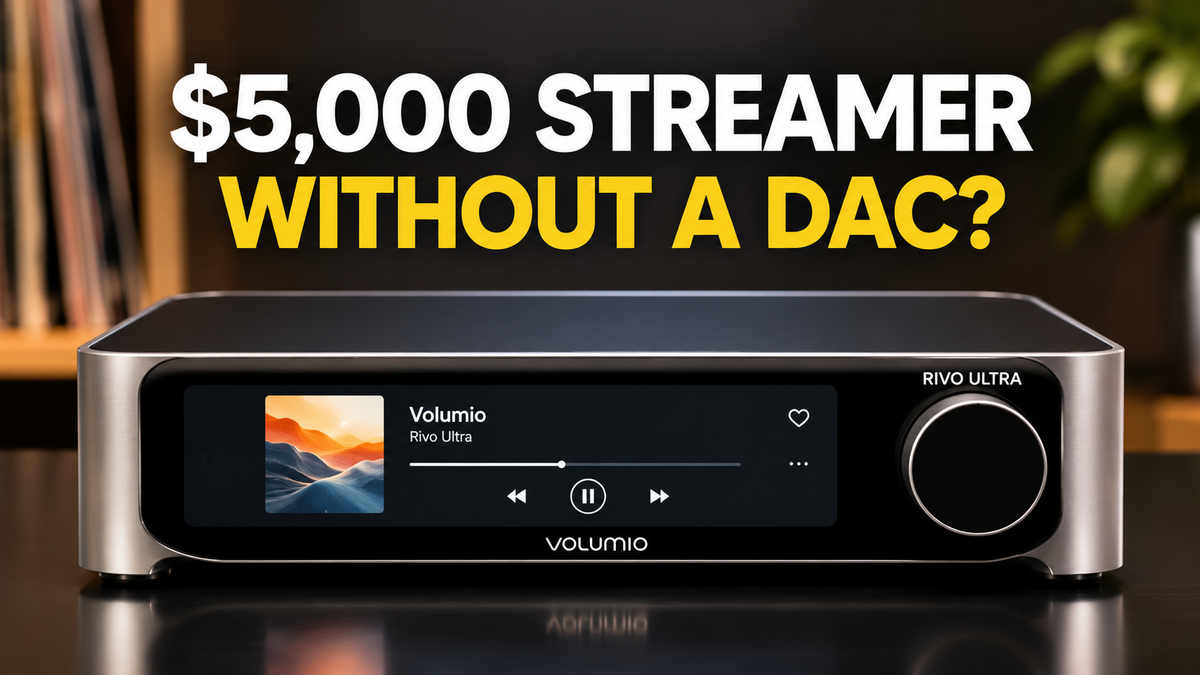
At $4,999, Volumio's new flagship digital transport promises cleaner power, precision clocking, and uncompromising digital playback. But how much of that engineering actually reaches your speakers?
There is something fascinating about spending nearly $5,000 on a component that doesn't convert digital music into analog sound.
No DAC. No analog outputs. No amplifier.
Just a meticulously engineered device designed to deliver digital audio to another component that ultimately produces the music.
That's precisely what Volumio is offering with its new Rivo Ultra, announced on November 18, 2026.
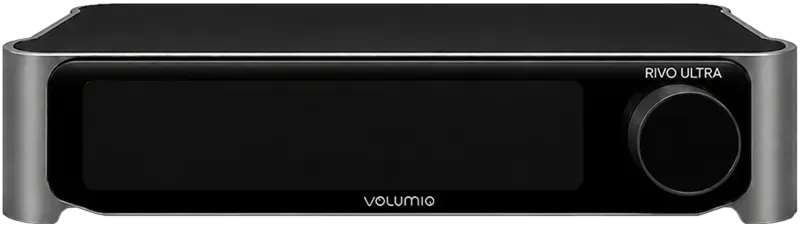
The Italian company's latest flagship streaming transport combines a sophisticated clocking architecture, dual linear power supply, a substantial 12-inch touchscreen, and an extensive collection of digital outputs.
At $4,999, it also moves Volumio firmly into premium audiophile territory.
But the Rivo Ultra raises a question that extends well beyond this particular product:
If two digital transports deliver identical audio data to the same DAC, what exactly are we paying thousands of dollars to improve?
The answer is more complicated than either side of the digital audio debate might suggest.
What Is the Volumio Rivo Ultra?
The Rivo Ultra sits above the company's existing Rivo and Rivo Plus transports. Unlike an all-in-one music streamer with an integrated DAC, its purpose is exclusively digital playback.
It retrieves music from streaming services, network storage, or locally connected drives, processes that data through Volumio's software platform, and sends the digital signal to an external DAC.
The Rivo Ultra provides seven digital outputs across five connection types:
- USB: Supports PCM up to 32-bit/1536 kHz and DSD1024.
- I2S/DSD over HDMI: Supports PCM up to 32-bit/768 kHz and DSD1024, with configurable pin assignments.
- AES/EBU: Balanced XLR digital output supporting PCM up to 24-bit/192 kHz and DSD64 via DoP.
- Coaxial S/PDIF: Separate RCA and BNC outputs supporting PCM up to 24-bit/192 kHz and DSD64 via DoP.
- Optical S/PDIF: Two TOSLINK outputs supporting PCM up to 24-bit/192 kHz and DSD64 via DoP.
The maximum DSD rates quoted for USB and I2S apply with Volumio's multiroom function disabled. With multiroom enabled, Volumio specifies a maximum of DSD256 for those interfaces.
Those are extensive capabilities, although compatibility ultimately depends on the connected DAC.
It's also worth noting that I2S over HDMI is not conventional HDMI audio. The connector is physically familiar, but pin assignments can differ between manufacturers. Volumio provides adjustable routing, although compatibility should still be confirmed before purchasing.
A separate HDMI connection allows the Volumio interface to appear on a television or monitor at up to 4K resolution.
Beyond connectivity, the Rivo Ultra offers a large touchscreen, a rotary control with its own display, and an internal NVMe slot supporting SSDs up to 16TB.
The result is more than a digital transport. It can also serve as a substantial local music library player.
The Real Engineering Story Is Inside
The Rivo Ultra's most interesting features aren't necessarily the ones visible from the listening chair.
Volumio has developed an internal dual linear power supply featuring a toroidal transformer and two independent linear regulation stages.
The company says this architecture reduces electrical noise and provides cleaner power to the device's sensitive digital circuitry.
Its clocking system is equally ambitious.
According to Volumio, the integrated digital outputs use a femtosecond-class clock with a specified 54-femtosecond RMS figure. The USB output uses a temperature-compensated crystal oscillator, commonly called a TCXO, along with additional power filtering and signal conditioning.
These are legitimate areas of electrical engineering.
Clock stability, power supply noise, signal integrity, and electrical interference can influence digital audio hardware.
What requires closer examination is whether improvements in those parameters create an audible difference after the signal passes through a modern external DAC.
Volumio's published specifications describe its engineering approach. They do not, by themselves, establish that the Rivo Ultra will sound better than another properly functioning digital transport.
That distinction matters at this price.
The Bit-Perfect Paradox
Digital audio has an interesting characteristic.
When a transport delivers bit-perfect PCM data to a DAC, the numerical audio samples should match the original source without unintended alteration.
A relatively inexpensive computer can accomplish this. So can a dedicated music server or a premium streaming transport.
If those devices deliver exactly the same samples, what could make one sound different?
The answer lies in separating the audio data itself from the electrical and timing characteristics of the connection carrying it.
With traditional S/PDIF and AES/EBU connections, timing information is embedded within the transmitted signal. A DAC must recover that timing, although well-designed DACs employ techniques to reduce the influence of incoming jitter.
USB audio generally works differently when using an asynchronous connection.
In that arrangement, the DAC typically controls the rate at which audio data is requested and uses its own clock for digital-to-analog conversion.
That means an exceptionally precise clock inside the streaming transport does not automatically translate into lower conversion jitter at the DAC.
The DAC's internal architecture remains critical.
There is also electrical noise to consider.
Even when audio data arrives intact, unwanted electrical noise can potentially travel through connected equipment and interfere with sensitive circuitry. Depending on the design of the DAC, grounding, isolation, and interface implementation, that interference may or may not affect its analog output.
This is where a dedicated transport with carefully managed power supplies and digital interfaces might offer an advantage.
But might is the important word.
A better power supply is not automatic proof of better sound. A lower clock specification is not automatically an audible improvement. And a more expensive digital output stage is not necessarily superior when connected to a DAC already engineered to reject incoming interference.
The complete signal chain determines the result.
Why the DAC Matters More Than the Marketing
Consider two different audiophile systems.
In the first, the DAC has excellent input isolation, effective jitter rejection, and a stable internal clock.
In the second, the DAC is more sensitive to incoming electrical noise or the timing characteristics of certain digital interfaces.
The same premium transport could behave differently in these two systems.
The first might show little or no measurable improvement over a less expensive digital source.
The second could potentially benefit from cleaner electrical delivery or improved interface behavior.
Neither outcome should be assumed.
This is one reason sweeping claims about digital transports are difficult to support without controlled testing.
It's also why listening impressions from one system cannot automatically be generalized to every other DAC.
A transport should ultimately be judged by what happens at the analog output of the connected DAC, not simply by an impressive specification on the transport's product page.
The Rivo Ultra Versus the Rivo Plus
Perhaps the most revealing comparison isn't with an inexpensive computer or another manufacturer's high-end streamer.
It's with Volumio's own Rivo Plus.
The Rivo Plus currently sells for $1,599, making the Rivo Ultra approximately $3,400 more expensive.
Both models provide access to Volumio's software ecosystem, high-resolution USB playback, Roon integration, streaming services, and external DAC connectivity.
Both are designed to perform the same fundamental task.
The Ultra adds several meaningful hardware features:
- An internal dual linear power supply instead of an external power adapter.
- Updated clocking architecture for its digital interfaces.
- Two optical outputs and a BNC coaxial output.
- A 12-inch touchscreen and a separate display within the control knob.
- An internal NVMe storage slot supporting up to 16TB.
- A faster processor, a larger chassis, and the included Volumio Remoto control.
These differences are substantial from a product design and usability standpoint.
A large touchscreen, integrated library storage, and extensive connectivity can genuinely improve the experience of operating a music system.
The more difficult question is whether the improved power and clocking architecture delivers a corresponding improvement in sound quality.
Volumio has not established that through an independently verified comparison available to us at publication.
For someone primarily interested in bit-perfect playback through USB, the Rivo Plus already covers much of the necessary functionality.
For someone seeking a premium standalone component with a sophisticated interface, integrated storage, and multiple digital connection options, the Ultra offers considerably more.
Those are two different definitions of value.
Software May Be Its Most Underrated Advantage
Premium audiophile components frequently concentrate their marketing on hardware.
However, the software experience can be just as important.
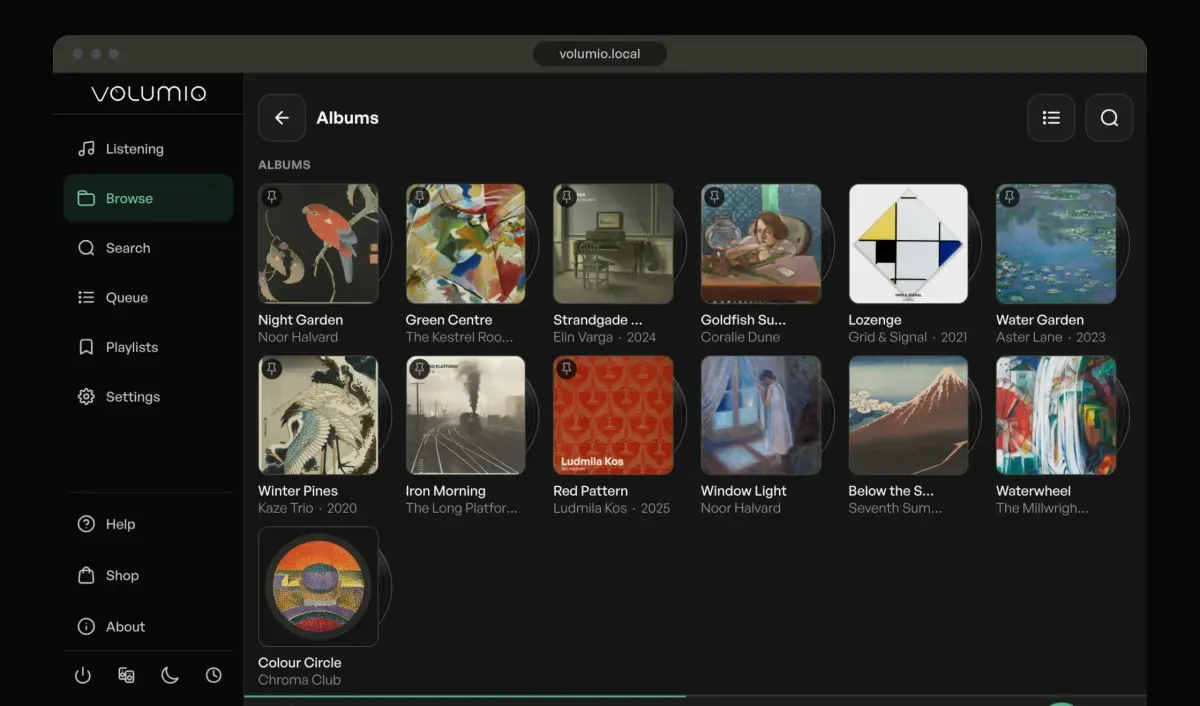
The Rivo Ultra runs Volumio OS and supports Qobuz, Qobuz Connect, TIDAL, TIDAL Connect, Spotify Connect, AirPlay, local music files, internet radio, and Roon Ready integration.
Volumio Premium features are included with the hardware without a separate Volumio subscription, although subscriptions to individual music services remain separate.
The front touchscreen allows listeners to browse music, view album artwork, and control playback without constantly reaching for a phone or tablet.
An included remote provides another option.
For listeners maintaining extensive digital music libraries, the internal SSD capability is especially appealing. Music can be stored directly inside the component rather than requiring a separate network storage device.
There is a certain appeal to combining the music server, playback interface, and digital transport into one purpose-built component.
That convenience is real, even before considering potential sonic benefits.
And unlike subtle differences in digital noise performance, the advantages of a responsive interface and accessible music library do not require a listening test to explain.
Actual software responsiveness, long-term reliability, and day-to-day usability would still need hands-on evaluation.
What Would Convince Us the Rivo Ultra Is Worth $5,000?
At Vinyl Latte, specifications are useful, but they are the beginning of an evaluation, not the conclusion.
A meaningful assessment of the Rivo Ultra would require comparisons against less expensive transports using the same external DAC and the same music.
The evaluation should answer several questions.
First, does it change the DAC's measurable analog performance?
This means examining noise, distortion, and jitter-related artifacts at the DAC's analog output under controlled conditions.
Second, does the result change across digital interfaces?
USB, AES/EBU, coaxial, and optical outputs should be evaluated independently where the DAC supports them.
A benefit observed through one interface may not carry over to another.
Third, are any differences repeatable during listening?
Comparisons should use identical recordings, consistent signal processing, matched playback levels, and ideally blind evaluations.
A sighted comparison between a $5,000 component and a much cheaper alternative can easily be influenced by expectations.
Finally, what does the additional investment actually buy?
If the audible result is effectively identical, the Rivo Ultra must justify its premium through build quality, connectivity, display technology, storage, software, and overall ownership experience.
Those are valid reasons to purchase expensive equipment.
They simply shouldn't be confused with demonstrated sonic superiority.
Is the Volumio Rivo Ultra Worth $4,999?
The Rivo Ultra is an ambitious product.
Its impressive display, flexible connectivity, expandable music storage, and integrated software ecosystem make it considerably more interesting than a conventional digital transport with a small status screen.
The engineering choices are also worth examining. Volumio has clearly invested in clocking, power regulation, and signal delivery rather than treating the digital output stage as an afterthought.
But engineering sophistication and audible improvement are not interchangeable.
At $4,999, the Rivo Ultra faces the challenge confronting nearly every premium digital transport: demonstrating that its elaborate hardware produces meaningful benefits beyond what a less expensive, properly functioning transport can already accomplish.
For owners of capable external DACs who value premium construction, direct touchscreen operation, and local music storage, it may be an attractive proposition.
For listeners interested exclusively in the quality of the digital signal reaching their DAC, the case for spending this much remains less certain.
The Bottom Line
The Volumio Rivo Ultra is one of the more interesting new digital transports because it combines ambitious engineering with a genuinely substantial set of usability features.
Its $4,999 price doesn't automatically make it excessive, but it does increase the burden of demonstrating value.
We have not evaluated the Rivo Ultra in a listening system, conducted measurements, or compared it directly with the Rivo Plus or competing transports. Any claims of superior sound quality therefore remain unverified by Vinyl Latte.
And perhaps that is the most important takeaway from this announcement.
The audiophile industry continues to invest heavily in improving the delivery of digital audio. Whether those improvements matter depends on the actual system, the connected DAC, and evidence that extends beyond the manufacturer's specifications.
The question isn't whether Volumio can build a $5,000 digital transport. It's whether that transport can demonstrate an advantage worth paying for.
For now, that remains an open question.
The Volumio Rivo Ultra is available for preorder at $4,999 in the United States, with shipping currently estimated to begin November 30, 2026.
Sources and Further Reading
Volumio official announcement, November 18, 2026:
https://volumio.com/introducing-volumio-rivo-ultra/
Volumio Rivo Ultra product information and technical specifications:
https://volumio.com/product/rivo-ultra/
Volumio official store, pricing and availability:
https://shop.volumio.com/product/rivo-ultra/
Benchmark Media Systems, technical discussion of digital interface jitter and DAC clocking:
https://benchmarkmedia.com/blogs/application_notes/inside-the-dac2-part-2-digital-processing



Comments ()