
Why Are Audiophiles Still Chasing “Perfect Sound”?
Why are audiophiles always chasing “perfect sound”? This reflective opinion piece explores the endless upgrade cycle, social media influence, and the emotional connection that matters more than technical perfection.
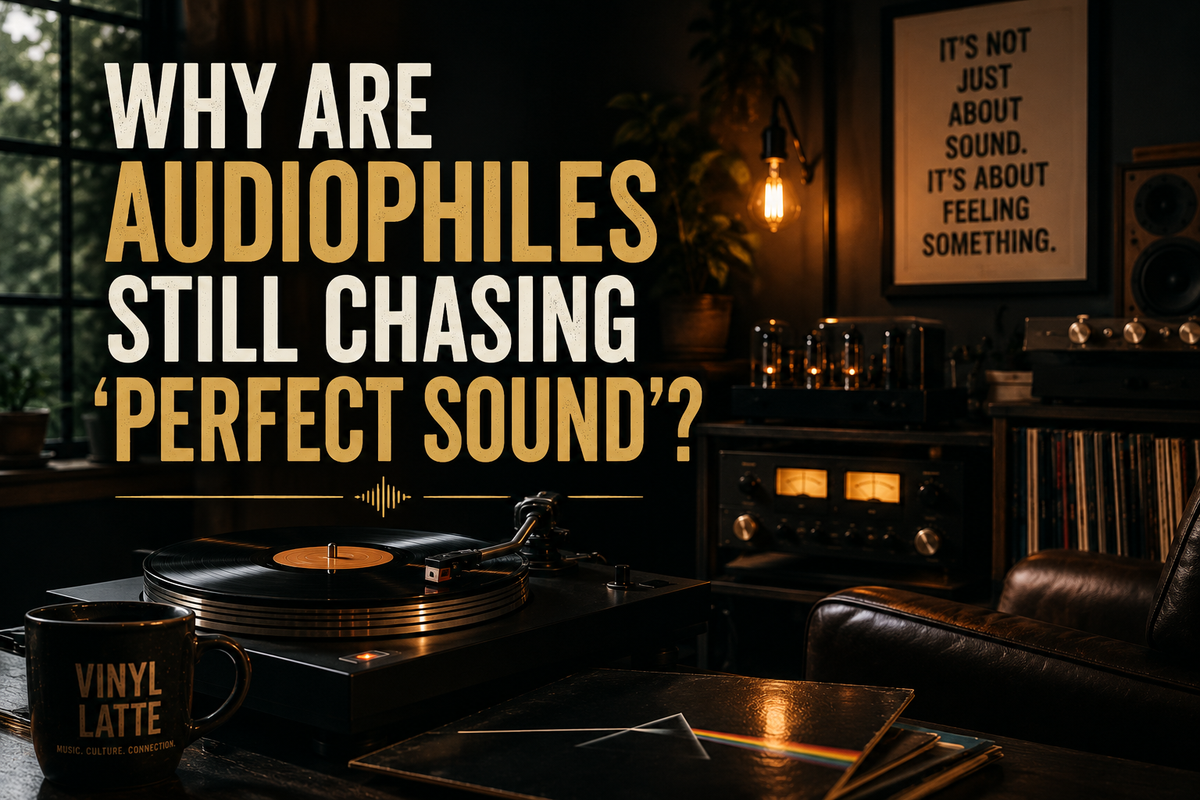
There’s a moment that happens to many audiophiles at some point in this hobby.
You sit down in front of your system, put on a record you know by heart, and instead of disappearing into the music, your brain starts analyzing everything else.
The soundstage feels a little narrow tonight.
Maybe the vocals seem slightly recessed.
Perhaps the bass is fuller than usual.
Then the questions begin:
Would a different cartridge fix this?
Do I need room treatment?
Maybe my DAC is the weak link.
What if I upgraded my speakers?
What if I upgraded everything?
And just like that, the music becomes secondary to the pursuit itself.
The truth is, many of us entered this hobby because we love music. But somewhere along the way, it becomes very easy to start chasing an idea that may not actually exist:
Perfect sound.
The Endless Upgrade Cycle
Hi-fi is one of the few hobbies where improvement never seems to end.
There is always:
- another cable
- another pressing
- another isolation product
- another streamer
- another amplifier
- another “game-changing” tweak
And to be fair, some upgrades absolutely matter. Better system matching, speaker placement, room acoustics, cleaner power, and quality source components can dramatically improve a listening experience.
But the deeper you go into this hobby, the smaller the improvements often become.
That’s the part nobody really prepares you for.
At a certain point, you can spend thousands of dollars chasing changes that are less about transformation and more about refinement. Sometimes those refinements are worthwhile. Sometimes they simply shift the presentation rather than improve it.
Yet the chase continues because audiophiles are wired to believe there’s always another level waiting to be unlocked.
Social Media Has Changed the Hobby
The modern audiophile world is very different from what it used to be.
Years ago, most people built systems slowly through local dealers, magazines, audio clubs, and personal experimentation. Today, we’re exposed to an endless stream of other people’s systems online.
Every day, we see:
- six-figure listening rooms
- exotic turntables
- massive horn systems
- glowing tubes
- limited-edition pressings
- endless “best ever” product reviews
It creates a subtle form of dissatisfaction.
Even when we love our own systems, social media constantly reminds us of what we don’t have.
That comparison culture fuels the idea that satisfaction is always one purchase away.
But in reality, there will always be someone with a more expensive system, a larger room, rarer records, or deeper pockets.
If enjoyment depends entirely on reaching some mythical endgame, most people will never actually arrive.
Listening to Gear vs. Listening to Music
This may be the biggest trap in the entire hobby.
There’s a difference between listening to music and listening to equipment.
One is emotional.
The other is analytical.
Neither approach is wrong. Critical listening can be incredibly rewarding. It helps us appreciate mastering differences, production quality, engineering choices, and system performance.
But if every listening session becomes a test track evaluation, something important can get lost.
Some of the most meaningful musical experiences people have ever had happened through imperfect systems:
- car stereos
- boom boxes
- cheap headphones
- old receivers
- worn records
- tiny apartment speakers
Why?
Because emotional connection matters more than technical perfection.
A perfectly measured system that leaves you emotionally cold will never outperform a modest setup that makes you want to play one more album at midnight.
The Reality of “Perfect Sound”
The deeper you get into audio, the more you realize something uncomfortable:
Perfect sound is subjective.
Some listeners prioritize:
- warmth
- detail
- dynamics
- imaging
- tonal richness
- speed
- neutrality
- impact
Others simply want a system that disappears and lets them connect with music.
Even live music itself isn’t “perfect.” Every venue sounds different. Every seat sounds different. Every performance sounds different.
So what exactly are we chasing?
Maybe the answer isn’t perfection at all.
Maybe the real goal is building a system that pulls us deeper into the emotional experience of music.
A system that makes us want to explore albums.
A system that keeps us listening longer.
A system that helps us reconnect with recordings we thought we already knew.
That kind of connection is far more valuable than endlessly obsessing over whether one component has slightly more air or microdetail than another.
Chasing Better Sound Isn’t the Problem
To be clear, there’s nothing wrong with improving a system.
Experimenting is part of the fun.
Learning is part of the fun.
Discovering what matters to your ears is part of the fun.
The problem happens when the pursuit itself replaces the reason we started.
Because at the end of the day, the goal was never really perfect sound.
It was always about feeling something.
And sometimes the best listening sessions happen when we stop analyzing everything… and simply let the music play.

Comments ()