
The Vinyl Comeback Needs a Cleanup Plan
Vinyl’s comeback has been worth celebrating, but growth brings responsibility. As Warner Music Group tests record take-back programs, the industry faces a bigger question: can vinyl keep expanding without ignoring waste, overproduction, and quality?
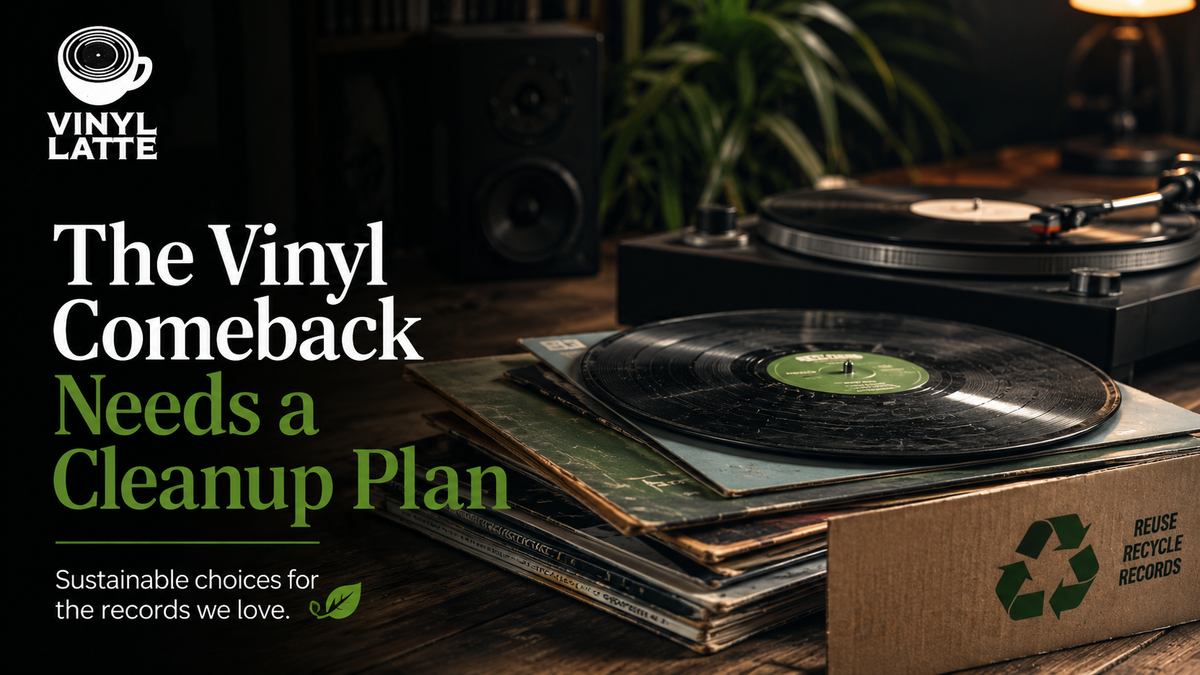
Vinyl is physical. That is the whole point.
It is the jacket in your hands, the record sliding out of the sleeve, the ritual of lowering the stylus, and the feeling that the music exists as something more permanent than a file on a server. For many of us, that is why vinyl matters. It gives music weight, presence, and a sense of ownership that streaming never will.
But that physicality comes with a responsibility we do not talk about enough.
As vinyl continues its comeback, the industry has become very good at celebrating growth. More sales. More variants. More limited editions. More deluxe packaging. More fans walking into record stores and buying albums again. That is all worth celebrating.
The less romantic question is this: what happens to the records nobody can use anymore?
Warner Music Group is now testing that question in a very practical way. The company has launched a pilot program with 11 independent record stores across the United States, giving customers a place to bring damaged, unwanted, or unplayable records. The records can come from any artist, any label, and in any condition. The goal is to collect them, study the material, and determine whether there is a realistic recovery path for old vinyl instead of simply treating it as waste.
That may not sound as exciting as a new audiophile pressing or a long awaited reissue, but it may be one of the more important vinyl stories of the year.
Because the bigger vinyl gets, the harder it becomes to ignore the leftovers.
Vinyl’s Strength Is Also Its Complication
The appeal of vinyl is that it is not disposable. At least, that is what we like to tell ourselves.
A well cared for record can last for generations. A good pressing can be played, shared, collected, traded, and passed down. That is part of the format’s magic. It does not feel temporary.
But not every record becomes a cherished part of someone’s collection. Some arrive warped. Some are noisy. Some are returned. Some are overpressed. Some sit in warehouses until they are obsolete. Some get damaged in stores, in transit, or in someone’s basement. Some simply become unwanted.
And unlike a paper sleeve or cardboard jacket, the record itself is not an easy thing to recycle through normal channels.
That is the uncomfortable side of the vinyl revival. We love the object, but we rarely ask what happens when the object reaches the end of its life.
This Is Bigger Than Recycling
The Warner pilot is interesting because it points to a broader issue. This should not just be a conversation about whether old records can be melted down or repurposed. It should also be a conversation about how the industry thinks about production in the first place.
Over the last few years, vinyl has become a major part of release strategy. For big artists, a new album is rarely just one record. It may come in multiple colors, multiple covers, retailer exclusives, signed editions, alternate track lists, deluxe versions, and limited bundles.
On one hand, that excitement helps fuel the format. Variants get fans engaged. They move units. They make physical media feel collectible again. They also help keep pressing plants busy and record stores relevant.
On the other hand, the strategy can get excessive fast.
When the same album is sold in five, ten, or twenty different versions, the line between collector culture and overproduction starts to blur. Some fans feel pressure to buy every copy. Some records are purchased more as merchandise than as music. Some editions inevitably become less special once the next wave of variants arrives.
That does not mean variants are bad. It means the industry needs balance.
A healthier vinyl economy should not be built only on pressing more copies in more colors. It should be built on making records people actually want to keep.
The Audiophile Question: Will It Sound Good?
For collectors and audiophiles, sustainability is important, but quality still matters.
That is where this story becomes especially interesting. Warner Music Group has already worked with GZ Media and Abbey Road Studios on a separate pilot showing that unsold records could be shredded, reprocessed, and used in new pressings with recycled content ranging from 10% to 100%. According to the companies involved, the tests showed that recycled material could be used without compromising the sound quality expected from commercial vinyl.
That matters.
Vinyl buyers are already sensitive to pressing quality. We complain about non-fill, warps, surface noise, off-center pressings, and poor quality control. If recycled vinyl is going to become part of the future, it cannot feel like a downgrade. It cannot become the budget bin version of the format. It has to be quiet, flat, centered, and consistent.
Collectors will support a more sustainable record industry, but not if they are asked to accept noisy records in the name of environmental progress.
That is the challenge. Sustainability cannot be a marketing sticker. It has to be engineered into the product without lowering the standard.
Independent Record Stores Are the Right Place to Start
One smart part of this pilot is the use of independent record stores as collection points.
Record stores are still the cultural center of the vinyl community. They are where new collectors learn. They are where longtime collectors browse, argue, discover, and connect. They are also where the real condition of the format is visible every day.
Store owners know what comes back defective. They know what sits unsold. They know what customers complain about. They know which pressings are loved and which ones disappoint. If the industry wants to understand what happens to damaged or unwanted vinyl, independent shops are a logical place to begin.
It also makes the pilot more tangible for consumers. Instead of talking about sustainability in abstract corporate language, the program gives people something simple to do: bring in the records that no longer have a life in your collection.
That is a small step, but small steps matter when the infrastructure does not really exist yet.
The Real Test Comes Later
The pilot itself is not the finish line. It is the starting point.
The real question is whether this can scale. Can old records be collected efficiently? Can the material be processed consistently? Can transportation be handled in a way that does not cancel out the environmental benefit? Can recycled vinyl be used at volume without compromising pressing quality? Can labels, plants, distributors, and retailers agree on a system that actually works?
And perhaps most importantly, will the industry care once the press release cycle is over?
Because this cannot just be about good optics. If vinyl is going to keep growing, sustainability has to become part of the business model, not a side project.
That means thinking about better forecasting, smarter pressing quantities, fewer meaningless variants, improved quality control, and real recovery options for records that cannot be sold or played.
The Vinyl Revival Should Grow Up
I love vinyl because it feels intentional.
Putting on a record asks something of you. It slows you down. It turns listening into an action instead of background noise. It creates a relationship with the music that feels more personal.
That is why the format has survived. That is why younger listeners are discovering it. That is why longtime collectors continue to care.
But if vinyl is going to remain meaningful, the industry has to treat the format with the same care that collectors do.
That does not mean pressing fewer great records. It does not mean killing color variants or making every release feel plain and utilitarian. It means acknowledging that physical media carries physical consequences.
The vinyl comeback has been one of the best stories in modern music. People are buying albums again. They are visiting record stores. They are building collections. They are paying attention to sound, packaging, mastering, and the value of owning music.
Now the industry has to take the next step.
The future of vinyl should not simply be more records.
It should be better records, made more thoughtfully, sold more responsibly, and given a real path when they reach the end of their life.
Because if vinyl is going to keep asking listeners to care more deeply about music, the industry should be willing to care more deeply about the records themselves.



Comments ()