
Vinyl Variants Are Fueling the Comeback. Are Fans Paying the Price?
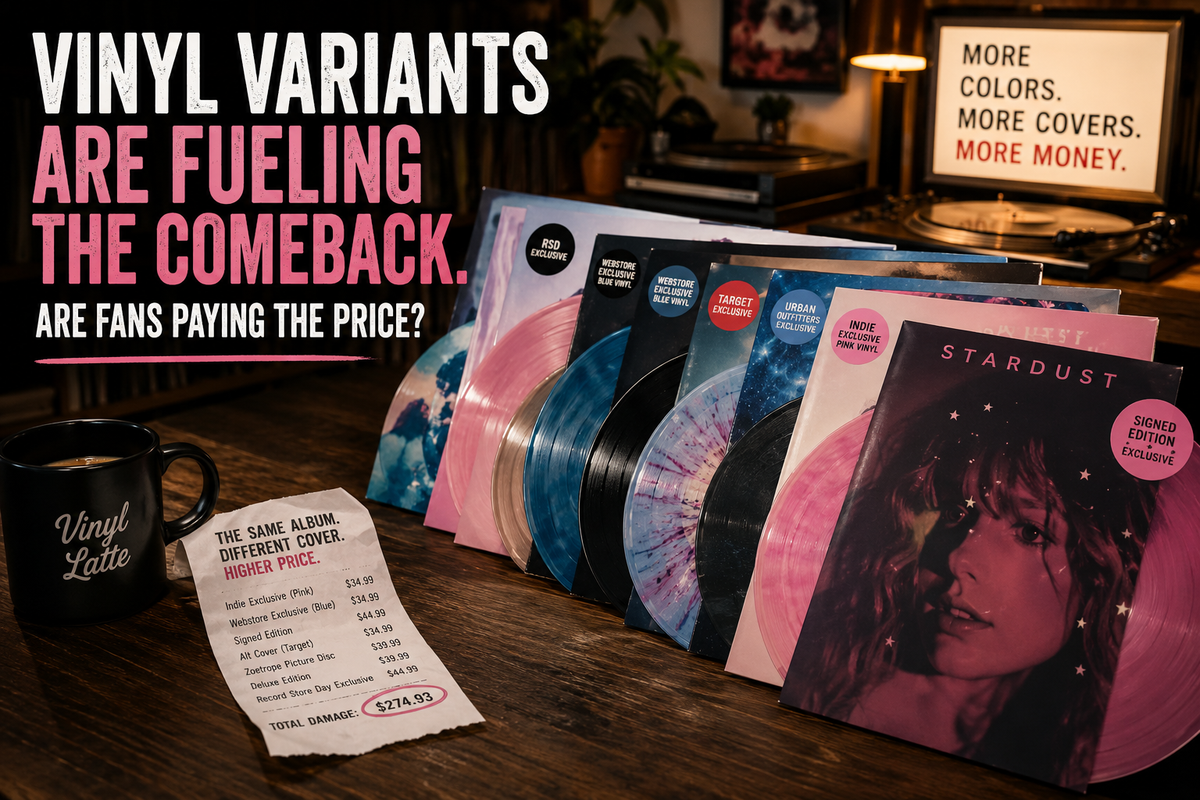
Vinyl variants are helping drive the format’s comeback, giving fans more ways to connect with the artists they love. But when one album arrives in multiple colors, covers, exclusives, and deluxe editions, collecting can start to feel less like choice and more like pressure.
There was a time when buying an album meant buying the album.
Maybe there was a standard black vinyl pressing. Maybe there was a limited color variant if you were lucky. Maybe an indie store had something slightly different, or a deluxe version came later with bonus material. But for the most part, the decision was simple. You liked the artist, you bought the record, and that was enough.
That is not always the case anymore.
In today’s pop market, the release of a major album can feel less like a single event and more like a collecting campaign. One version has the alternate cover. Another has the exclusive color. Another has a signed insert. Another has a different back cover. Another has a bonus track. Another is only available through one retailer. Another disappears after a short preorder window. Then, a few weeks later, another version arrives.
For fans, that can be exciting. It can also be exhausting.
Vinyl variants have become one of the defining forces behind the modern physical music boom. They create excitement. They help artists move albums in a streaming world. They give fans something tangible to own in an era where most music is rented through an app. And whether we like it or not, they are helping fuel vinyl’s continued comeback.
But there is another side to this story.
At what point does collecting become pressure? At what point does fandom become a financial test? And how many copies of the same album should one fan feel expected to buy?
The Variant Era Is Here
Vinyl has always had a collector culture. That is not new.
Collectors have chased original pressings, promo copies, imports, test pressings, colored vinyl, misprints, mono mixes, half speed masters, numbered editions, and special packaging for decades. The hunt has always been part of the appeal.
What feels different now is the scale and the speed.
The variant strategy has moved from niche collector culture into the center of mainstream pop marketing. For some major releases, fans are no longer deciding whether they want the album on vinyl. They are deciding which version, which cover, which color, which store exclusive, and which bundle they are willing to miss.
That changes the emotional relationship between fan and format.
A colored pressing can be fun. An alternate cover can be beautiful. A signed insert can feel personal. A deluxe package can be worth owning. But when the same core album appears in five, ten, or even more physical versions, the line between celebration and consumption gets blurry.
The question is not whether variants should exist. They should. Collecting is part of the culture.
The better question is whether the current model respects the fan or exploits the most dedicated ones.
Why Variants Work
There is a reason labels and artists keep doing this. It works.
In a streaming dominated music business, physical albums are one of the few ways fans can directly show support in a measurable, visible way. A vinyl purchase feels more meaningful than a stream. It is deliberate. It is expensive. It takes up space. It says, “This artist matters enough to me that I want something real.”
For younger fans who grew up with unlimited access to music, vinyl offers a form of ownership that streaming never could. The artwork is larger. The object has weight. The ritual feels intentional. It turns an album into something you live with, not just something that lives in your library next to everything else.
Variants also create excitement around a release. They give fans choices. A pink pressing might match the album’s aesthetic. A blue pressing might be tied to a specific lyric or era. An alternate cover might capture a different mood. For some fans, choosing the version that speaks to them is part of the experience.
And yes, variants sell records.
They help artists chart higher. They help labels justify physical production. They help retailers move inventory. They help keep pressing plants busy. They keep vinyl visible in a market where physical music could have easily become a museum piece.
There is a real argument that variants have helped make vinyl feel current again, especially for pop audiences who may not care about first pressings, all analog mastering, dead wax initials, or whether a record was cut from high resolution digital files.
For those fans, the appeal is not always audiophile purity. It is connection.
That matters.
Where It Starts to Feel Uncomfortable
The problem is not that different versions exist.
The problem is when the release strategy starts to make one copy feel incomplete.
That is where the fan relationship changes.
If one version has one bonus track, another version has a different bonus track, and another version has exclusive artwork, the fan is no longer choosing between cosmetic options. They are being asked to buy the same album multiple times to access the full experience.
That is a very different thing.
For casual listeners, this may not matter. They will buy one copy, stream the rest, and move on. But hardcore fans are not casual listeners. They are emotionally invested. They want to support the artist. They want to participate. They want the complete collection. They want to feel like they were there for that moment in the artist’s career.
That emotional investment is exactly what makes the variant model so powerful.
It is also what makes it complicated.
A $35 record is one thing. Five $35 records is something else entirely. Add shipping, taxes, retailer exclusives, international variants, signed editions, deluxe versions, and resale market inflation, and one album cycle can quickly become hundreds of dollars. For the most devoted fans, it can become much more than that.
At that point, we have to be honest about what is happening. This is not only about music. It is about scarcity, urgency, identity, and fear of missing out.
That does not make every variant cynical. But it does mean the industry knows exactly which emotional buttons it is pressing.
The Fan Should Not Have to Prove Loyalty Through Duplicate Purchases
This is where I think the conversation needs more nuance.
Fans should be able to collect. Fans should be able to buy multiple versions if they genuinely want them. There is nothing wrong with loving an artist enough to own several editions of the same album.
I own multiple copies of certain records. Many collectors do.
Sometimes there is a sonic reason. Sometimes there is a sentimental reason. Sometimes one pressing has different mastering, different packaging, or a unique place in the album’s history. Collecting does not have to be rational to be meaningful.
But there is a difference between choosing to collect and feeling pushed to collect.
The healthiest version of fandom should not make people feel like buying one copy is somehow less supportive. A fan who buys one record should not feel behind the fan who bought six. A fan who streams the album should not feel less legitimate than the fan who bought every exclusive.
Music fandom should not become a spending competition.
That is especially important because many of these releases are aimed at younger audiences. These are fans who may be students, early in their careers, or managing limited disposable income. Asking them to repeatedly buy the same album in slightly different packaging may be good for first week numbers, but it does not always feel good for the culture around music.
There is a difference between serving fans and monetizing their devotion.
The Comeback Contradiction
This is the strange balancing act.
Vinyl variants are helping physical music thrive. At the same time, they risk turning vinyl into something less about albums and more about inventory.
That is the contradiction.
The vinyl comeback is exciting because it proves people still want music they can hold. They want artwork. They want liner notes. They want shelves. They want ritual. They want objects that represent the artists and albums that shaped them.
But when the market becomes flooded with variants, the focus can shift from listening to acquiring.
The question becomes less, “Do I love this album?” and more, “Do I have the rare one?”
That is not automatically bad. Collecting has always had that element. But if the industry leans too hard into artificial scarcity, it risks cheapening the very thing that made vinyl special again.
Vinyl works best when the object deepens the relationship with the music.
It works less well when the object becomes the point and the music becomes secondary.
There Is a Better Way to Do Variants
I am not arguing for a world where every album only comes on standard black vinyl.
That would be boring. It would also ignore the reality of modern music fandom. Variants can be fun, creative, and meaningful when they are handled with care.
The better version of this model is simple.
Make the variants visually different, but do not make fans buy multiple copies to get the complete album. If there are bonus tracks, put them on a deluxe edition later, or make them available digitally for everyone. If there are multiple colors, let fans choose the one they like without feeling like one version has essential content missing from another.
Make the packaging meaningful. Make the pressing quality good. Make the record something worth owning beyond the color of the vinyl.
And maybe most importantly, do not punish fans who only buy one copy.
A variant should feel like an option, not an obligation.
That is the difference.
The Vinyl Comeback Should Be About More Than Units Sold
It is easy to look at the numbers and celebrate. Vinyl is selling. Physical music is alive. Younger fans are buying records. Pop artists are moving serious units. Record stores are getting new customers. Pressing plants have work. The format matters again.
That is all good.
But if the comeback is built too heavily on the most devoted fans buying the same album over and over again, it is worth asking what kind of comeback we are building.
Is it a comeback rooted in music ownership, listening, and long term connection?
Or is it a comeback driven by limited drops, alternate covers, and the anxiety of missing out?
The answer is probably both.
That is what makes this topic so interesting.
Vinyl variants are not ruining the format. They are not the enemy. In many ways, they are part of why vinyl feels alive to a new generation. But the industry should be careful. The same fans helping fuel this revival are the fans most likely to feel squeezed by it.
There is nothing wrong with giving fans beautiful things to collect.
There is something wrong with making them feel like love for an artist has to be proven through duplicate purchases.
Vinyl’s comeback should bring fans closer to the music. It should make albums feel bigger, more personal, and more lasting.
It should not make fans feel like buying the record once was not enough.

Comments ()