
Vinyl Is Still Growing. So Why Does the Boom Feel Over?
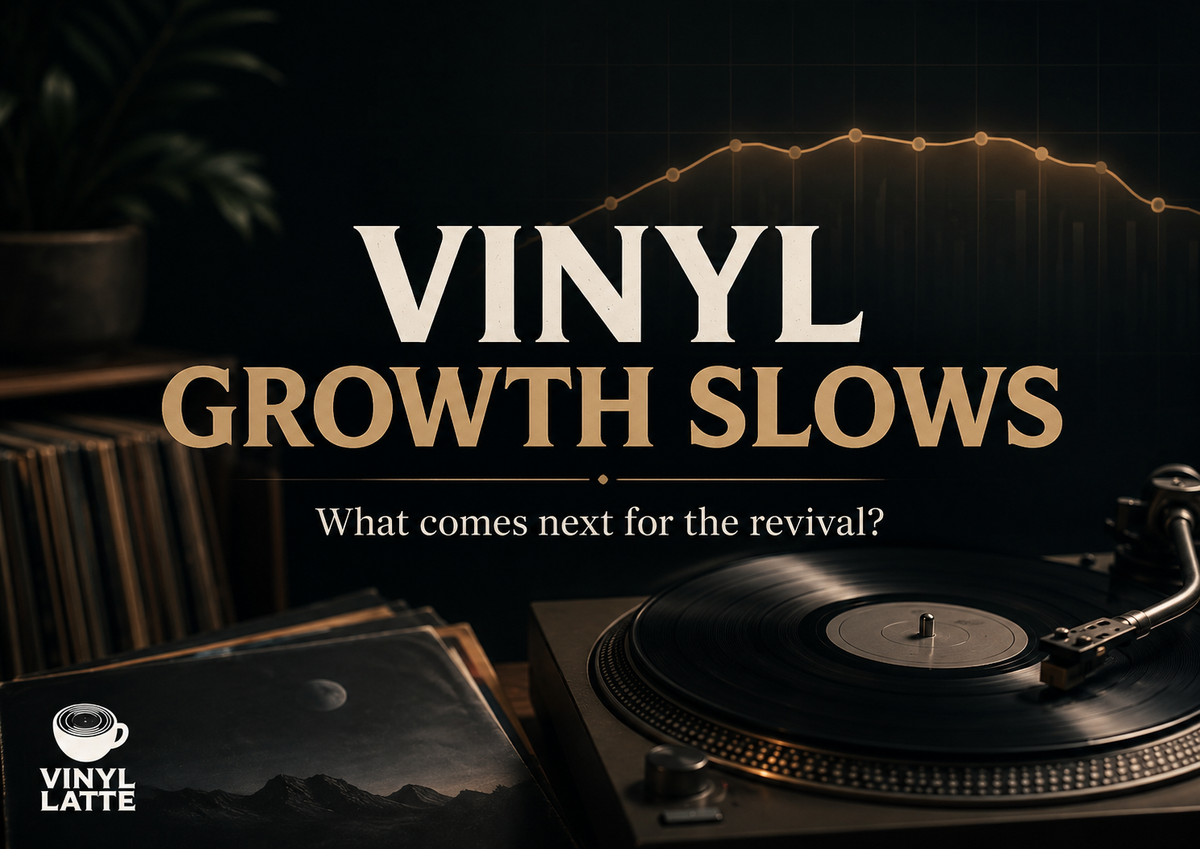
Vinyl sales are still growing, but the explosive momentum of the revival is beginning to cool. Could slower growth lead to better pressings, smarter reissues, and a healthier future for the format?
For nearly two decades, every vinyl sales report seemed to tell the same story.
Records were back. Sales were climbing. New pressing plants were opening. Major retailers were expanding their vinyl sections, while artists increasingly treated physical releases as important parts of an album campaign.
The vinyl revival appeared unstoppable.
That story may finally be changing.
According to Luminate’s 2026 midyear report, U.S. vinyl sales grew by approximately 2.4 percent during the first half of the year, reaching roughly 21.8 million records sold.
Growth is still growth. Vinyl is not collapsing, and there is little evidence that listeners have suddenly abandoned the format.
But a 2.4 percent increase feels very different from the double digit gains that helped define the revival.
Vinyl may be entering a new phase. The question is no longer whether records can come back.
It is whether the modern vinyl market can remain healthy after the excitement of the comeback begins to fade.
The Revival Was Never Going to Grow Forever
No market expands at the same pace indefinitely.
Vinyl began its resurgence from an unusually low starting point. For years, records had largely disappeared from mainstream retail, pressing capacity had declined, and many younger listeners had never owned a turntable.
As vinyl returned, there was enormous room for growth.
Record stores expanded. Artists discovered that fans wanted physical products. Collectors returned to the hobby. Younger listeners began purchasing albums from artists they already followed through streaming.
Each new customer added momentum.
Eventually, however, the easiest growth becomes exhausted. Most people who are curious about vinyl already know it exists. Turntables are widely available. Major releases routinely arrive on vinyl. Records are no longer an unexpected alternative to digital music.
Vinyl has become normal again.
That is an achievement, but it also means the format must now compete for each sale rather than relying on the novelty of its return.
Collectors Are Becoming More Selective
The vinyl market may still be growing, but many collectors seem less willing to purchase every interesting release.
That is not necessarily because their enthusiasm has disappeared. In many cases, the economics of collecting have changed.
A standard new album can now cost $30, $40, or more. Audiophile reissues frequently sell for $60 to $150. Limited editions, imported pressings, box sets, and premium releases can climb much higher.
At those prices, even dedicated collectors have to make choices.
A $25 record can be an impulse purchase. A $45 record becomes a decision.
Collectors may ask whether the mastering is improved, whether the pressing quality is reliable, whether the packaging adds meaningful value, and whether they will actually play the album more than once.
That greater selectivity may be contributing to slower sales growth, but it could also improve the market.
A customer who buys fewer records may demand better ones.
The Variant Strategy May Be Reaching Its Limit
Vinyl variants have played an important role in the format’s resurgence.
Different colors, alternate covers, retailer exclusives, signed editions, and limited pressings give fans additional reasons to purchase physical music. These editions can create excitement around an album and provide artists with revenue that streaming alone may not generate.
The strategy works, but there is a point where enthusiasm can become exhaustion.
Some albums now arrive in so many editions that collecting them all can cost hundreds or even thousands of dollars. Fans may feel pressure to purchase quickly because each variation is marketed as limited, even when another edition appears days later.
The result is a strange contradiction.
Variants help increase vinyl sales, but too many variants can make the market feel less special.
When scarcity becomes a routine marketing tool, collectors begin to question whether anything is truly limited. When the same album is offered repeatedly with only minor cosmetic changes, some fans may decide to purchase one copy.
Others may decide not to participate at all.
The industry should not eliminate variants. It should make them feel meaningful again.
Pressing Quality Matters More in a Slower Market
During periods of rapid growth, consumers may tolerate inconsistency because demand is high and excitement is driving purchases.
That becomes more difficult when buyers are spending $35 or $40 on a single album.
Off center pressings, excessive surface noise, warps, damaged jackets, and poor quality control remain common complaints among collectors. These problems are particularly frustrating when a new record costs significantly more than a used copy or an earlier pressing.
Collectors understand that vinyl is a physical product and will never be completely perfect. What becomes harder to accept is paying a premium price for a product that feels carelessly manufactured.
Slower growth may force labels and pressing plants to take quality more seriously.
If consumers become more selective, reputation matters. A label known for excellent mastering and reliable pressing quality will have an advantage over one that relies primarily on scarcity, packaging, or colored vinyl.
The records that succeed may increasingly be the ones that offer a clear reason to exist.
Not Every Album Needs Another Reissue
The vinyl revival has created an enormous reissue market.
Classic albums have returned in remastered editions, anniversary packages, expanded box sets, half speed masters, direct to disc releases, one step pressings, and countless limited variations.
Many of these releases are excellent. Some restore albums that have been unavailable for decades. Others provide better sound, improved artwork, or access to recordings that original pressings have made prohibitively expensive.
But the market is also filled with familiar albums being reissued again and again.
There are only so many times collectors can be asked to repurchase the same title.
The next phase of vinyl should place greater emphasis on records that have been overlooked. Albums that have never received a proper vinyl release, recordings that have been out of print for decades, and catalog titles that are difficult to find could offer more value than another edition of an album already available in twenty versions.
Collectors do not necessarily need more products.
They need better reasons to buy them.
Slower Growth Could Be Healthy
A slowing market is often described as a problem, but vinyl may benefit from becoming less frantic.
Rapid expansion encouraged labels to press almost anything because demand appeared endless. Retailers ordered aggressively. Artists released numerous editions. Buyers rushed to preorder records because they feared missing out.
A more stable market could reduce some of that pressure.
Labels may become more careful about what they release. Pressing plants may have more time to focus on quality. Retailers may order more realistic quantities. Collectors may purchase records because they genuinely want them rather than because social media made a release appear urgent.
This would not mean the vinyl revival had failed.
It would mean vinyl had matured.
Healthy formats do not require constant double digit growth. They need committed customers, sustainable pricing, reliable manufacturing, strong independent retailers, and products worth owning.
Vinyl already has many of those ingredients.
The Bigger Risk Is Taking Collectors for Granted
The greatest threat to vinyl may not be streaming, CDs, or another physical format.
It may be complacency.
The industry has spent years celebrating vinyl’s growth. That success can create the assumption that collectors will continue buying regardless of price, quality, or release strategy.
They will not.
Collectors may be passionate, but they are also increasingly informed. They compare pressings, read reviews, examine mastering credits, discuss quality control, and question whether premium releases justify their cost.
They know when an album has been carefully produced.
They also know when they are being asked to purchase the same music in slightly different packaging.
The vinyl market cannot depend forever on nostalgia, fear of missing out, or the belief that physical media is automatically valuable.
Value must be earned with each release.
Vinyl Does Not Need Another Boom
Vinyl has already achieved something remarkable.
It survived near extinction, returned to mainstream retail, attracted a new generation of listeners, and once again became a meaningful part of the music business.
It no longer needs to prove that it can come back.
Now it must prove that it can last.
That may require fewer unnecessary variants, better quality control, more thoughtful reissues, and prices that do not push casual listeners out of the hobby.
A slower market may be uncomfortable for an industry accustomed to constant growth. But it may also create the conditions for a stronger and more sustainable future.
The vinyl boom may be ending.
That does not mean the vinyl revival is over.
It may simply mean the real work is beginning.
Are you buying more records than you did a year ago, or have higher prices and endless releases made you more selective?


Comments ()