
Vinyl Is Booming. So Why Are Record Stores Still Closing?
Vinyl sales are booming, but independent record stores that helped keep the format alive struggle to compete with major artists, online exclusives, and collectible variants.
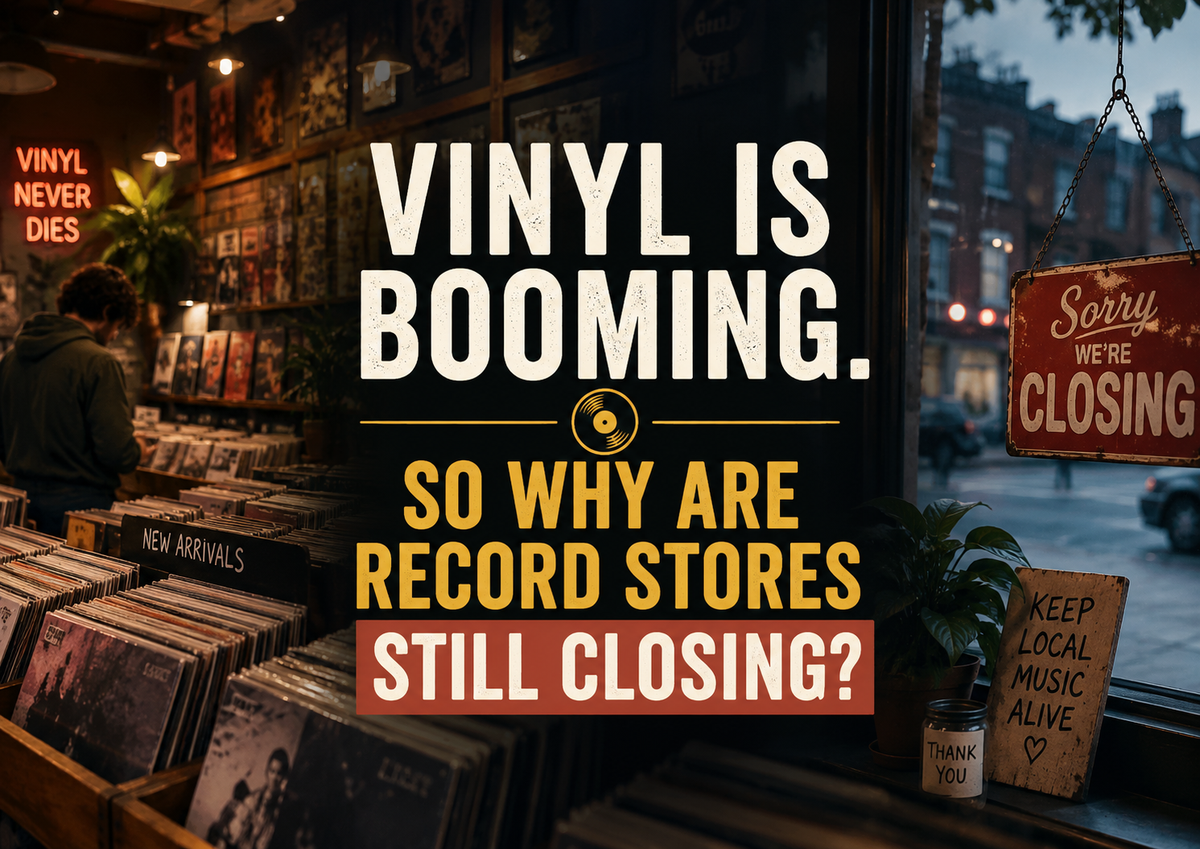
Vinyl is having a moment. Actually, vinyl has been having a moment for so long that it might be time to stop calling it a comeback.
The numbers are impressive. U.S. vinyl revenue crossed the billion dollar mark in 2025. More records are being pressed, more major artists are releasing vinyl, and younger fans are walking into the hobby through Taylor Swift, Billie Eilish, Olivia Rodrigo, Sabrina Carpenter, Kendrick Lamar, and countless others. On paper, this should be the golden age of record collecting.
So why does the culture still feel fragile?
Why are independent record stores still struggling?
Why are beloved shops closing their doors while the industry celebrates another year of growth?
That contradiction says a lot about where vinyl is today. The format is healthy. The business is growing. But the culture around it is not automatically protected just because the revenue chart looks good.
And that matters.
The Vinyl Revival Is Real
Let’s start with the obvious. The vinyl revival is not imaginary.
This is not just a nostalgia trend kept alive by a few aging collectors looking for first pressings of classic rock albums. Vinyl has become a mainstream physical format again. New releases are routinely pressed on vinyl. Major retailers stock records. Pop artists build entire release campaigns around collectible variants. Record Store Day still brings people out early in the morning, waiting in line, hoping to score something special.
For a format that was once written off as outdated, that is remarkable.
Vinyl survived the CD. It survived downloads. It survived streaming. It survived the idea that convenience would permanently replace ownership.
But the revival has changed shape.
Vinyl is no longer just about the record store bin. It is also about direct to consumer webstores, exclusive color variants, limited edition covers, big box retail exclusives, deluxe box sets, preorders, restocks, and online drops that sell out before most collectors even know they exist.
That is great for the revenue number.
It is not always great for the record store.
The Problem Is Where the Money Goes
When someone says vinyl is booming, the natural assumption is that everyone connected to vinyl must be doing well.
Labels must be happy. Artists must be happy. Pressing plants must be busy. Collectors must be buying. Record stores must be thriving.
But that last part is not guaranteed.
A billion dollar vinyl market does not mean every independent shop is seeing the benefit. It simply means a lot of money is being spent on records.
Where that money is spent matters.
A fan buying five versions of the same new pop album from an artist’s official store helps the vinyl sales number. A collector grabbing an exclusive pressing from Target helps the vinyl sales number. A limited edition preorder sold directly through a label helps the vinyl sales number.
But none of that necessarily helps the local shop that introduced generations of people to music they did not even know they were looking for.
That is the tension.
The vinyl revival has created more customers, but it has also created more ways for those customers to bypass the very stores that helped keep the format alive when nobody else cared.
Record Stores Are Not Just Retail
This is where the conversation gets emotional.
A good record store is not just a place that sells records.
It is a discovery engine. It is a community space. It is a place where you can walk in looking for one thing and leave with something completely unexpected. It is where the person behind the counter might put you onto an album that changes your taste forever. It is where local scenes leave fingerprints. It is where used records carry history in a way no algorithm can recreate.
Streaming can recommend what sounds similar.
A record store can recommend what feels connected.
That difference matters.
The best shops do not simply move inventory. They build trust. They give a town or neighborhood a music identity. They become part of people’s routines. They become part of people’s memories.
So when a long running store closes, it feels bigger than a retail story. It feels like a piece of culture disappearing.
The New Vinyl Buyer Is Different
There is another layer to this.
The vinyl customer has changed.
That is not a criticism. It is just reality.
For some collectors, vinyl is still about sound quality, mastering, pressing plants, original copies, dead wax, cartridge setup, and whether a reissue was cut from tape. For others, vinyl is about fandom, artwork, color variants, display value, and owning a physical object connected to an artist they love.
Both groups are real. Both groups matter.
But they do not always shop the same way.
The audiophile collector is more likely to dig through bins, ask questions, compare pressings, and seek out older copies. The modern pop collector may be more likely to preorder directly from the artist, chase variants online, or buy the version that matches a specific aesthetic.
That shift changes the ecosystem.
Record stores can absolutely serve younger and newer collectors, but they are competing against an online machine built around scarcity, urgency, and exclusivity. The store has to pay rent, staff the counter, manage inventory, buy used collections, support local customers, and somehow compete with a drop culture that rewards instant online purchasing.
That is not an easy business.
Vinyl Became Bigger, But Not Necessarily Better
This is the part collectors do not always want to say out loud.
The vinyl boom has created some incredible things. More titles are available. More artists care about physical media. More younger listeners are building collections. More people are treating music as something worth owning again.
That is good.
But the boom has also created problems.
Prices are high. Quality control can be inconsistent. Some releases feel rushed. Some albums are spread across too many variants. Some fans are being pushed to buy the same record over and over again just to feel complete. Some records feel more like merchandise than a serious music release.
And somewhere in the middle of all that, the independent store is expected to make the economics work.
A shop cannot survive on good vibes alone. It needs foot traffic. It needs margin. It needs customers who buy more than one Record Store Day release per year. It needs people to remember that convenience is not the same thing as community.
That is the uncomfortable part of the vinyl revival.
We love the idea of record stores. But do we support them enough to keep them alive?
The Local Shop Still Matters
I buy records online. Most collectors do.
There is nothing wrong with that.
Some records are hard to find locally. Some audiophile releases are direct order only. Some titles sell out quickly. Sometimes online is simply the only practical option.
But if we want record stores to survive, they cannot be treated as museums we visit once in a while and mourn when they close.
They need to be part of the habit.
Buy a new release locally when the price is fair. Dig through the used section. Ask what came in recently. Buy the record cleaning sleeves. Pick up the album you were going to order anyway. Bring in good records when you sell. Tell people about the shop. Take your kids. Take a friend who has never flipped through bins before.
Because once a great record store is gone, it rarely comes back.
The inventory gets scattered. The staff moves on. The regulars lose a meeting place. The neighborhood loses a little weirdness. And the music culture becomes a little more transactional.
That is the real loss.
The Vinyl Revival Needs a Course Correction
The future of vinyl should not just be bigger.
It should be better.
Better pressing quality. Better pricing. Better availability. Better support for independent stores. Better balance between collectible excitement and consumer fatigue. Better understanding that fans are not unlimited wallets.
The industry loves to talk about vinyl’s growth. But growth should not only be measured by revenue.
A healthier vinyl culture would mean more great shops staying open. More new collectors learning how to build meaningful collections. More artists releasing records with care instead of treating vinyl like a merch bundle. More labels respecting the format. More fans supporting the places that make music discovery feel human.
Vinyl’s comeback should not only benefit the biggest artists, the biggest labels, and the biggest retailers.
It should also benefit the people who kept the turntables spinning when the rest of the world moved on.
Final Thoughts
Vinyl is booming. That part is true.
But a booming format does not automatically create a healthy culture.
If anything, this moment should remind us that the vinyl revival is not finished. It is still being shaped by every preorder, every variant, every pressing decision, every local purchase, and every record store that manages to keep its doors open.
The question is not whether vinyl can survive. Clearly, it can.
The better question is what kind of vinyl culture we want to survive with it.
Because if the future of vinyl is only limited drops, online exclusives, inflated prices, and collectors refreshing web pages at midnight, then we may win the revenue story while losing something far more important.
The record store is still the heart of this hobby.
And hearts do not keep beating just because the industry had a good year.


Comments ()