
Nearly 1,300 Rare Beatles Records Go on Sale Today. Some Are Almost Impossible to Find.
Nearly 1,300 rare Beatles records are going on sale through Discogs, including early UK pressings, promotional singles, and unusual international editions. Discover what makes this extraordinary private collection special.
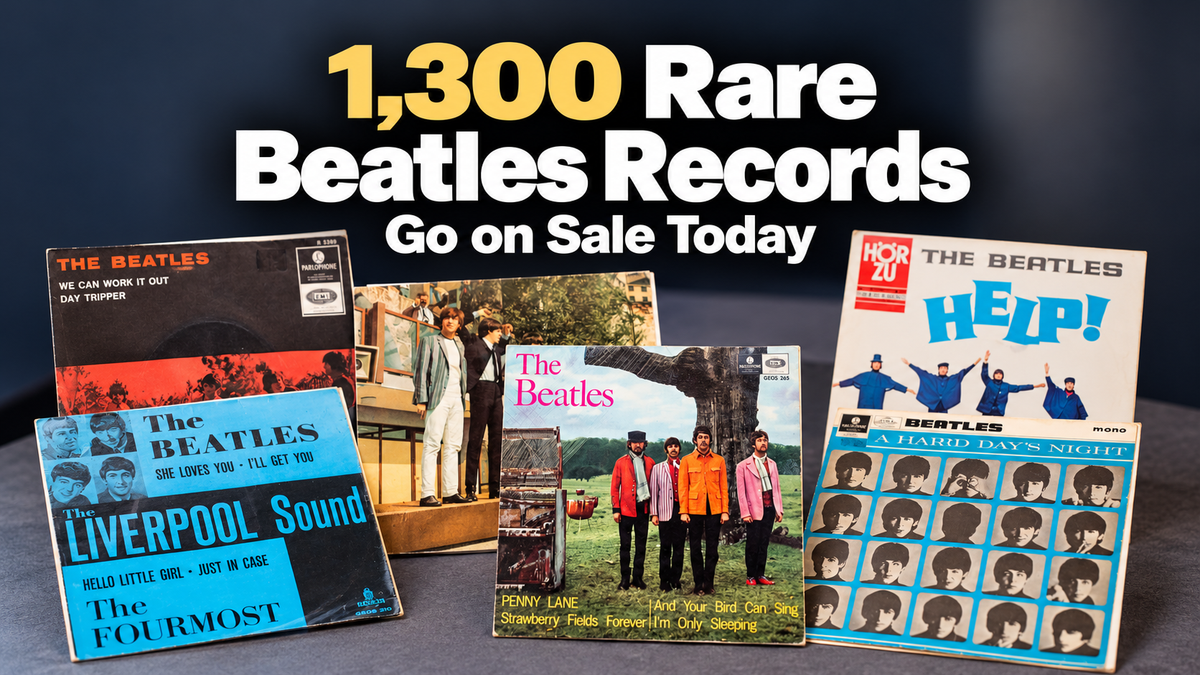
An extraordinary private collection is being broken up after decades of careful collecting. From early promotional pressings to unusual international releases, these are the Beatles records that tell a different story.
Imagine spending decades tracking down nearly every variation of your favorite band's records.
Not just the albums everyone knows. The obscure singles. The promotional copies sent to radio stations. The unusual pressings released in countries where the artwork, track listings, and even record labels were different.
Now imagine that entire collection being offered for sale.
That's what's happening today, October 30, 2026.
Discogs has partnered with Black Plastic Records, an independent record store in Dortmund, Germany, to offer nearly 1,300 Beatles records from a remarkable private collection.
Among them are original UK pressings, rare promotional records, unusual European editions, and a remarkably complete 1970 Let It Be box set.
Some are the kinds of records collectors spend years hoping to find.
But what makes this sale especially fascinating isn't simply the rarity of individual records.
It's the story of one collector who spent decades assembling an unusually detailed history of The Beatles through the records themselves.
And now, that collection is about to be scattered around the world.
One Collector. Nearly 1,500 Beatles Records.
The collection belonged to a devoted Beatles enthusiast whose identity hasn't been publicly disclosed.
Over decades, he acquired nearly 1,500 records, concentrating on original pressings, promotional releases, and unusual editions from the United Kingdom and continental Europe.
Following his death, Black Plastic Records acquired the collection from his estate.
The store then undertook the considerable task of identifying, cataloging, and preparing the records for sale.
Approximately 1,300 are being offered in the initial release through Discogs Drops, the platform's curated marketplace program.
It's an extraordinary number of records devoted to a single band.
But anyone familiar with Beatles collecting knows how quickly the possibilities multiply.
A collector could own several copies of Please Please Me and still be missing dozens of important variations.
Different labels. Different stampers. Different countries. Different sleeves.
And sometimes, records that look almost identical until you examine the smallest details.
That's what makes this collection so interesting.
It isn't simply a library of Beatles music.
It's a physical record of how that music was manufactured, marketed, and distributed around the world.
The 1963 Please Please Me Promotional Record
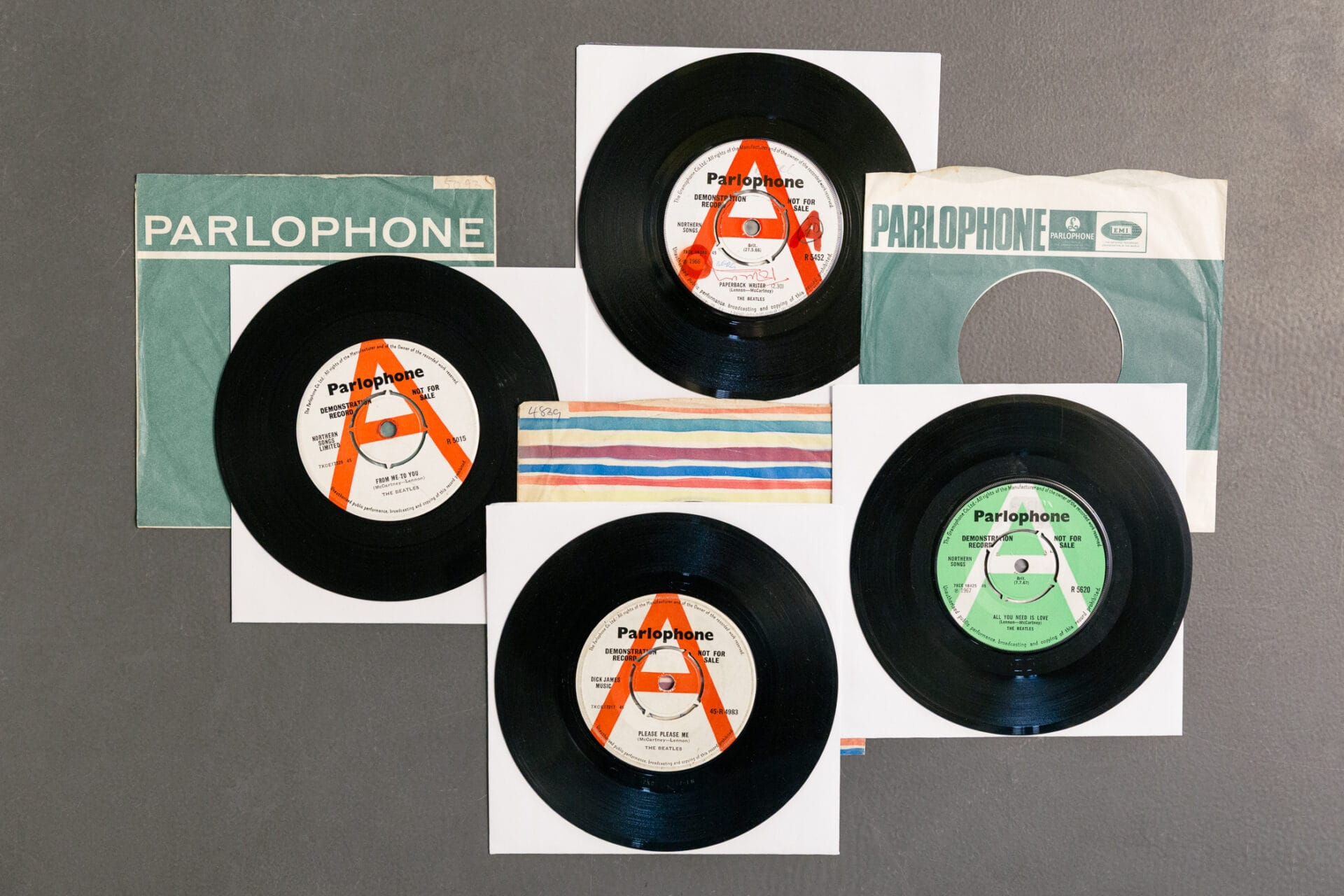
One of the headline attractions is a 1963 promotional pressing of “Please Please Me,” reportedly produced in a run of approximately 250 copies for British radio stations.
That estimated production figure immediately puts the record in a different category from ordinary commercial Beatles releases.
Promotional records were generally distributed to radio stations, journalists, or other industry contacts rather than sold through traditional retail channels.
Their purpose was to encourage airplay and generate interest in upcoming releases.
Many were used heavily.
Some were discarded. Others disappeared into private collections.
And decades later, identifying an authentic promotional pressing in desirable condition can become a serious challenge.
But there's an important distinction collectors should understand.
A promotional pressing isn't automatically valuable simply because it wasn't sold commercially.
Its desirability depends on the exact edition, documented rarity, condition, authenticity, and collector demand.
For this particular record, the estimated production run is certainly intriguing.
However, that figure should not be confused with the number of surviving copies.
Nobody has established that only 250 still exist.
And before spending serious money, a buyer should confirm the precise pressing being offered, including its label design, catalog number, matrix information, and any promotional markings.
That's particularly important with early Beatles records, where seemingly minor variations can make a substantial difference.
The Black-and-Gold Parlophone Please Please Me
Another highlight is an original 1963 UK mono first pressing of The Beatles' debut album, Please Please Me, featuring the distinctive black-and-gold Parlophone label.
For Beatles collectors, that label is immediately recognizable.
Early copies of the album were issued before Parlophone transitioned to its more familiar black-and-yellow label design.
That makes the black-and-gold edition a desirable artifact from the band's earliest period of commercial success.
But identifying an authentic early pressing involves more than looking at the label colors.
Collectors also examine the publishing credits, label typography, sleeve construction, matrix numbers, and other manufacturing details.
These variations help establish when a particular copy was manufactured.
Condition matters enormously, too.
An early pressing with a heavily worn record and damaged sleeve is a very different proposition from a well-preserved copy.
And while original pressings are historically fascinating, they shouldn't automatically be assumed to sound better than later editions.
Vinyl playback quality depends on mastering, pressing condition, groove wear, and the playback system.
A desirable collectible and a great listening copy aren't always the same thing.
Sometimes you're buying a piece of history.
Sometimes you're buying a record to enjoy.
The best finds manage to be both.
A White Album That Doesn't Look Quite Right
The collection also includes an unusual 1968 pressing of The Beatles, better known as the White Album.
What makes it interesting?
The record reportedly features a Parlophone label rather than the Apple Records design most listeners associate with the album.
For anyone accustomed to seeing the familiar Apple labels on original copies, that immediately raises questions.
Where was this edition manufactured?
Was it intended for a particular export market?
What distinguishes it from other pressings?
And how many comparable copies are known?
These are exactly the kinds of questions that make international Beatles collecting so fascinating.
An unusual label doesn't necessarily mean a record is counterfeit or unofficial.
Record companies sometimes used different labels, packaging, and distribution arrangements depending on the market.
But those differences need to be researched carefully.
The precise catalog number, matrix information, and country of manufacture are essential to identifying the edition.
Without those details, it's premature to assign a specific rarity or value.
For collectors, the attraction is in discovering exactly what the record represents.
And sometimes that investigation is nearly as enjoyable as finding the record itself.
The Let It Be Box Set That Somehow Survived
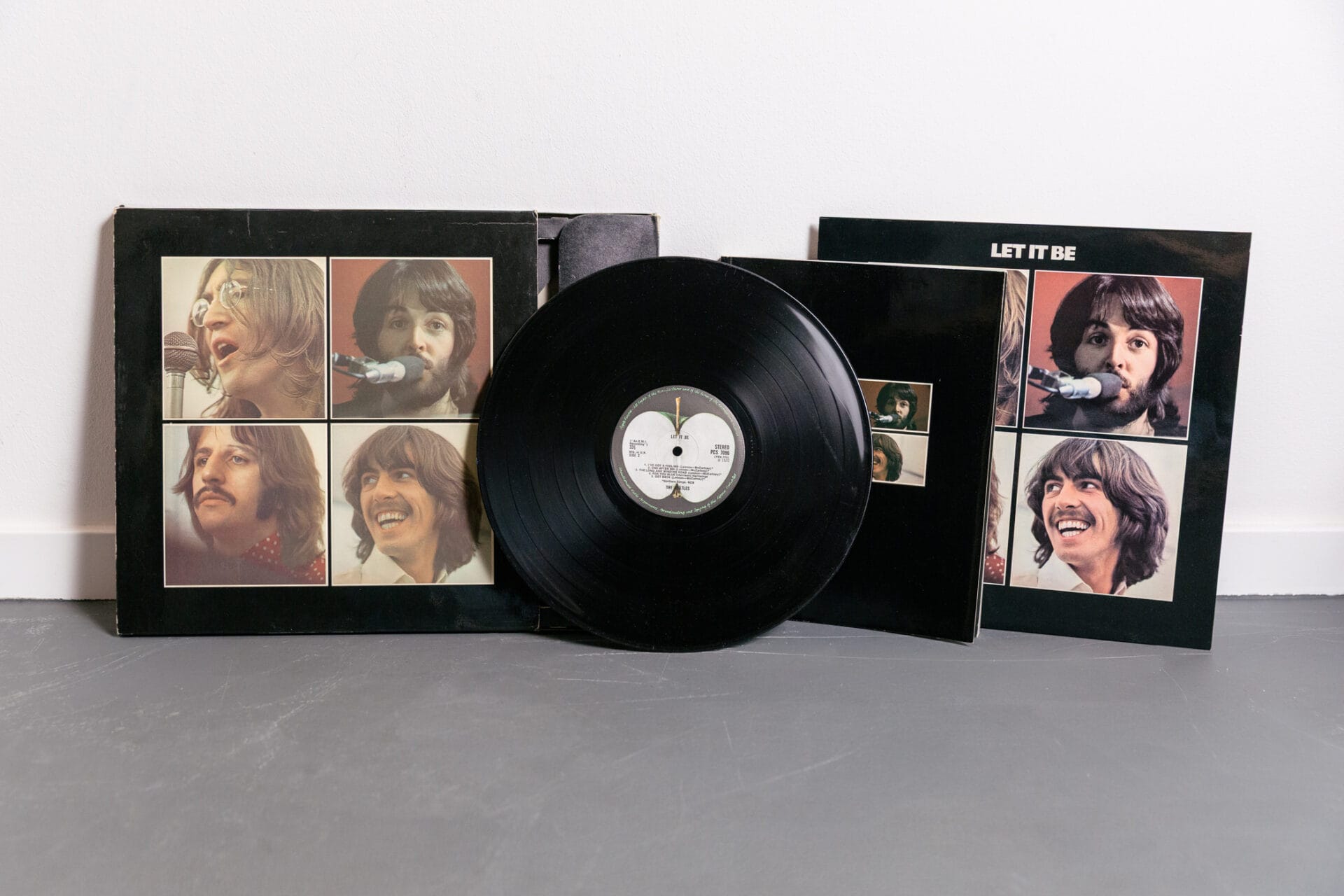
Perhaps the most visually impressive item is a 1970 UK box set edition of Let It Be.
Unlike an ordinary LP, this package originally included several separate components.
There was the record, an outer slipcase, an interior tray, and a substantial book featuring photographs from the band's recording sessions.
The book, Get Back, provided an unusually intimate look at the group during a complicated period in its history.
The problem is that elaborate packaging doesn't always survive decades of ownership particularly well.
Cardboard bends. Trays collapse. Books become separated from their original sets.
And some owners simply discard the outer packaging to make the record easier to store.
As a result, complete examples are considerably more interesting to collectors than incomplete copies.
The example included in this sale is described as exceptionally well preserved, with its original components intact.
That's significant because completeness is part of the collectible value.
For a buyer, the important questions go beyond the condition of the vinyl.
Are the original packaging components present?
Has anything been repaired or replaced?
Does the book show damage or detached pages?
Is the record itself consistent with the original edition?
A complete package can be a wonderful piece of music history.
But the details determine whether it's truly exceptional.
Why International Beatles Records Are So Interesting
Here's where this collection becomes much more than a showcase of expensive first pressings.
Hundreds of the records come from different European markets.
And those international releases reveal something that modern music distribution has largely erased.
In the 1960s, an album or single didn't necessarily look the same everywhere.
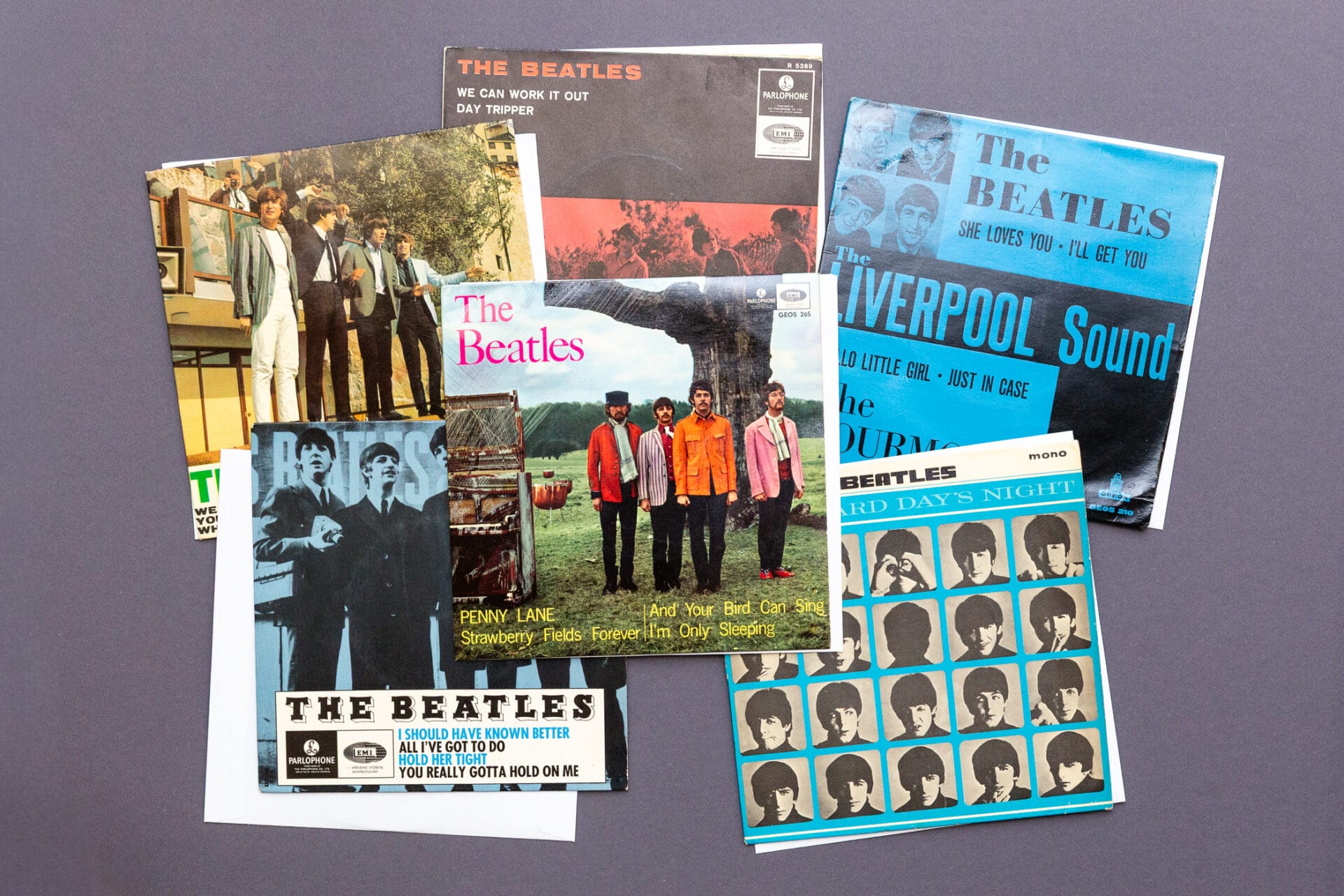
Record companies in different countries sometimes created their own sleeves, adjusted track combinations, or used different label designs.
A Beatles single sold in Britain might appear in France with completely different artwork.
An Italian edition could feature a sleeve that collectors elsewhere had never encountered.
Even familiar songs could be presented in unexpected combinations.
One example highlighted in coverage of the collection is a 1964 Italian edition of “No Reply” backed with “Baby's in Black,” featuring an early sleeve design that was subsequently replaced.
For collectors, these variations provide a fascinating window into the global record business during Beatlemania.
They also demonstrate how a band's identity could change visually from one country to another.
The music might be familiar.
But the packaging tells a different story.
And that's something streaming services generally can't replicate.
A digital listing may identify an album's title, artist, and release year.
A physical record can reveal where it was manufactured, how it was marketed, and what listeners in a particular country actually encountered when they walked into a record store.
It's one reason international pressings remain such a rewarding area of collecting.
The Real Challenge Isn't Finding Beatles Records
Let's be clear.
Beatles records aren't inherently rare.
Millions were manufactured, and enormous numbers remain in circulation.
You can walk into record stores around the world and find copies of Abbey Road, Revolver, or Sgt. Pepper's Lonely Hearts Club Band.
But finding a specific pressing in exceptional condition is another matter entirely.
Many original Beatles records were purchased by people who simply wanted to hear the music.
They were played at parties, shared with friends, and enjoyed on turntables that weren't always gentle on vinyl.
Nobody was necessarily thinking about preserving a pristine collector's item for someone sixty years later.
And that's part of the appeal.
A record that survived decades with minimal wear is a small historical achievement.
But condition should always be evaluated carefully.
A seller's grading provides a useful starting point, not an absolute guarantee of playback quality.
Surface marks, groove wear, pressing defects, and previous playback damage can affect the listening experience.
For especially expensive records, asking for detailed photographs and a representative playback assessment is sensible.
And if the attraction is primarily historical, sleeve condition and originality may matter just as much as how the record sounds.
What Collectors Should Check Before Buying
A sale like this can generate excitement, particularly when some editions are difficult to find elsewhere.
But rarity alone shouldn't override careful purchasing decisions.
Before buying, consider these five questions:
1. Is it the exact pressing being advertised?
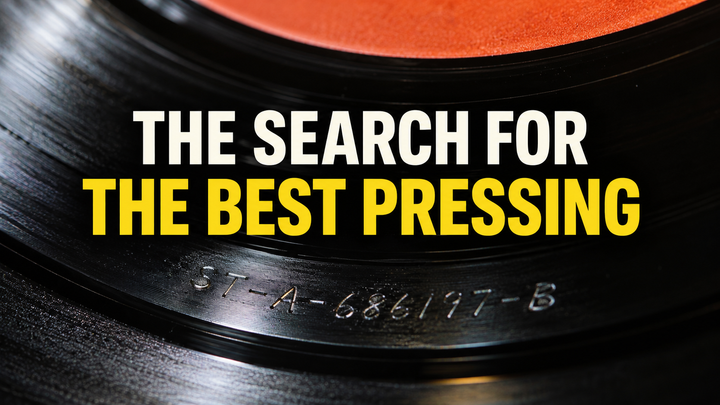
Check catalog numbers, label variations, matrix and runout information, and country of manufacture. The Discogs database can help, but individual listings still require scrutiny.
2. How accurately has the record been graded?
Examine photographs and descriptions. For expensive items, request additional information about audible wear, scratches, and playback condition.
3. Is the packaging complete and original?
This matters especially for box sets, promotional releases, and records with unusual inserts or sleeves.
4. What do comparable copies actually sell for?
An asking price doesn't establish market value. Recent sales of the same pressing in similar condition are more useful than unusually high listings.
5. What is the total cost?
International shipping, insurance, import duties, taxes, and return conditions can materially change the economics of a purchase.
There's also the question of authenticity.
Vinyl Latte previously explored a major counterfeit-record operation that generated millions in illegal sales.
That story involved a different market and different circumstances, but it reinforces an important point: identifying what you're actually buying matters.
When dealing with rare records, documentation and provenance are valuable.
So is patience.
Not every desirable record needs to be purchased the moment it appears.
How to Access the Beatles Collection
The sale begins Friday, October 30, 2026, through Discogs Drops.
Approximately 1,300 records from the larger collection are included in the initial offering.
The records will be available exclusively through Discogs for the first ten days.
Black Plastic Records will also provide in-store browsing and pickup opportunities in Dortmund, Germany.
For international buyers, that means the collection can be explored remotely rather than requiring a trip to Germany.
However, availability will depend on which records remain unsold when individual buyers visit the listings.
The organizers have not announced a verified overall valuation for the collection.
And the fact that a particular record is featured in the announcement doesn't establish its eventual selling price.
Discogs Drops / Official Beatles Collection Sale
Black Plastic Records / Official Store
What Happens When a Lifetime Collection Is Broken Apart?
There's one aspect of this sale that deserves more attention.
The original collector spent decades building something unusually comprehensive.
He wasn't simply acquiring the Beatles albums he enjoyed most.
He was assembling a collection that documented how the band's music appeared in different countries, formats, and editions.
Every acquisition represented another piece of that history.
Now those records will be distributed among new owners.
Some may end up in carefully maintained private archives.
Others will be played regularly, displayed, or eventually sold again.
And some may disappear from public view for another generation.
There's something bittersweet about that.
Collectors often imagine their collections as permanent works in progress, something they'll continue refining indefinitely.
But eventually, every collection faces a question its original owner may never have fully answered.
What happens next?
In this case, Black Plastic Records and Discogs are helping the records find new homes through a public marketplace.
That doesn't preserve the collection as a single archive.
But it does create an opportunity for individual records to continue their journeys with people who appreciate them.
And perhaps that's a fitting continuation of the story.
The Vinyl Latte Take: The Collection Is More Interesting Than the Prices
It's easy to focus on the most expensive or unusual Beatles records.
The promotional pressings. The early mono albums. The rare label variations.
Those are fascinating, and some will undoubtedly attract considerable attention.
But the real significance of this sale lies in its breadth.
Nearly 1,500 records assembled over decades by someone who understood that Beatles history extends far beyond the familiar album covers.
It's a reminder that collecting can be about discovery, documentation, and the stories hidden in physical objects.
An obscure Italian single might not have the same recognition as an original UK Please Please Me.
But it can reveal something equally interesting about how the Beatles reached listeners in another part of the world.
And for collectors who love that kind of detail, the historical significance can matter more than the price.
Whether you're considering a purchase or simply browsing the listings, this collection offers a rare opportunity to explore the Beatles' recorded history through the objects that helped carry their music around the world.
Sixty years later, there's apparently still more to discover.
Sources and Further Reading
Discogs and Black Plastic Records Sale Announcement
Discogs Drops Official Marketplace
Black Plastic Records Official Website
Billboard: Beatles for Sale, Discogs to List 1,300 Rare Beatles Records From Private Collection
Vinyl Latte: The Fake Vinyl Factory That Made £2.7 Million Selling Counterfeit Records
What would you choose? An original black-and-gold Parlophone Please Please Me, a complete Let It Be box set, or an unusual international pressing you've never seen before?
And if you've ever collected multiple pressings of the same album, what made you start?
Share your stories in the comments.
Comments ()