
Fyne Audio Built Just 30 Pairs of Its New Flagship Speaker. Here's What Makes It Different.
Only 30 pairs of Fyne Audio's $50,000 F1-10 Anniversary speakers will be made. Discover the innovative glass-diaphragm tweeter, SuperTrax technology, and engineering behind this exclusive Scottish flagship ahead of Capital Audiofest 2026.
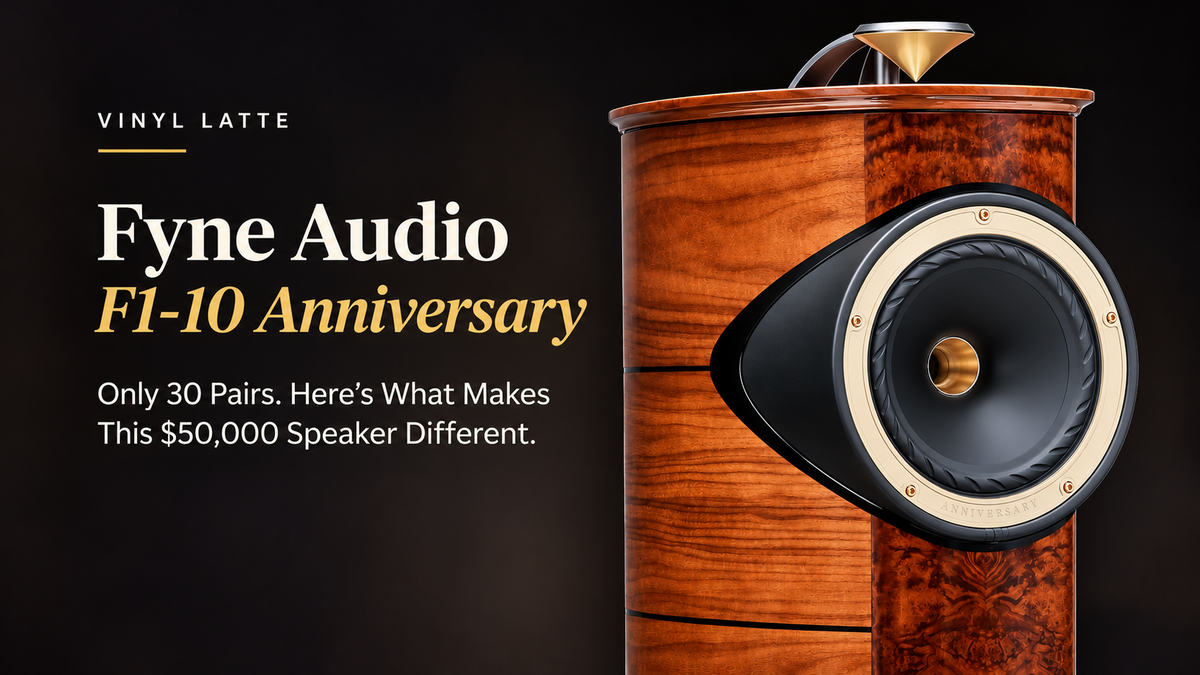
The $50,000 F1-10 Anniversary makes its North American debut at Capital Audiofest 2026, bringing a new glass-diaphragm tweeter, integrated supertweeter, and a decade of Scottish loudspeaker engineering.
Only 30 pairs will ever be made.
That's the headline-grabbing detail behind Fyne Audio's new F1-10 Anniversary loudspeaker, a $50,000 statement piece celebrating the Scottish manufacturer's first decade.
But the limited production run might be the least interesting thing about it.
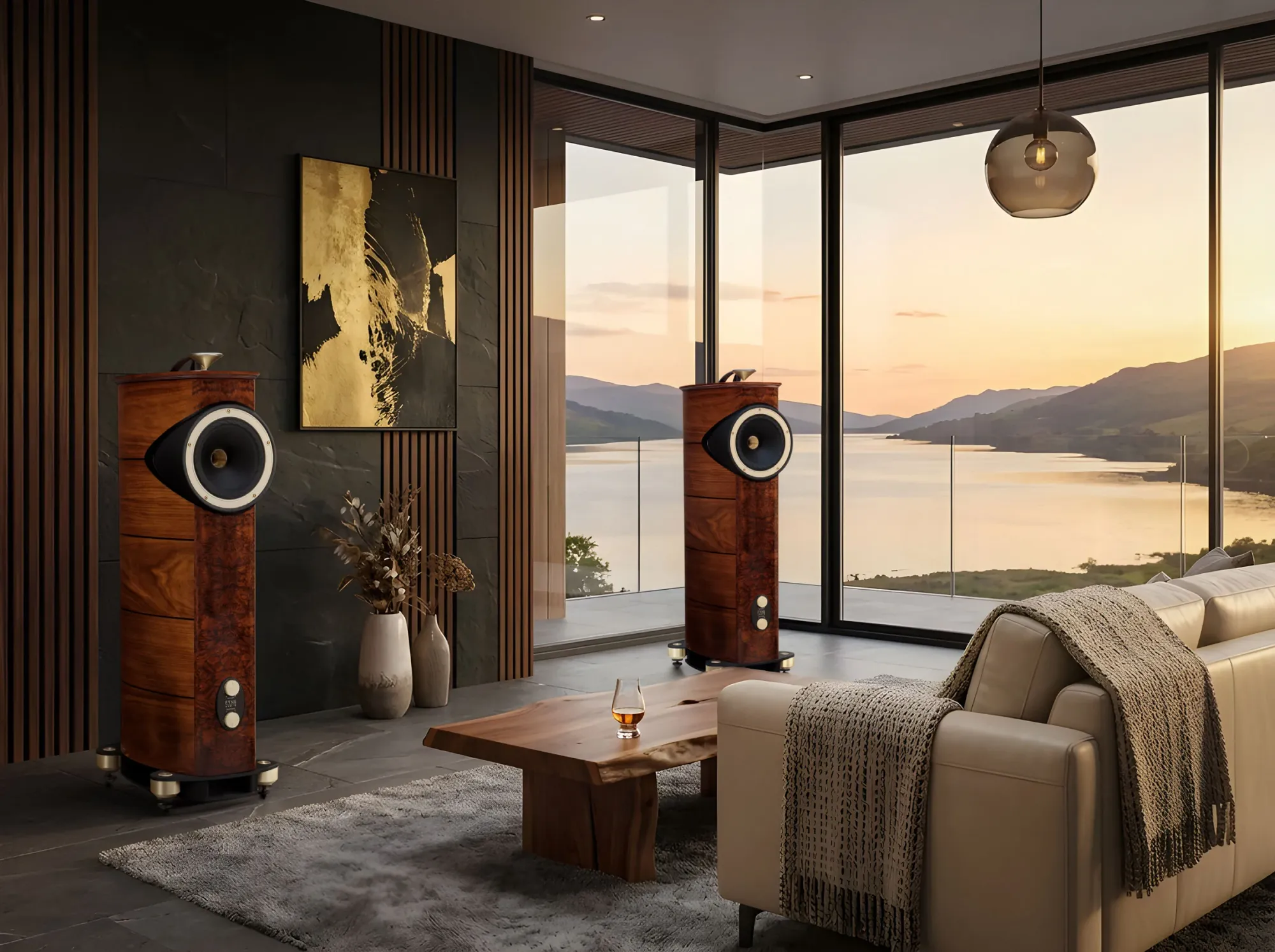
Beneath the polished walnut cabinet and champagne-gold accents, Fyne has introduced several significant engineering changes, including an unusual glass-diaphragm compression tweeter and a fully integrated version of its SuperTrax supertweeter.
Those developments could have implications beyond the 30 collectors who eventually own a pair.
And with the F1-10 Anniversary making its North American debut at Capital Audiofest, November 13–15, 2026, we're about to get a closer look at what Fyne has been working on.
The real question isn't whether a $50,000 loudspeaker can sound impressive.
It's whether the engineering behind this anniversary model represents a meaningful advance, and whether those ideas might eventually influence speakers that more listeners can afford.
The Speaker That Started Fyne Audio Gets Reimagined
Fyne Audio's story began with engineers bringing decades of loudspeaker experience into a new Scottish company.
The original F1-10, conceived in 2016 and launched in 2017, established the design language that would become central to the brand.
Its distinctive IsoFlare driver, substantial cabinet, and BassTrax bass dispersion system reflected a philosophy built around coherent sound radiation, room interaction, and traditional loudspeaker craftsmanship.
A decade later, Fyne has returned to that original flagship concept.
The F1-10 Anniversary retains the familiar 10-inch driver format and imposing floorstanding cabinet, but its internal engineering has changed considerably.
Rather than simply applying a commemorative badge to an existing design, Fyne has developed a new high-frequency driver, integrated additional ultrasonic-frequency reproduction, and revised the crossover architecture.
That makes this speaker worth examining even if its price places it well outside most audiophiles' budgets.
Why Is Fyne Using Glass for a Tweeter?
One of the most intriguing developments is hidden at the center of the speaker's main driver.
The F1-10 Anniversary uses a newly developed 75mm compression tweeter with an aluminosilicate glass diaphragm.
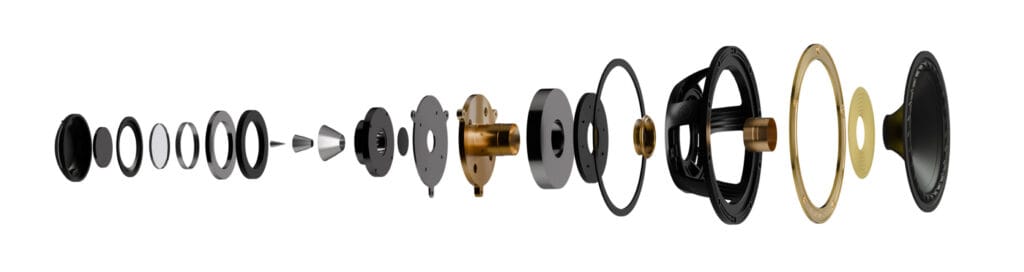
Glass might seem like an unusual material for a loudspeaker driver.
After all, most listeners associate it with something fragile, heavy, and potentially prone to ringing.
But the material's behavior depends heavily on its composition, thickness, shape, and treatment.
Fyne says its new diaphragm is exceptionally thin, chemically strengthened, and engineered to combine rigidity with improved resonance damping.
The company claims substantially greater resonance damping than typical metal domes, although that figure is a manufacturer specification rather than an independently verified listening result.
Why does this matter?
Every loudspeaker diaphragm has resonant behavior. When that behavior is insufficiently controlled, it can introduce coloration or unwanted energy into the reproduced sound.
The goal isn't simply to make a diaphragm as rigid as possible. Designers must balance mass, stiffness, damping, geometry, and the driver's intended operating range.
In the F1-10 Anniversary, the glass compression tweeter operates down to a 750Hz crossover point.
That means it contributes well below the highest treble frequencies, extending into a region containing important vocal and instrumental information.
If the new material delivers the intended reduction in unwanted resonance, the potential benefits could include improved clarity and more natural reproduction of complex musical passages.
But those benefits remain claims to evaluate through listening and measurement.
The choice of glass is interesting because it represents a meaningful material change from the titanium-dome compression tweeter used in the original F1-10.
And that isn't the only major departure.
A Supertweeter That Extends to 60kHz. Does That Actually Matter?
The F1-10 Anniversary introduces Fyne's first fully integrated SuperTrax system.
Its 25mm Thin Ply Carbon Diaphragm supertweeter fires upward into a specially shaped Tractrix diffuser, distributing high-frequency energy around the room.
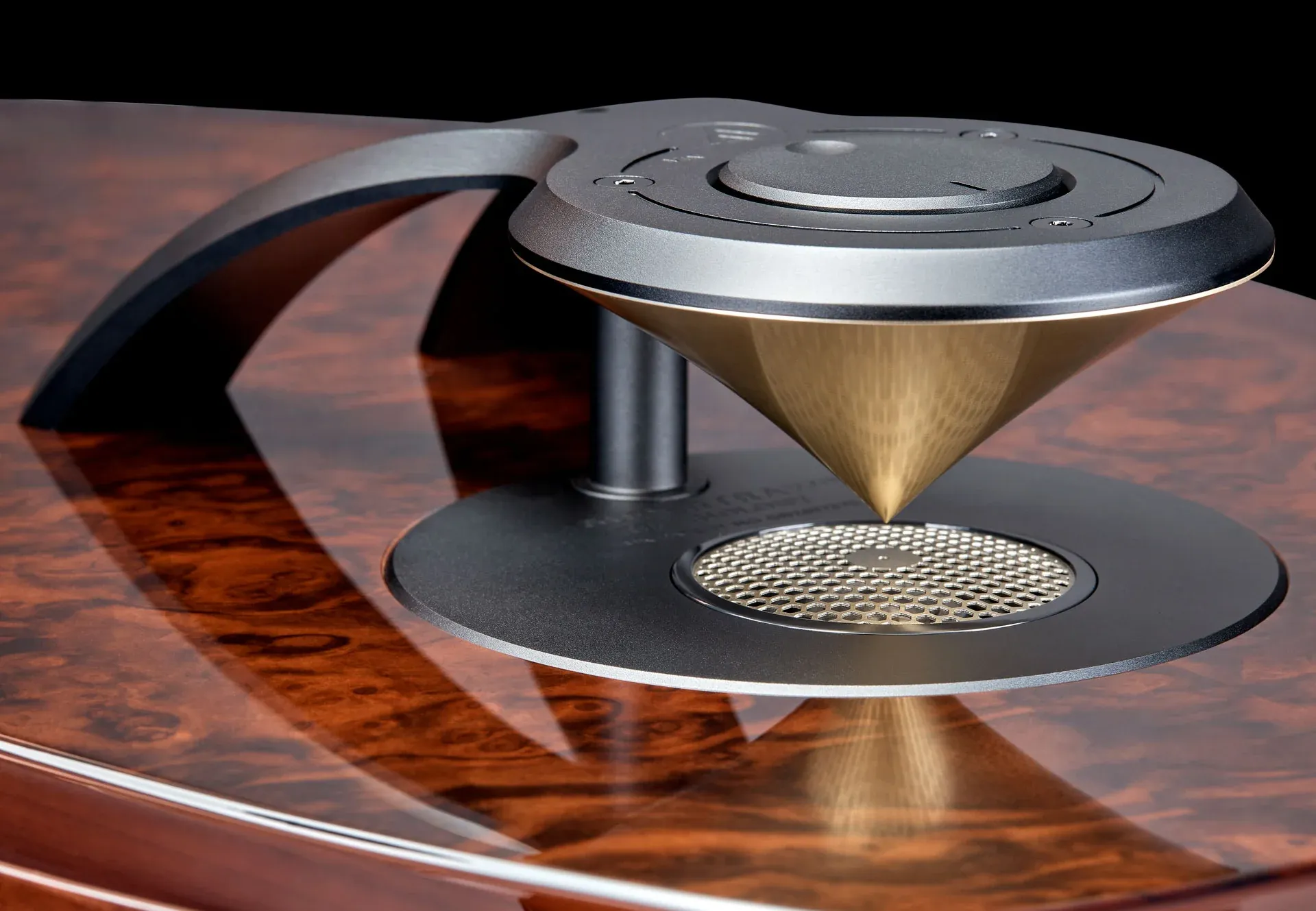
Fyne specifies an upper frequency response extending to 60kHz.
There's an obvious question here.
If human hearing generally tops out around 20kHz, and often considerably lower with age, why build a loudspeaker capable of reproducing frequencies far beyond that range?
The answer requires separating two different ideas.
The first is ultrasonic bandwidth.
A driver capable of reproducing energy above the audible range does not automatically produce better sound within it. A 60kHz specification, by itself, tells us very little about audible performance.
The second is dispersion and integration.
The SuperTrax system begins contributing around 16kHz, which overlaps the upper end of the conventional audible spectrum for some listeners.
Its upward-firing design and diffuser also change how high-frequency energy is distributed into the room.
That makes the system interesting from an acoustic perspective.
A loudspeaker's sound isn't determined solely by what travels directly from the drivers to the listener.
Reflections from walls, ceilings, and other surfaces contribute to the listening experience, influencing perceived spaciousness, tonal balance, and the relationship between direct and reflected sound.
Fyne argues that its SuperTrax arrangement helps preserve spatial information and creates a more open presentation.
Whether those effects are audible, beneficial, or dependent on the listening room is something that needs to be established through listening.
The most useful question isn't whether anyone can hear 60kHz.
It's whether the integration of the additional driver improves the speaker's behavior within the frequencies we actually hear.
That's a much more interesting engineering discussion.
The IsoFlare Driver Remains Central to the Design
At the heart of the F1-10 Anniversary is a 250mm, or approximately 10-inch, IsoFlare point-source driver.
Unlike a conventional speaker arrangement in which the tweeter sits above or below the midrange driver, the IsoFlare design positions its high-frequency unit concentrically within the larger driver.
The objective is to create a more unified acoustic source.
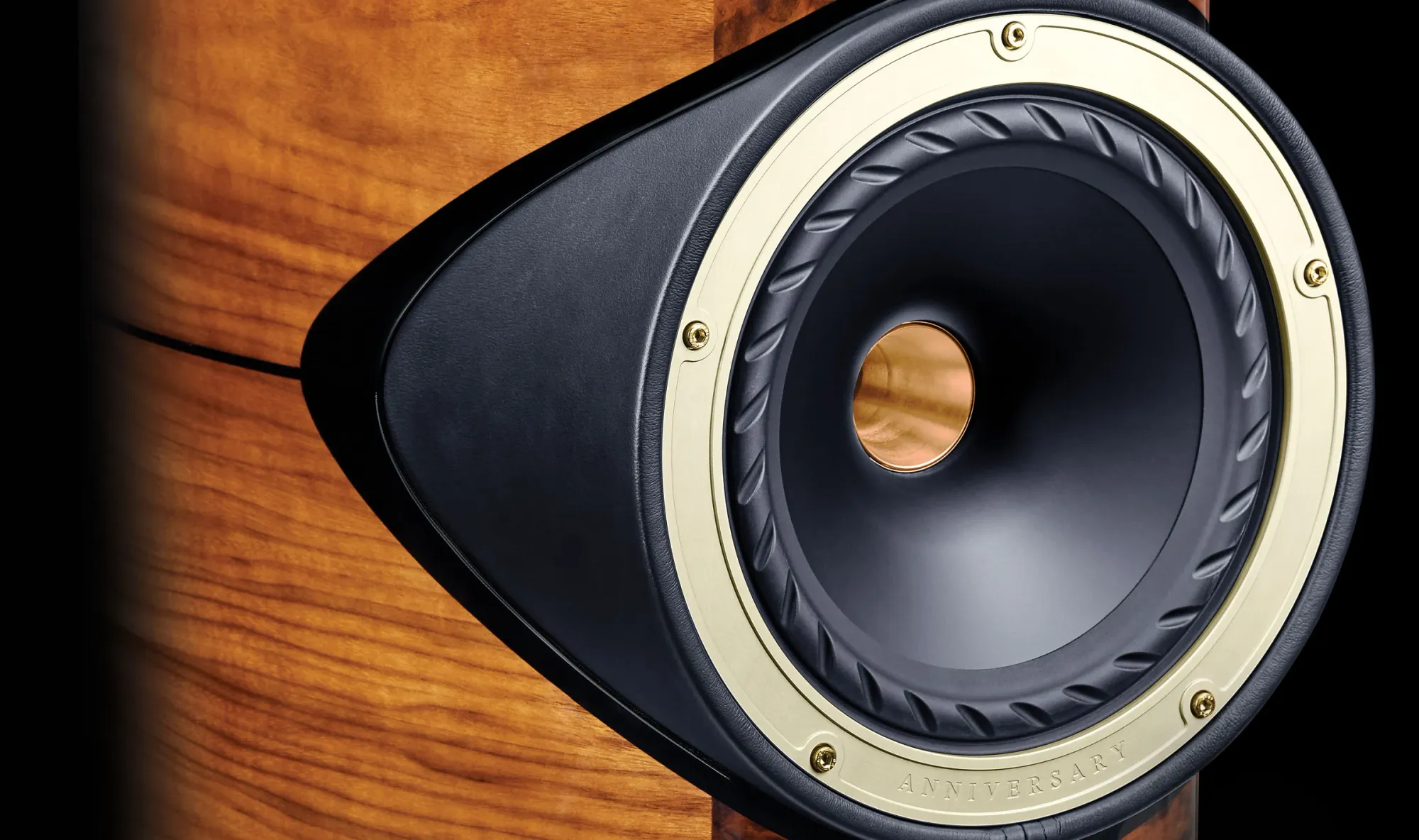
This approach can offer advantages in the relationship between drivers, particularly around their crossover region.
When sound from separate drivers reaches a listener at different times or angles, their interaction can produce variations in frequency response and dispersion.
A concentric arrangement offers designers another way to manage those relationships.
However, coaxial geometry doesn't automatically guarantee perfect time alignment, uniform dispersion, or superior imaging.
The results depend on the driver construction, crossover, cabinet, and implementation.
Fyne's revised IsoFlare system is therefore important not simply because it uses a familiar driver arrangement, but because the company has changed the compression tweeter operating inside it.
Combined with the new SuperTrax system, the F1-10 Anniversary is effectively a three-way design built around a large concentric main driver and an additional high-frequency radiator.
That combination is unusual enough to make the speaker stand out technically, even before considering its limited production.
What About the Bass?
The F1-10 Anniversary retains another recognizable Fyne technology: BassTrax.
This system uses a downward-firing port and a Tractrix-profile diffuser to distribute low-frequency output.
Rather than directing port energy straight toward a rear wall or directly into the listening room from a conventional front-facing opening, the design redirects it through the diffuser.
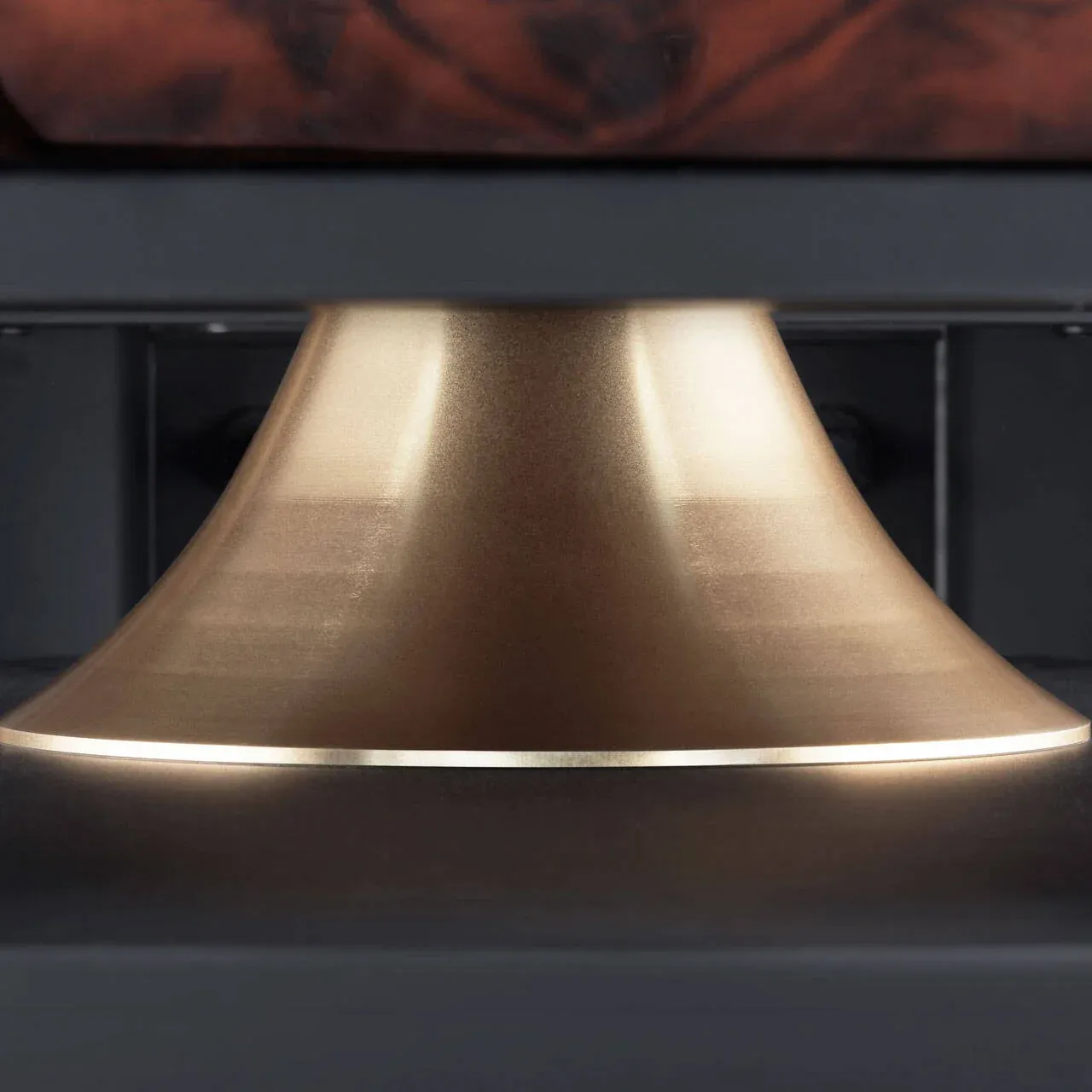
Fyne's objective is more consistent bass distribution and greater flexibility in room placement.
That doesn't mean room acoustics suddenly stop mattering.
At low frequencies, speaker placement, listening position, room dimensions, and modal behavior remain critical.
A sophisticated bass port cannot eliminate standing waves or guarantee smooth bass response in every room.
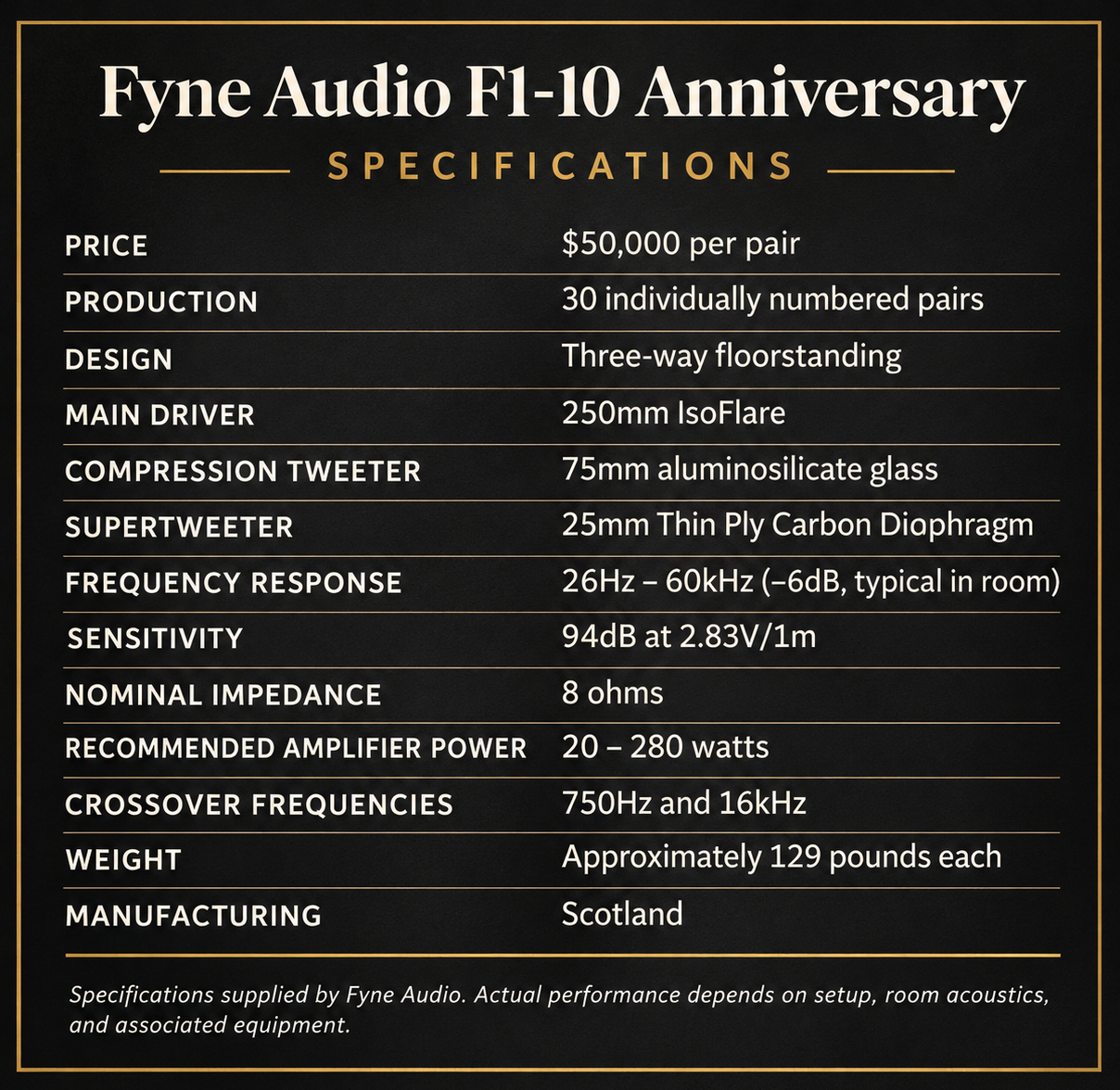
Fyne specifies an in-room frequency response extending down to 26Hz at the minus 6dB point.
That's substantial extension for a passive floorstanding loudspeaker, although the specification alone doesn't tell us how the bass will behave in a particular room.
For me, one of the most interesting things to investigate at Capital Audiofest will be whether the speaker delivers bass that feels controlled and articulate rather than simply powerful.
That distinction matters far more than a single frequency-response number.
Fyne Audio F1-10 Anniversary: Specifications
Could a 94dB Speaker Work With a Modest Amplifier?
One specification that deserves attention is the F1-10 Anniversary's claimed 94dB sensitivity.
That's relatively high for a modern floorstanding loudspeaker.
Sensitivity describes how much sound pressure a speaker produces under a defined measurement condition.
In general, a more sensitive loudspeaker requires less amplifier power to achieve the same sound pressure level than a less sensitive design, assuming comparable measurement conditions.
Fyne rates the Anniversary at 94dB with a 2.83V input measured at one meter.
The speaker also carries a nominal impedance rating of 8 ohms.
On paper, that combination suggests compatibility with a wide range of amplifiers, including some lower-powered tube designs.
Fyne recommends amplifiers rated between 20 and 280 watts.
But sensitivity isn't the entire story.
Impedance variations, phase angle, room size, listening distance, and desired playback levels all influence amplifier requirements.
A speaker can be highly sensitive and still present a challenging electrical load at particular frequencies.
Without independent impedance measurements, it would be premature to describe the F1-10 Anniversary as universally easy to drive.
Still, its sensitivity makes the design interesting because it offers an alternative to loudspeakers that depend on very powerful amplification to reach realistic listening levels.
The Details Beyond the Drivers
Fyne has also paid considerable attention to the parts of the loudspeaker that receive less attention in marketing headlines.
The Anniversary uses a revised passive crossover with premium components and cryogenic treatment.
It includes ClarityCap polypropylene capacitors, Neotech internal wiring, and WBT Nextgen terminals.
The cabinet is constructed from extensively braced birch plywood with solid wood detailing and a high-gloss walnut finish.
Fyne also provides three adjustable controls, allowing changes to high-frequency energy, presence, and supertweeter output.
Those controls are particularly interesting.
A loudspeaker that sounds balanced in one room may behave differently in another, and controlled adjustments can offer a useful way to accommodate acoustics and personal preference.
The presence adjustment operates between approximately 2.5kHz and 5kHz, a region that can strongly influence perceived vocal clarity and instrumental presence.
The high-frequency and supertweeter adjustments offer additional flexibility.
Of course, these controls are not substitutes for proper placement or room treatment.
But their inclusion acknowledges an important reality: loudspeakers don't operate in isolation.
As for the cryogenic treatment, Fyne describes it as part of its crossover optimization process. Whether that treatment produces an independently measurable or audible improvement in this particular design has not been established here.
That's an important distinction when evaluating any manufacturer's technical claims.
Only 30 Pairs. But Is This Really a Collector's Speaker?
The F1-10 Anniversary is limited to 30 individually numbered pairs worldwide.
Each pair includes anniversary documentation, a signed approval certificate, and special accessories.
The walnut finish and champagne-gold accents reinforce its status as a commemorative product.
There is clearly a collector's element to the release.
But unlike limited-edition records, which can sometimes differ only in vinyl color or packaging, the F1-10 Anniversary introduces substantive changes to the underlying product.
The new compression tweeter and integrated SuperTrax system distinguish it from the original F1-10.
That doesn't automatically justify the price, nor does a production limit guarantee future collectibility.
The more interesting question is whether these engineering developments will eventually appear elsewhere in Fyne's lineup.
Manufacturers frequently use flagship products to introduce technologies that later become available in more accessible models.
Fyne has positioned the Anniversary as an expression of its future engineering direction.
If some of these innovations migrate into less expensive loudspeakers, the significance of the F1-10 Anniversary could extend well beyond its 30 owners.
Capital Audiofest Will Be the First Real Test for Many Listeners
The F1-10 Anniversary is scheduled to make its North American debut at Capital Audiofest 2026, held November 13–15 at the Hilton Rockville in Maryland.
The demonstration is scheduled for the Truman ballroom.
Vinyl Latte will be attending Capital Audiofest, and this is one of the speakers I'm particularly interested in hearing.
There are several things I'll be listening for.
First, vocal coherence.
The new glass compression tweeter operates unusually low in frequency, making its integration with the main driver especially interesting.
Second, spatial presentation.
The SuperTrax system is intended to influence high-frequency dispersion and perceived spaciousness. I'll be interested in whether that translates into a convincing soundstage rather than simply additional brightness or air.
Third, bass control.
With a large driver and substantial claimed extension, the question is whether the F1-10 Anniversary can deliver both scale and definition.
And finally, musical engagement.
A loudspeaker can impress with detail, dynamics, and spectacular imaging, yet still struggle to make music feel natural and emotionally convincing.
That last quality is difficult to capture in a specification sheet.
It is also one of the most important reasons to listen.
Of course, a show demonstration isn't a substitute for a controlled review. Room acoustics, equipment matching, and setup can significantly influence the result.
Any impressions from Capital Audiofest will need to be understood within those limitations.
For more on the event and the equipment expected to appear, see Vinyl Latte's earlier coverage: Capital Audiofest 2026: New Hi-Fi Gear Preview.
The Bigger Story Behind Fyne's Anniversary Speaker
It's easy to dismiss a $50,000 loudspeaker limited to 30 pairs as an exercise in exclusivity.
And for most music lovers, that's exactly what it will remain: an extraordinary piece of equipment they'll probably never own.
But focusing exclusively on the price misses what makes this particular release interesting.
Fyne Audio has used its anniversary to introduce a new compression tweeter material, integrate an additional high-frequency system, and further develop the loudspeaker architecture that helped establish the company.
Those are engineering decisions worth examining.
They also raise questions that matter well beyond this model.
How much does diaphragm material influence audible coloration? Can an additional supertweeter improve spatial reproduction? How effectively can a large concentric driver integrate with an ultrasonic-frequency radiator? And how much of a loudspeaker's final performance depends on the room rather than the hardware itself?
These are questions that make high-fidelity audio interesting, regardless of budget.
The F1-10 Anniversary might be a collector's item.
But the technologies inside it are the real story.
We'll be listening closely at Capital Audiofest.
Would you rather see manufacturers develop ambitious flagship speakers like this, or focus their engineering resources on bringing better sound to more affordable products? Share your thoughts in the comments.
Learn More
Fyne Audio F1-10 Anniversary: Official Product Information
Capital Audiofest: Official Website
About Vinyl Latte
Vinyl Latte is an independent publication covering music, vinyl records, high-fidelity audio, and the people and technology behind the listening experience.
Subscribe to Vinyl Latte for original reporting, artist interviews, equipment reviews, and firsthand coverage from Capital Audiofest 2026.
Comments ()