
Capital Audiofest 2026 Day 1: $3.8 Million Hi-Fi, Swiss Precision, and Reel-to-Reel
Day 1 of Capital Audiofest 2026 delivered a nearly $3.8 million hi-fi system, Swiss analog innovation, and a $55,000 reel-to-reel tape deck. Vinyl Latte explores three standout demonstrations.
Friday, November 13, 2026 | Rockville, Maryland
The first day of Capital Audiofest 2026 has wrapped up, and one thing is already clear: the pursuit of better sound can take some radically different directions.
Walking through the Hilton Rockville on Friday, I encountered everything from extraordinarily expensive loudspeaker systems to sophisticated Swiss analog electronics and a brand-new reel-to-reel tape machine. Some manufacturers are pushing the boundaries of modern engineering, while others are finding new ways to develop technologies that have existed for decades.
With dozens of listening rooms spread across the show, attempting to declare a winner after a single day would be premature. Show conditions, room acoustics, music selections, and limited listening time make meaningful comparisons difficult.
Instead, here are three exhibits from my Friday visits that deserve a closer look, not simply because of their prices, but because of the different approaches they take to reproducing recorded music.
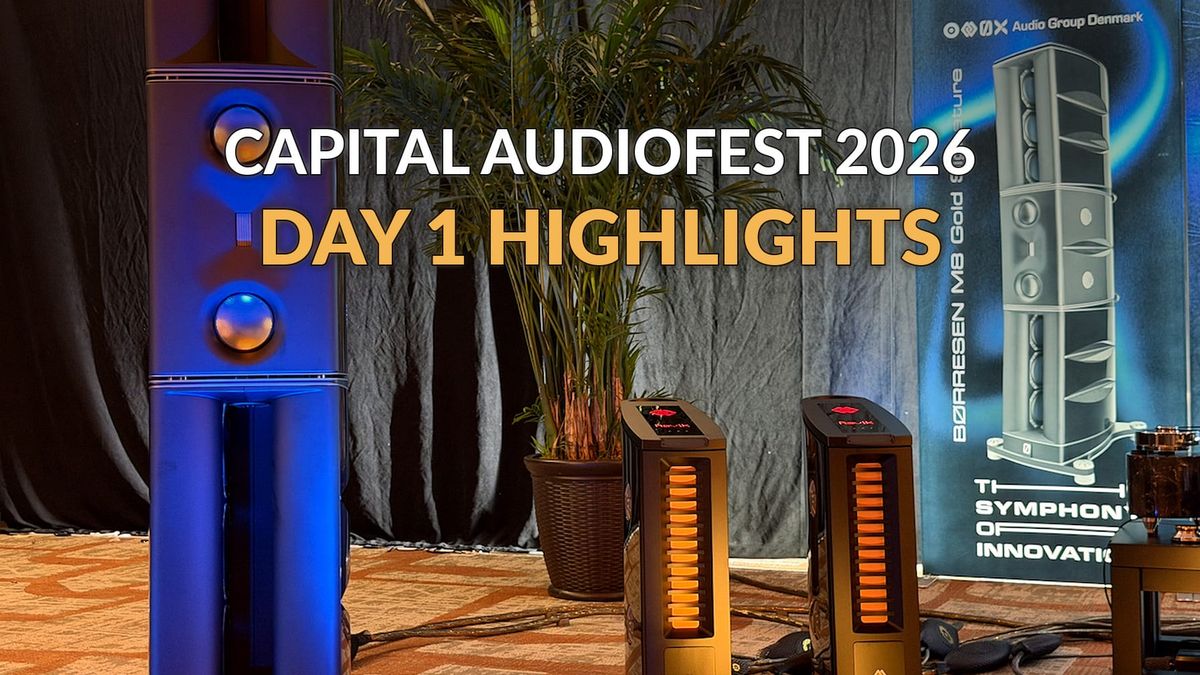
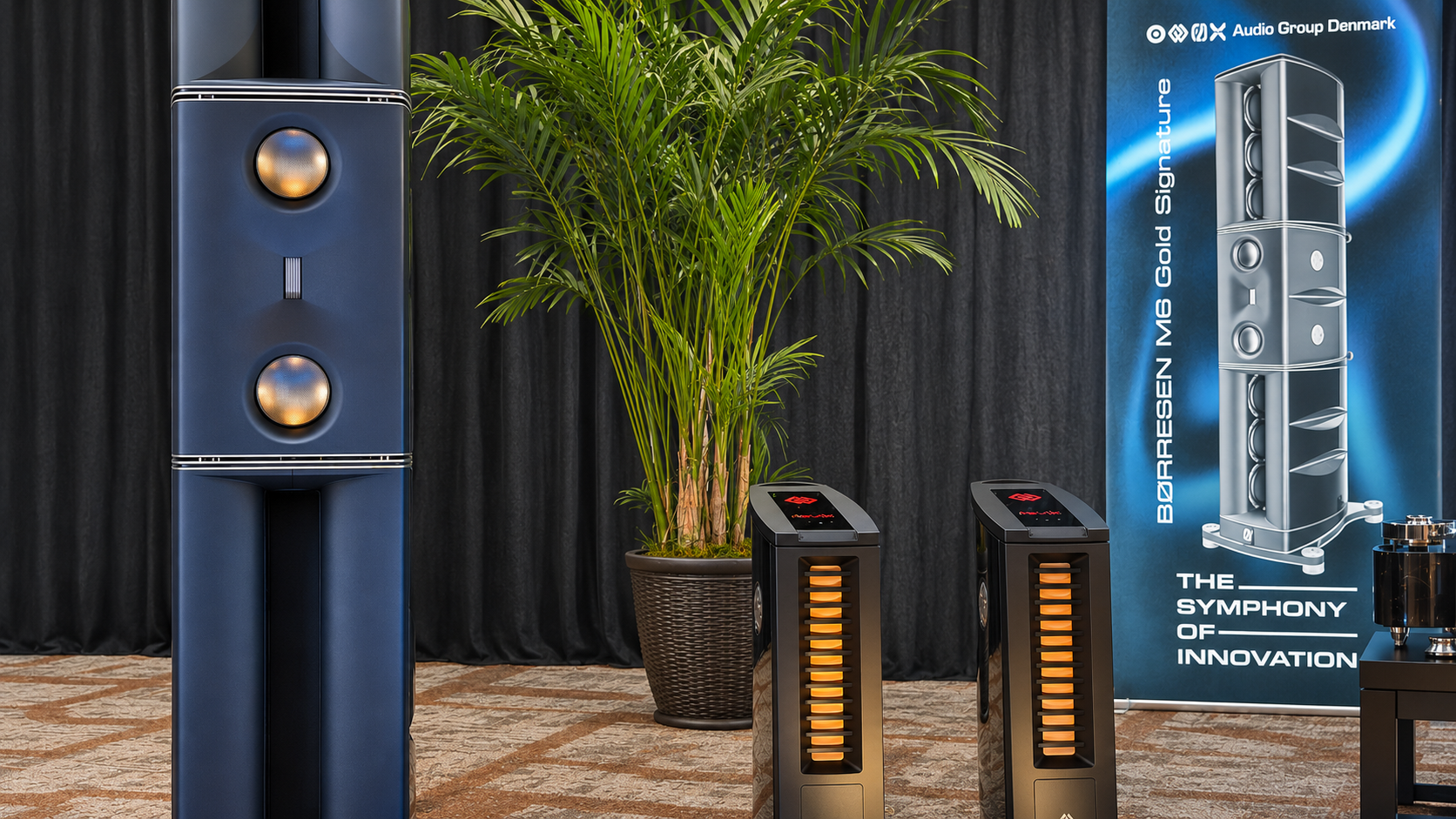
1. Blink High End: What Does a Nearly $3.8 Million Audio System Look Like?
Location: Plaza Ballroom I
If there were an award for sheer ambition, Blink High End would certainly be a contender.
Its demonstration centered on the Børresen M8 Gold Signature loudspeakers, making their American premiere at Capital Audiofest. The speakers alone carry a listed price of $1,150,000 per pair.
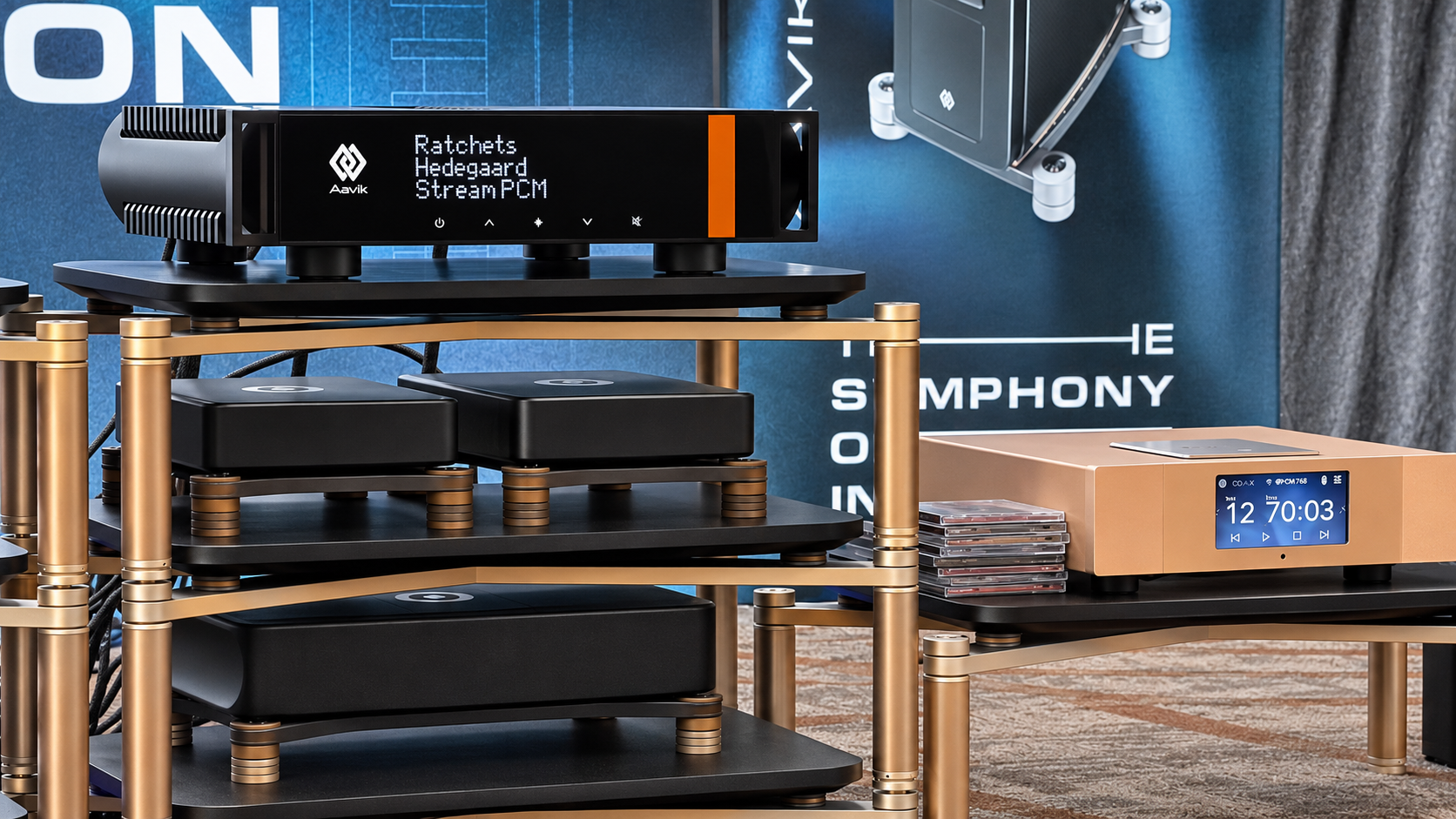
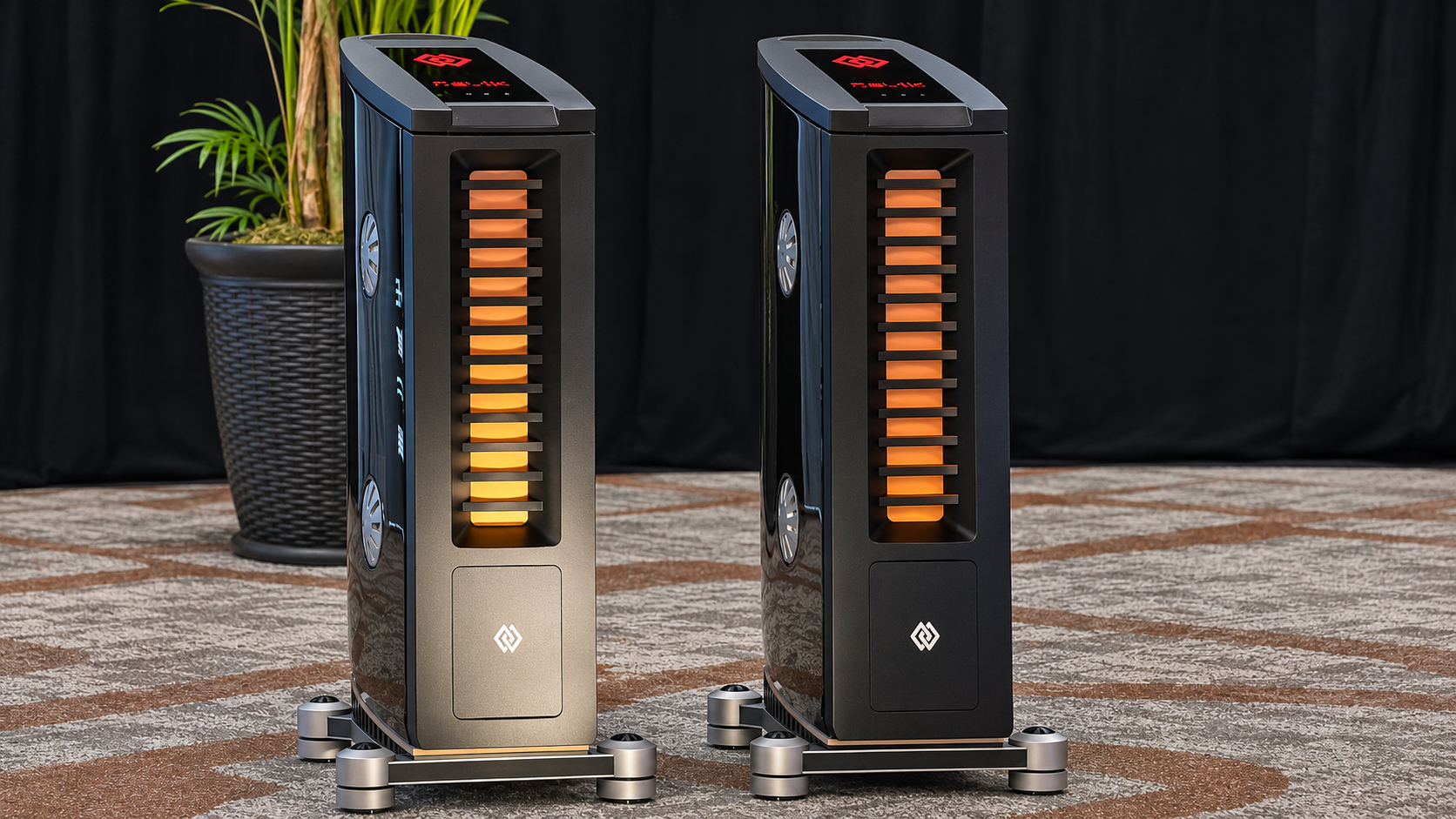
Driving them were four Aavik M-880 monoblock amplifiers, each listed at $115,000, bringing the amplification investment to $460,000 before accounting for any other electronics.
The supporting system was equally ambitious:
- Loudspeakers: Børresen M8 Gold Signature, $1,150,000 per pair
- Amplification: Four Aavik M-880 monoblocks, $460,000 combined
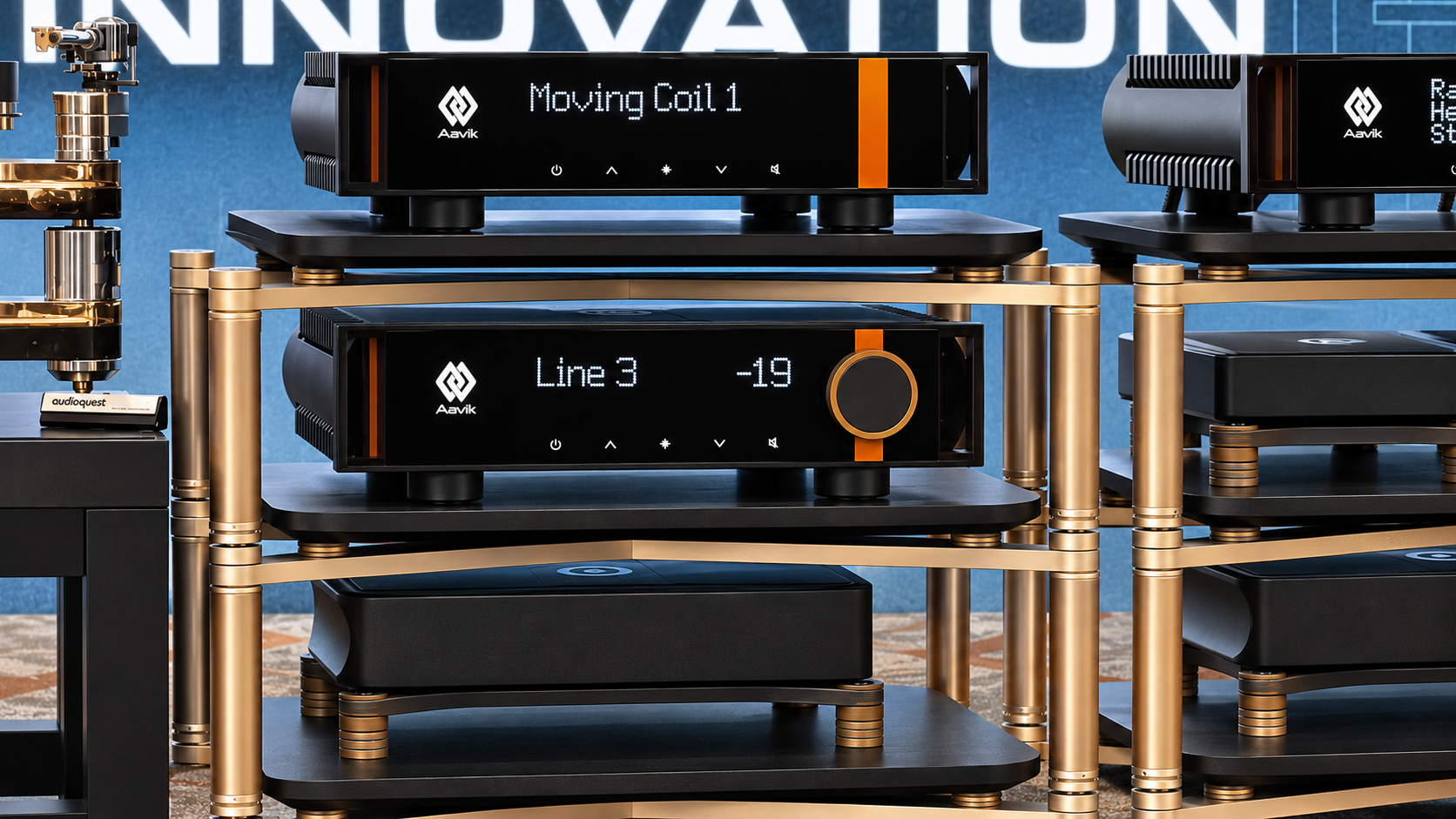
- Preamplifier: Aavik C-880
- Streaming/DAC: Aavik SD-880
- Phono stage: Aavik R-880
- Analog playback: Thuono TH-400 turntable with Ortofon Verismo MC cartridge
- Cabling, power, and resonance control: Ansuz Gold Signature components
According to the room's detailed retail pricing sheet, the complete configuration approached $3.8 million.
That figure naturally attracts attention. But the more interesting question is what such an extreme system is trying to accomplish.
At this level, manufacturers are pursuing extremely small improvements in noise, distortion, mechanical resonance, signal transmission, and loudspeaker behavior. The system also illustrates how extensively a high-end manufacturer can approach the entire playback chain, rather than concentrating on speakers and amplification alone.
The Ansuz accessories and cabling represent a substantial portion of the system's stated cost, inviting questions about how much each part contributes to the final presentation.
And that is precisely why rooms like this are fascinating.
They offer an opportunity to experience a manufacturer's most ambitious ideas without immediately requiring a decision about whether those ideas represent sensible purchasing choices.
A system approaching $3.8 million deserves serious scrutiny, not automatic praise because of its price.
2. Alma Music & Audio: FM Acoustics Returns With an Intriguing Analog Approach
Location: Room 850
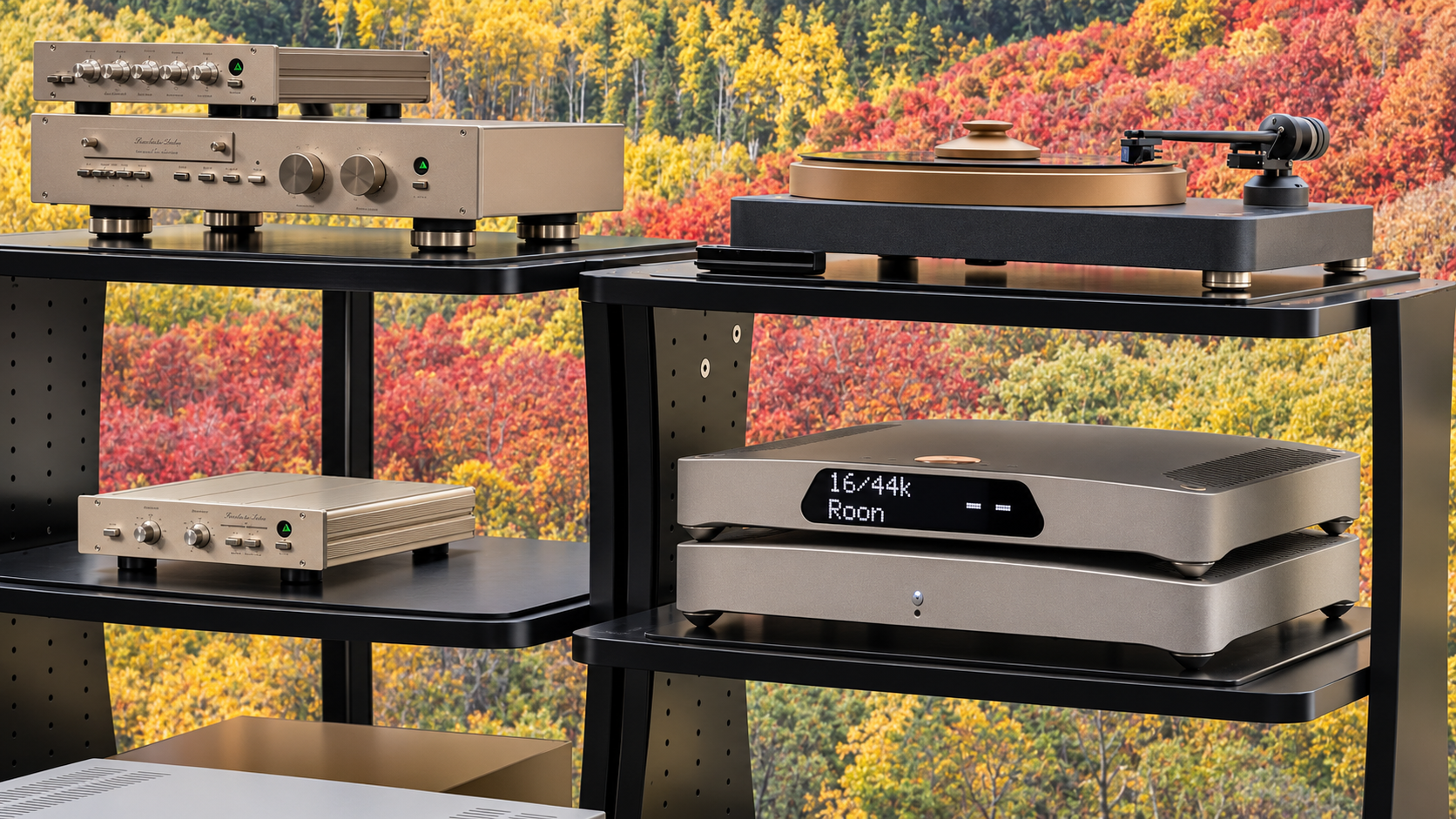
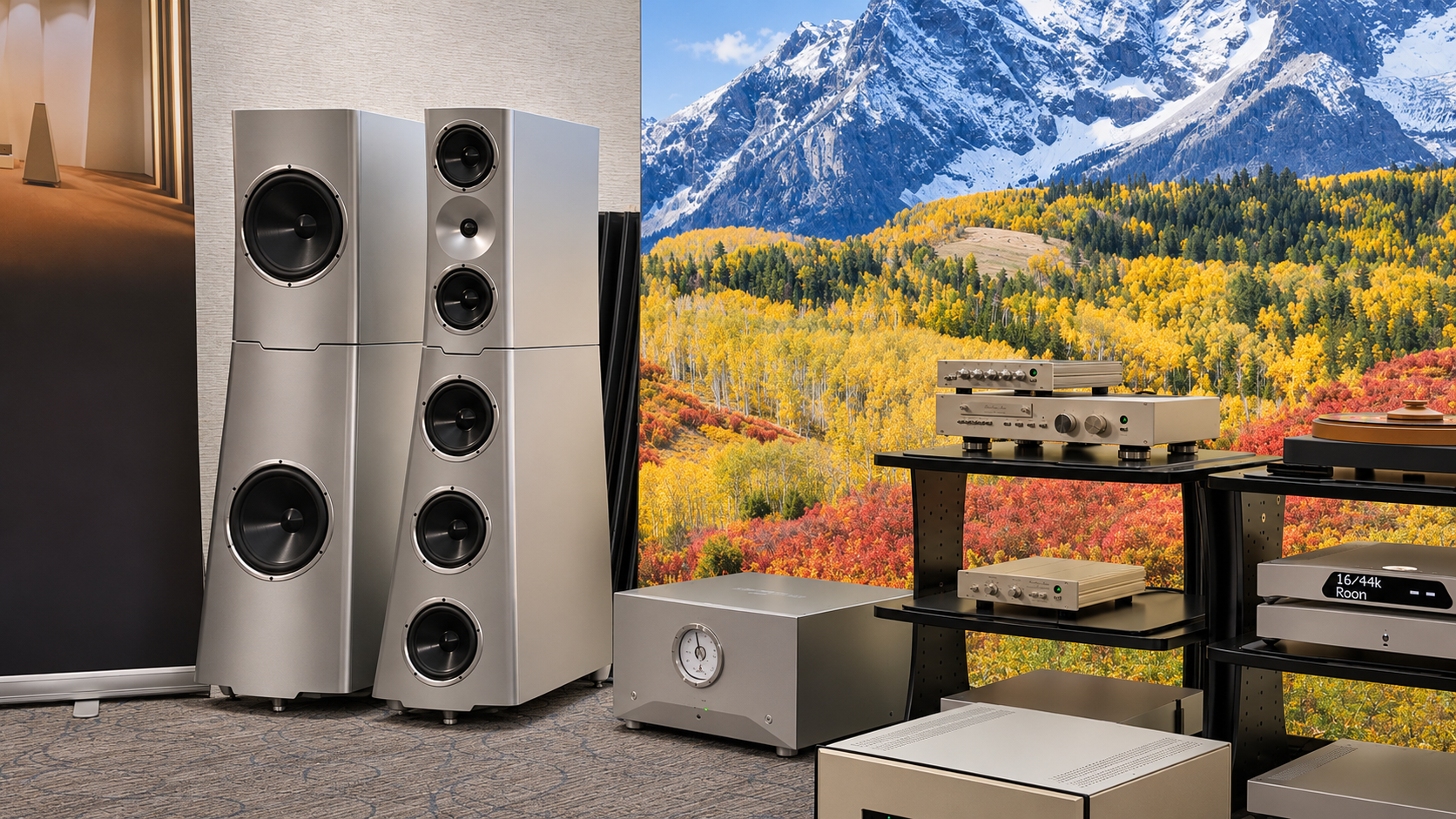
One of the more technically interesting stops on Friday was Alma Music & Audio's demonstration featuring FM Acoustics and YG Acoustics.
The system paired the imposing YG Acoustics XV Studio 3 loudspeakers, listed at $314,000, with electronics from Swiss manufacturer FM Acoustics.
The equipment lineup included:
- Loudspeakers: YG Acoustics XV Studio 3, $314,000
- Power amplification: FM Acoustics FM 411 MKIII
- Preamplifier: FM Acoustics FM 256-RC
- Phono stage: FM Acoustics FM 223
- Harmonic Linearizer: FM Acoustics FM 133, $39,900
- Turntable: Thales Reference with Statement tonearm
- Cartridge: Hana Umami Black MC
- Digital conversion: MSB Technology Cascade DAC
FM Acoustics' return to the American market is noteworthy in itself. But the component that particularly caught my attention was the FM 133 Harmonic Linearizer.
Unlike conventional digital room correction, the FM 133 is designed to address perceived shortcomings in recordings themselves.
According to FM Acoustics, the component uses an entirely analog signal path and an additive and subtractive correction system intended to compensate for certain recording or mastering problems.
The manufacturer says the design allows adjustments without routing the original audio signal through conventional equalization circuitry.
Those are ambitious claims, and determining their audible significance would require careful comparison.
Nevertheless, the underlying idea is intriguing.
Audiophiles frequently debate whether playback equipment should reproduce a recording as faithfully as possible or provide some degree of adjustment for recordings that are less than ideal.
The FM 133 sits directly in the middle of that discussion.
Can an analog device make difficult recordings more enjoyable without undermining the qualities that make a revealing playback system worthwhile?
It is a question I would like to explore further.
Combined with the YG loudspeakers, Thales analog front end, and MSB digital conversion, Alma's exhibit provided an interesting look at a system assembled around highly specialized components rather than a single manufacturer's ecosystem.
3. United Home Audio and MBL: Reel-to-Reel Refuses to Disappear
Location: Twinbrook Room
For readers who love physical music formats, the United Home Audio and MBL demonstration offered something particularly appealing.
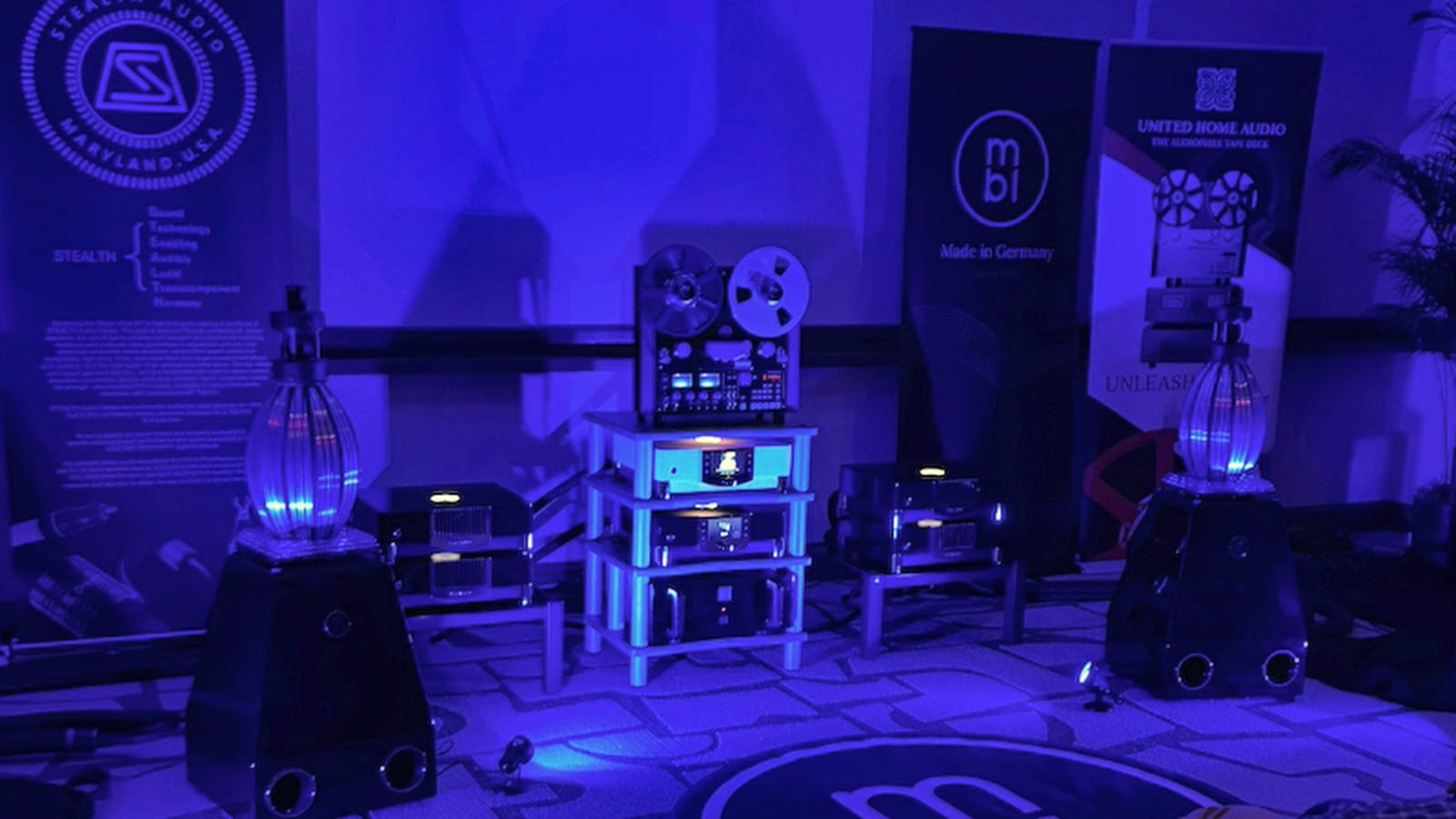
The centerpiece was the new UHA Apollo-Z reel-to-reel tape deck, listed at $55,000.
United Home Audio's presentation describes the machine as incorporating a newly developed UHA-Z tape head, dual-mono Class A electronics, and a dedicated outboard DC power supply.
Sharing the spotlight were MBL's visually distinctive 101 E MKII Radialstrahler loudspeakers, listed at $96,100 per pair.
Unlike conventional forward-firing loudspeakers, the MBL design uses omnidirectional radiation to distribute sound around the listening space.
The advertised system included:
- Tape deck: United Home Audio Apollo-Z, $55,000
- Loudspeakers: MBL 101 E MKII Radialstrahler, $96,100 per pair
- Preamplifier: MBL N11, $19,290
- Amplification: Four MBL N15 mono amplifiers, listed at $22,670 each
- Digital source: MBL N41 CD/DAC streamer
This is a fascinating pairing because it combines two very different engineering philosophies.
The Apollo-Z builds upon the long-established concept of magnetic tape reproduction, while MBL's loudspeakers take an unconventional approach to how sound is distributed throughout a room.
Reel-to-reel has never completely disappeared from the audiophile world, but machines like the Apollo-Z demonstrate that some manufacturers still see considerable room for development.
Of course, there are practical considerations.
At $55,000 for the deck alone, this is not an accessible alternative to a turntable or network streamer. Prerecorded tape availability, storage, maintenance, and the cost of acquiring recordings are also important factors.
But those limitations do not diminish the significance of continued innovation in the format.
For collectors accustomed to debating vinyl pressings, mastering differences, and the quality of analog sources, a modern reel-to-reel machine raises another interesting question:
How much of the original recording experience can a carefully engineered tape playback system preserve?
It is one of the more compelling subjects to investigate at this year's show.
Three Systems, Three Very Different Philosophies
What makes Capital Audiofest interesting isn't simply the opportunity to hear equipment that most people will never own.
It is the chance to see how differently manufacturers approach the same fundamental challenge.
Blink High End's Børresen and Aavik demonstration represents the pursuit of performance through an extremely ambitious, extensively integrated system.
Alma Music & Audio's FM Acoustics demonstration explores sophisticated analog electronics, including the possibility of addressing imperfections in existing recordings.
United Home Audio and MBL remind us that established technologies such as magnetic tape and unconventional loudspeaker designs still have dedicated engineering communities behind them.
None of these approaches should be assumed superior simply because of their complexity, rarity, or price.
And none can be fully evaluated in a brief hotel-room listening session.
For me, the value of these demonstrations lies in discovering which ideas deserve a more careful investigation beyond the show floor.
More Capital Audiofest Coverage Is Coming
Friday provided an interesting introduction to Capital Audiofest 2026, but there is still plenty of equipment, music, and conversation to explore.
Vinyl Latte is attending throughout the weekend, covering notable new products, interesting listening rooms, analog playback, and the technologies shaping high-end audio.
Expect more observations and video coverage as the event continues.
Capital Audiofest 2026 runs through Sunday, November 15, at the Hilton Rockville in Rockville, Maryland.
If you enjoy independent audio journalism and firsthand event coverage, consider supporting Vinyl Latte. Your support helps make continued reporting, equipment evaluations, and music coverage possible.
Comments ()