
Capital Audiofest 2026 Day 2: From Open-Baffle Speakers to Six-Figure Sound
Day 2 of Capital Audiofest 2026 explores Clayton Shaw's open-baffle speakers, Margules' affordable Magenta series, Vitus and Estelon, and a six-figure VAC and Magico system.
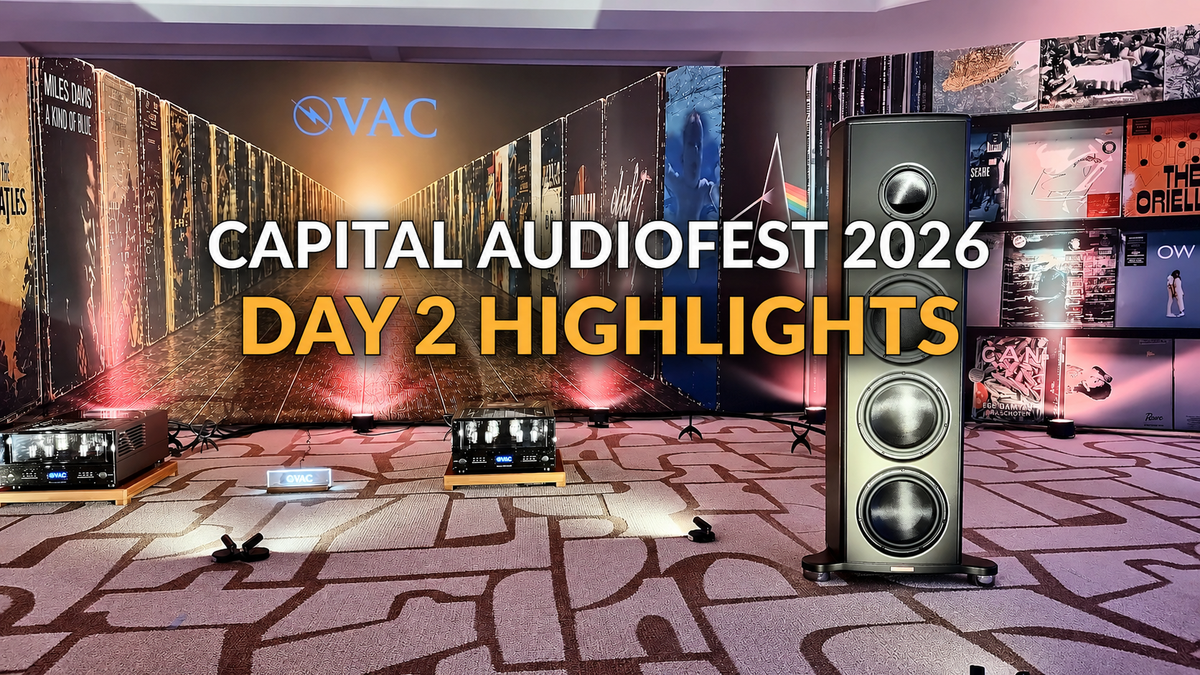
Saturday, November 14, 2026 | Rockville, Maryland
How much do you really need to spend to experience exceptional sound?
It's a question that becomes increasingly difficult to answer when walking through Capital Audiofest, where one room might feature a relatively attainable system built around a few thousand dollars' worth of loudspeakers, while the next contains equipment costing more than most people's homes.
Following Friday's exploration of a nearly $3.8 million Børresen and Aavik system, FM Acoustics' sophisticated analog electronics, and United Home Audio's $55,000 reel-to-reel tape deck, the second day of Capital Audiofest 2026 offered an opportunity to consider a different side of high-end audio.
Rather than concentrating exclusively on extravagant systems, I wanted to explore what manufacturers are accomplishing at opposite ends of the pricing spectrum.
Four demonstrations stood out as particularly interesting subjects: Clayton Shaw Acoustic Lab with Black Ice Audio, Margules' new Magenta series, Estelon paired with Vitus Audio, and Magico's formidable S7 loudspeakers driven by VAC electronics.
Their approaches differ considerably, but each raises worthwhile questions about loudspeaker design, amplification, engineering priorities, and what constitutes genuine value in high-end audio.
This is the second installment in Vinyl Latte's Capital Audiofest 2026 coverage. If you missed Friday's report, you can read it here:
https://blog.vinyllatte.com/capital-audiofest-2026-day-one-highlights
1. Clayton Shaw and Black Ice Audio: Challenging Conventional Loudspeaker Design
Room 608 | Clayton Shaw Acoustic Lab, Black Ice Audio, and Anticables
Most loudspeakers follow a familiar formula: drivers mounted in an enclosed cabinet, with the enclosure playing an important role in controlling the rear radiation of the drivers.
Clayton Shaw has spent decades exploring a different approach.
His work with open-baffle loudspeakers challenges the assumption that conventional enclosures are necessary to achieve compelling full-range reproduction.
Instead of enclosing the rear of the drivers, an open-baffle design allows sound to radiate both forward and backward. The resulting dipole radiation pattern creates different interactions with the listening room, potentially reducing certain sidewall reflections while introducing its own placement and bass-reproduction challenges.
The approach is hardly new, but relatively few manufacturers have embraced it as their primary design philosophy.
That makes Shaw's continued commitment particularly interesting.
His current Caladan Gen 2 loudspeakers start at $3,950 per pair, placing them within reach of enthusiasts who might otherwise be considering conventional floorstanding speakers from established brands.
The Caladan design incorporates two 12-inch bass/midrange drivers and a silk-dome tweeter mounted on a substantial hardwood baffle. The published sensitivity rating is 93 dB, making amplifier matching an interesting consideration.
At Capital Audiofest, Clayton Shaw Acoustic Lab shared Room 608 with Black Ice Audio and Anticables.
Black Ice Audio's emphasis on vacuum tube electronics makes the collaboration particularly intriguing. It brings together an unconventional loudspeaker philosophy with an amplification brand that has continued developing tube-based designs for contemporary listening systems.
But the most interesting question isn't whether open-baffle speakers sound different. Their radiation pattern virtually guarantees that they will interact with a room differently from traditional box speakers.
The question is whether those differences translate into a more convincing musical presentation in a typical home.
Open-baffle designs also involve practical compromises. Bass cancellation, speaker positioning, and the amount of space behind the speakers all matter.
For listeners willing to experiment with placement, however, the approach deserves consideration.
And compared with many of the systems demonstrated throughout the weekend, Clayton Shaw's products offer an interesting alternative without requiring an extraordinary financial commitment.
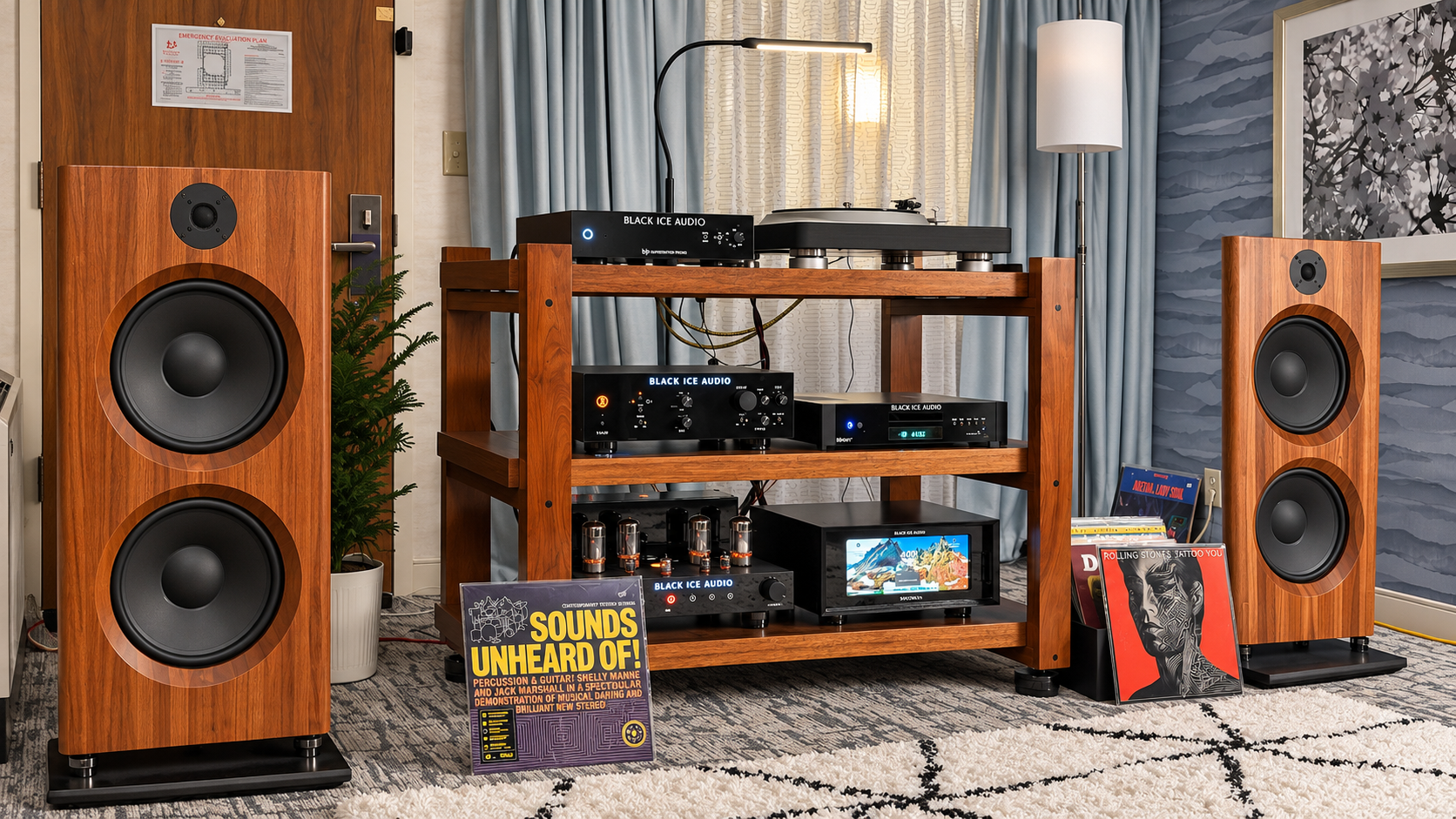
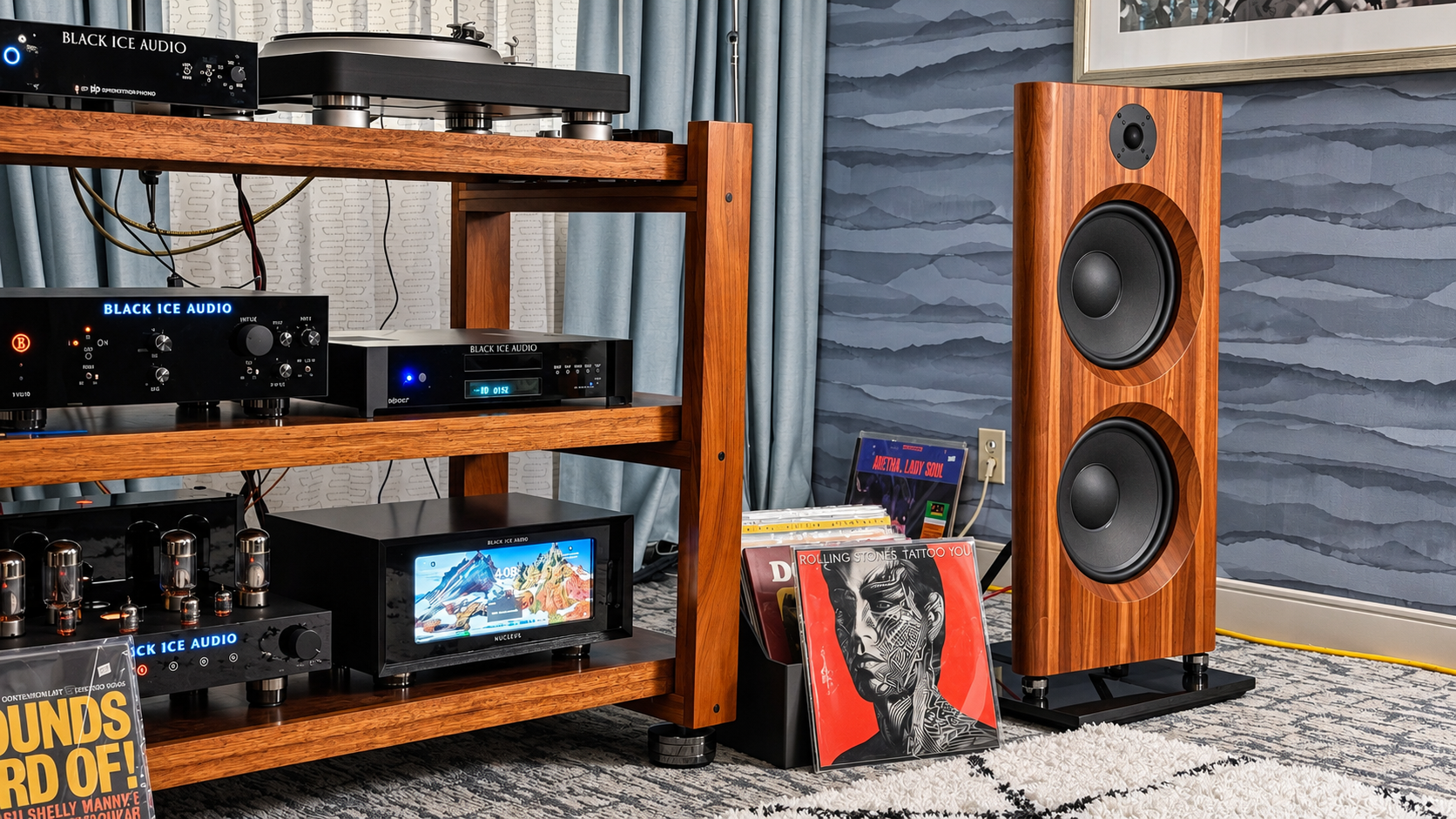
Clayton Shaw Acoustic Lab’s open-baffle loudspeakers paired with Black Ice Audio electronics at Capital Audiofest 2026. The demonstration highlighted an alternative approach to conventional speaker design, combining open-baffle technology with tube amplification. Photo: Vinyl Latte, enhanced for publication.
2. Margules: A More Attainable Entry Into High-End Audio
Suite 832 | Ball Audio Distribution and System Solutions
The second demonstration takes us in another direction.
Rather than challenging conventional loudspeaker architecture, Mexican audio manufacturer Margules is expanding its portfolio with a new system designed to make its engineering philosophy available at a lower price.
Capital Audiofest 2026 marked the U.S. debut of the Magenta series, represented by the Avora hybrid integrated amplifier, Monitor 3 loudspeakers, and MS-01 music server.
According to the equipment sheet distributed at the show, the system includes:
- Magenta Monitor 3 loudspeakers: $2,995 per pair
- Magenta Avora hybrid integrated amplifier: $2,850
- Magenta MS-01 music server/streamer: $3,500
Together, the three components total approximately $9,345 before cables, stands, and other accessories.
That is still a substantial investment, but it represents a significantly more approachable proposition than the reference systems occupying some of the hotel's larger demonstration spaces.
The Avora is especially interesting because of its hybrid architecture.
Rather than relying exclusively on tubes or solid-state circuitry, it combines a 12AU7 vacuum tube input stage with a solid-state output stage rated at 50 watts per channel into 8 ohms.
The design attempts to balance the characteristics associated with tube amplification with the current delivery and loudspeaker control offered by solid-state electronics.
It also incorporates a phono input, providing a convenient starting point for vinyl enthusiasts who want to avoid adding a separate phono preamplifier.
The Monitor 3 loudspeakers use a compact two-way design, incorporating a 13 cm bass/midrange driver and a soft-dome tweeter.
At this price point, the real question becomes one of balance.
Can a carefully matched system built around relatively modestly priced components deliver enough resolution, dynamics, tonal accuracy, and musical involvement to satisfy a demanding listener?
And how much additional performance should someone reasonably expect by spending two or three times as much?
Margules also demonstrated its more expensive tube electronics and U4Oria headphone system in Suite 832, illustrating the manufacturer's broader ambitions.
For me, the Magenta series represents an important part of the show's story.
High-end audio needs innovation at attainable price points just as much as it needs ambitious flagship products.
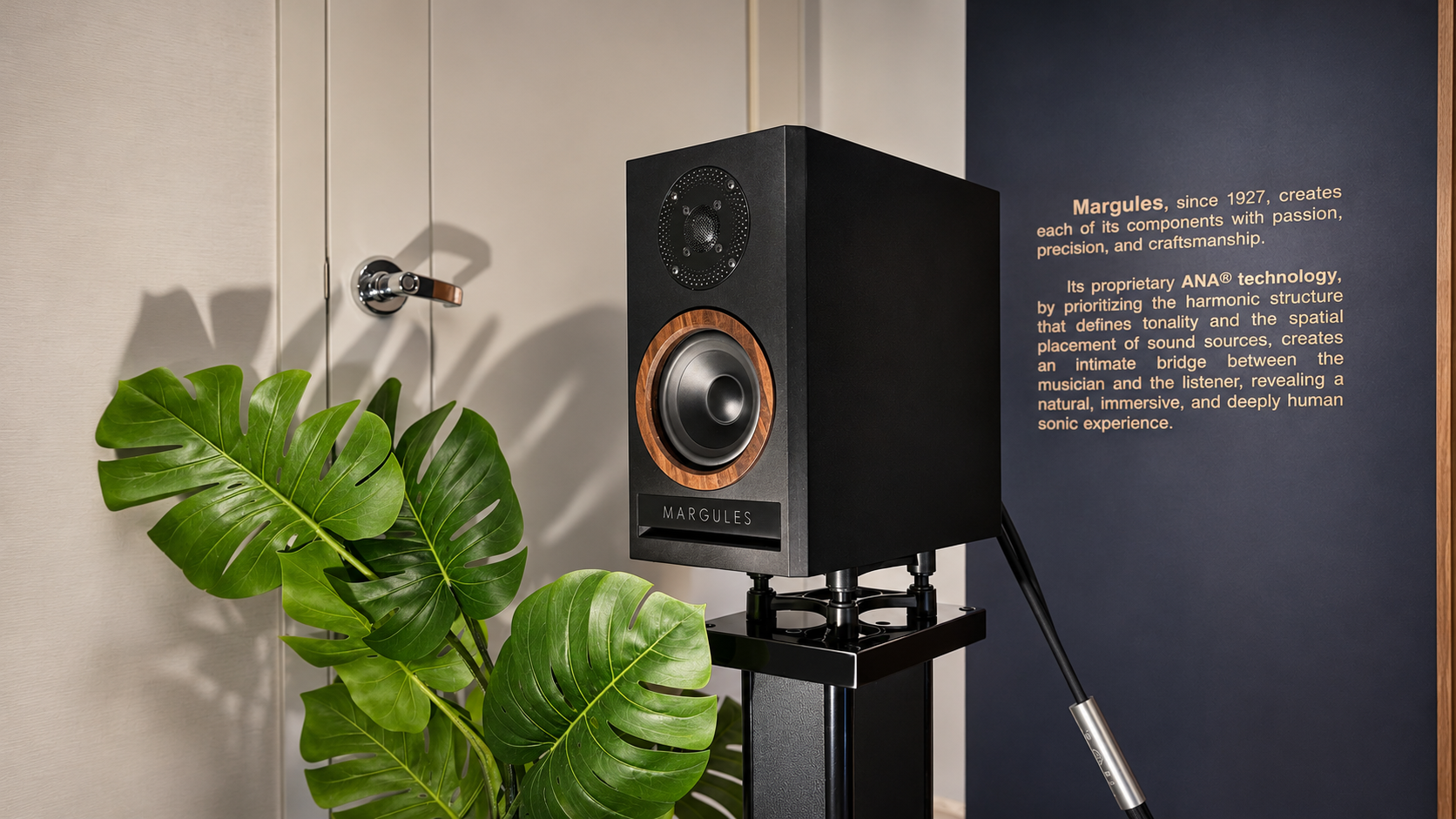
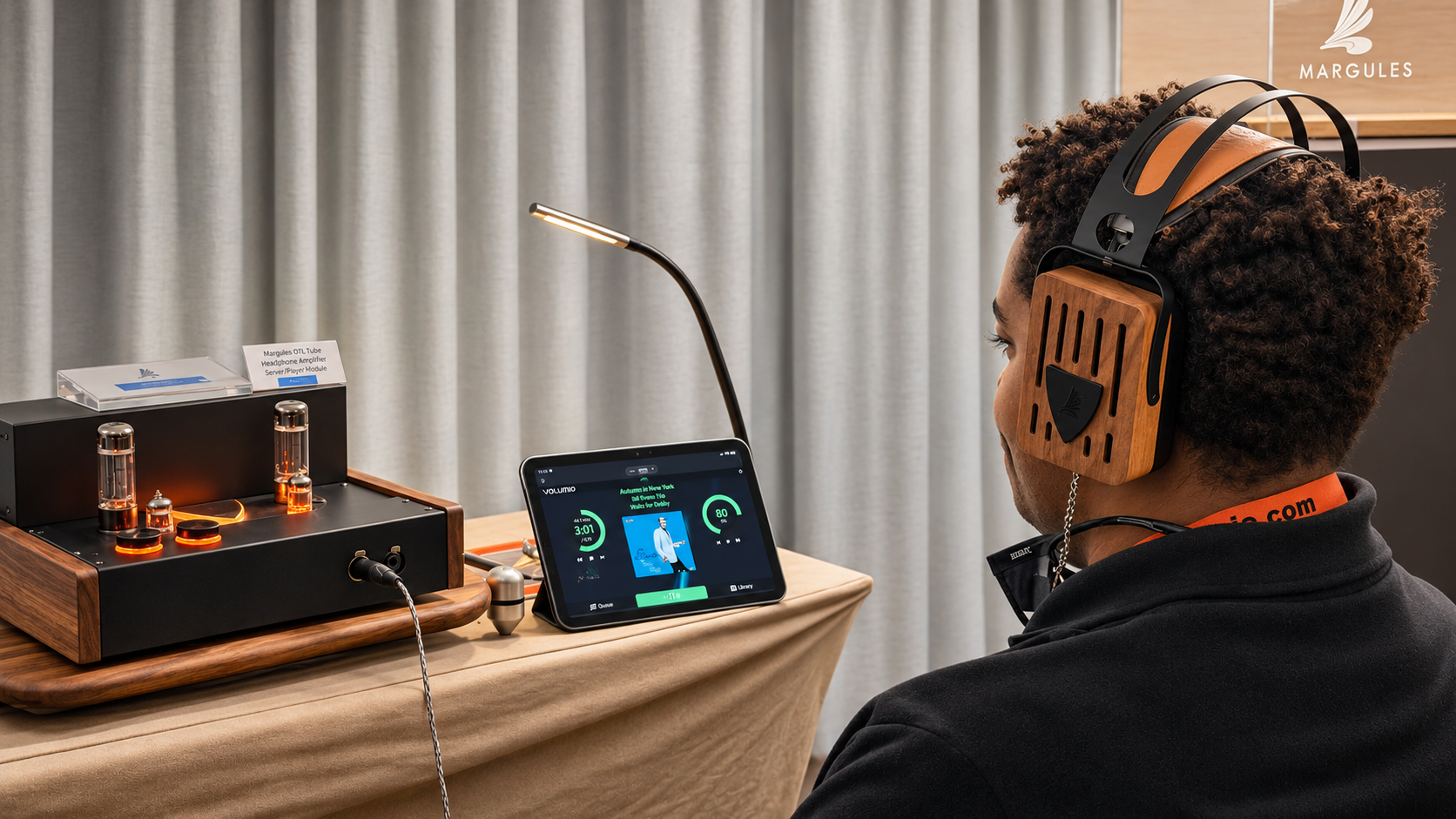
Margules showcased its Magenta Monitor 3 loudspeakers, priced at $2,995 per pair, alongside its U4Oria headphone system at Capital Audiofest 2026, highlighting the company's range of loudspeaker and personal audio solutions. Photos: Vinyl Latte, AI-enhanced.
3. Vitus Audio and Estelon: When Engineering and Industrial Design Converge
Washington Theater | Scott Walker Audio
Moving into the upper end of the market brings us to Scott Walker Audio's demonstration featuring Estelon loudspeakers and Vitus Audio electronics.
Both manufacturers occupy distinctive positions in high-end audio, although their approaches to product design are quite different.
Estelon is known for its sculptural loudspeaker enclosures, which look considerably different from traditional rectangular cabinets.
Those unusual forms are not simply decorative.
Curved surfaces and carefully controlled cabinet geometry can help address diffraction, internal standing waves, and other mechanical and acoustic challenges that influence loudspeaker performance.
Of course, appearance alone tells us very little about how a loudspeaker will reproduce music.
Cabinet rigidity, driver integration, crossover design, dispersion, and room interaction all remain critical.
Pairing Estelon with Vitus Audio creates an interesting engineering combination.
The Danish electronics manufacturer is known for substantial amplification designs that emphasize power delivery, circuit architecture, and mechanical construction.
At this level, buyers are paying not only for the components inside an amplifier, but also for the engineering effort involved in controlling noise, managing thermal behavior, and maintaining performance under demanding operating conditions.
Scott Walker Audio's system also brought together other specialist manufacturers, including Crystal Cable and Taiko Audio.
What makes such a demonstration valuable is the opportunity to examine how a carefully selected group of premium components works together.
But there is an important distinction between a system engineered for maximum performance and one that offers meaningful improvements over substantially less expensive alternatives.
The further prices climb, the more difficult those improvements can become to quantify.
It is one reason I approach demonstrations like this with considerable interest, but also with an appreciation for the limitations of show listening.
A brief audition can reveal something about a system's character and presentation. It cannot establish how that equipment will perform in another room or whether the investment is justified.
Nevertheless, Estelon and Vitus represent the kind of ambitious engineering that makes events such as Capital Audiofest worth attending.
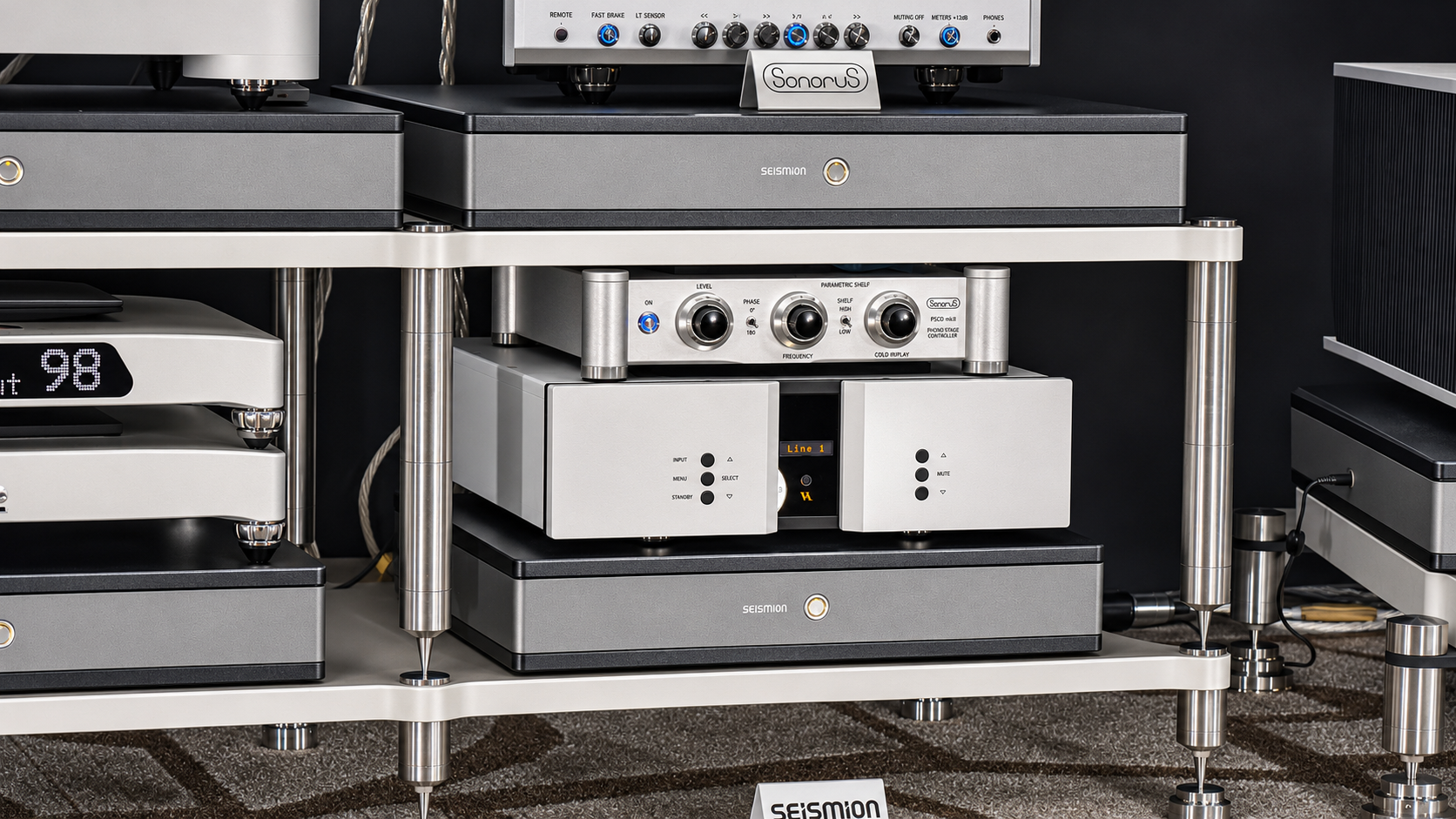
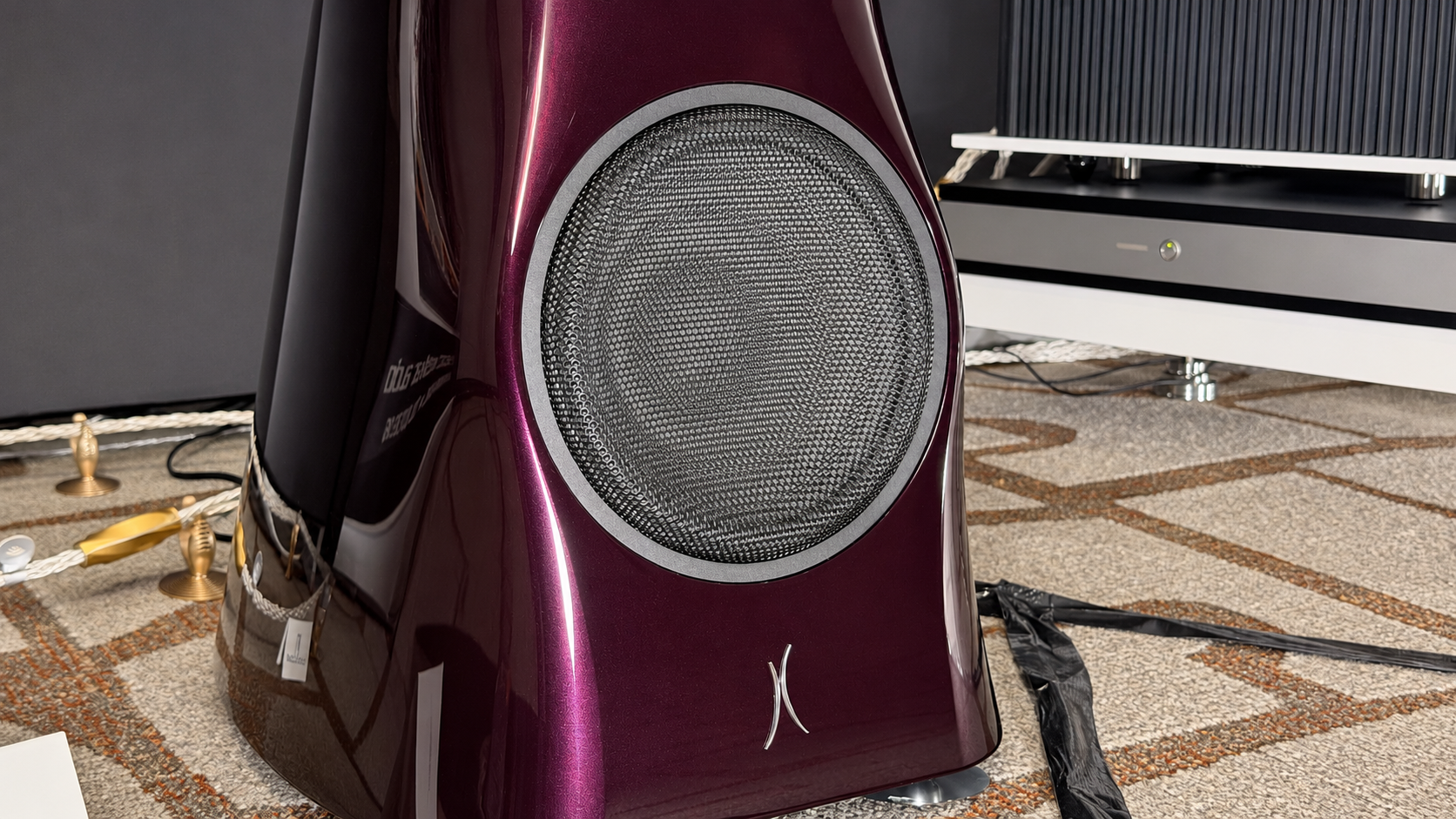
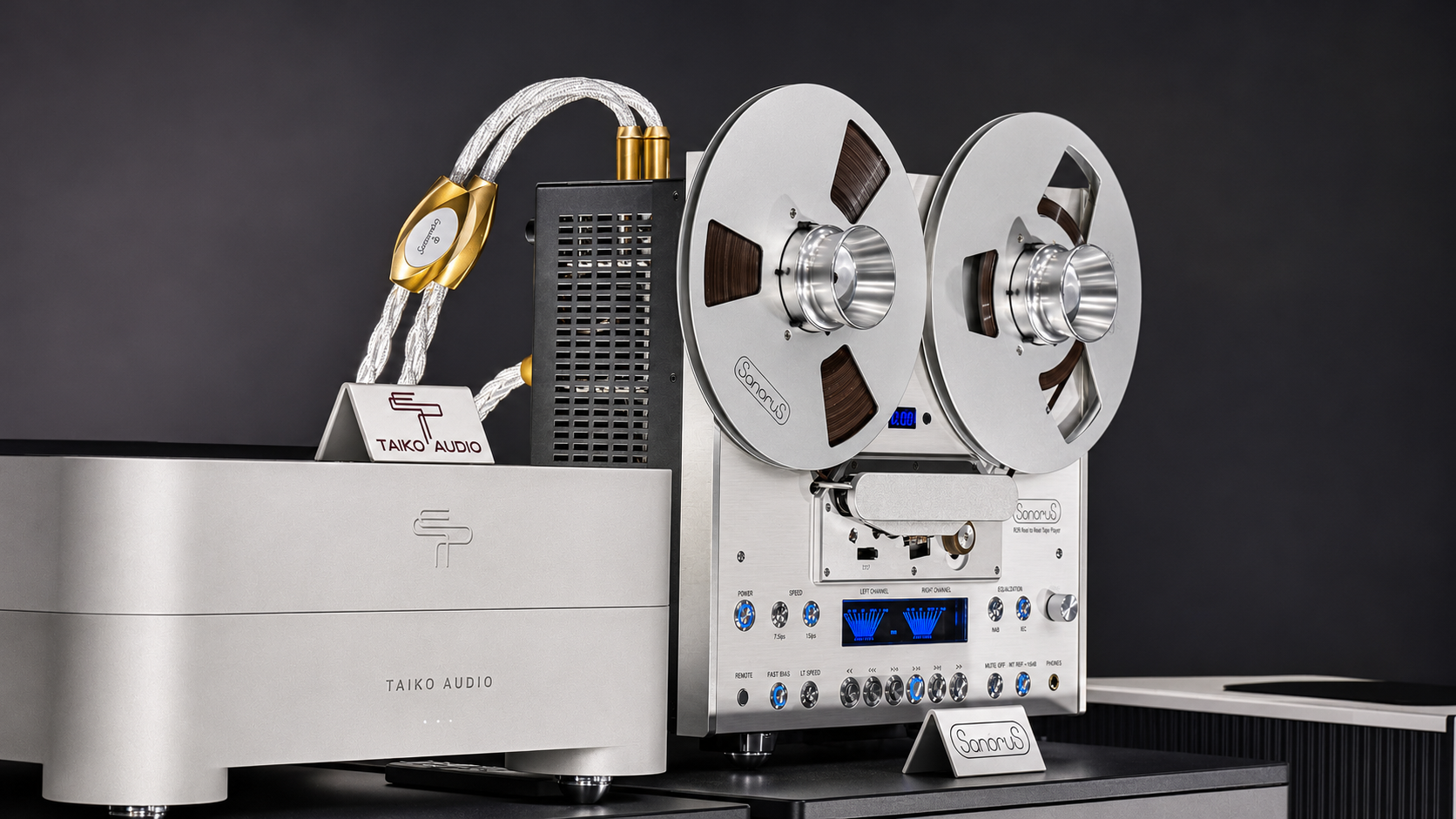
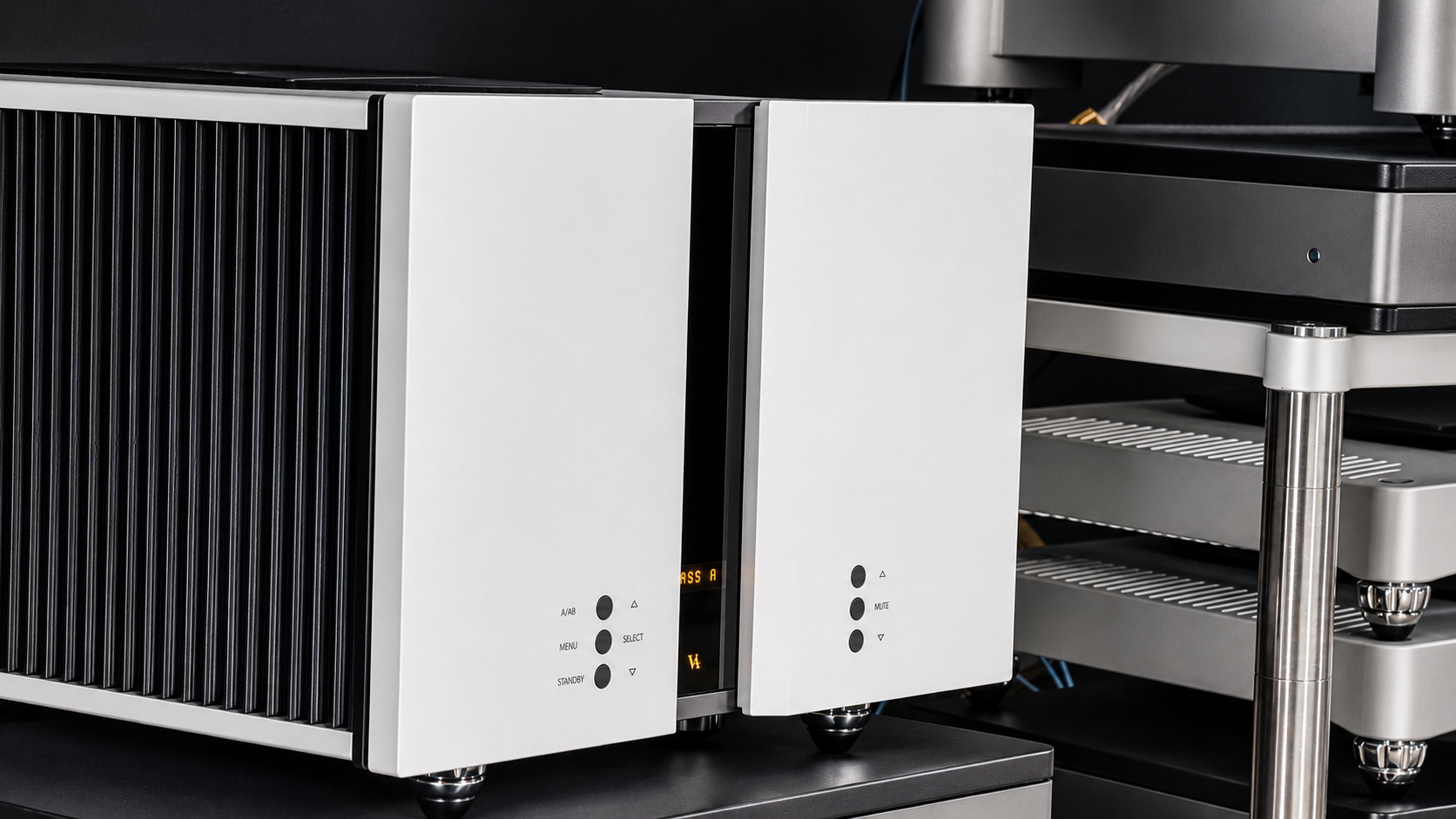
A closer look at the Vitus Audio and Estelon demonstration at Capital Audiofest 2026, featuring Vitus amplification, Estelon’s sculpted loudspeaker design, a Sonorus reel-to-reel tape deck, Taiko Audio digital components, and Seismion isolation platforms. Photos: Vinyl Latte, AI-enhanced.
4. VAC and Magico: Two Very Different Technologies, One Reference System
Potomac Room | Valve Amplification Company and Magico
One of Saturday's most compelling combinations brought together two manufacturers whose engineering philosophies might initially seem quite different.
Magico has established its reputation around precision loudspeaker construction, advanced materials, and extensive acoustic engineering.
VAC, the Valve Amplification Company, remains committed to developing sophisticated vacuum tube amplification.
Together, they illustrate how technologies with very different histories can coexist in a modern reference system.
The loudspeakers were Magico's S7 2026, listed at $135,000 per pair in the Softec finish.
The S7 represents the culmination of Magico's current S Series and incorporates a five-driver, three-way configuration within a substantial aluminum enclosure.
At approximately 384 pounds per loudspeaker, the design makes clear that Magico places considerable emphasis on cabinet construction and mechanical stability.
Driving the system were VAC Master Series electronics.
According to the demonstration's equipment list, the configuration included:
- Magico S7 2026 loudspeakers: $135,000 per pair
- VAC Master Phono Stage: $35,000
- VAC Master Line Stage: $35,000
- VAC Master 300 iQ MKII Musicbloc amplifiers: Two units
- SAT XD1 turntable and CF1-09 tonearm
- Lyra Atlas Lambda Diamond cartridge
- Aurender N50 music server/streamer
- LampizatOr Pacific DAC
- AudioQuest power distribution and cabling
The VAC Master Phono Stage deserves particular attention.
Introduced as a new component at the show, it draws upon ideas developed for VAC's more ambitious Statement Phono Stage.
Its published features include multiple cartridge inputs, adjustable gain and loading, mono operation, balanced outputs, and an external power supply.
For vinyl enthusiasts, those capabilities are meaningful.
A versatile phono stage can accommodate different cartridges and loading requirements, making it possible to optimize an analog playback system without changing the entire signal chain.
The broader VAC and Magico pairing is equally interesting.
Vacuum tube amplification is sometimes associated with warmth, harmonic richness, and a particular presentation of musical texture.
Magico's loudspeaker philosophy places significant emphasis on low coloration, structural rigidity, and accurate reproduction.
But these descriptions should not be treated as guaranteed sonic outcomes.
The actual result depends upon the amplifiers' electrical characteristics, loudspeaker impedance, room conditions, source material, and system setup.
What makes this combination fascinating is the opportunity to explore how carefully engineered tube amplification interacts with a modern, high-resolution loudspeaker.
And unlike the question of whether a $135,000 speaker is a sensible purchase, that underlying engineering discussion has relevance at almost every price point.
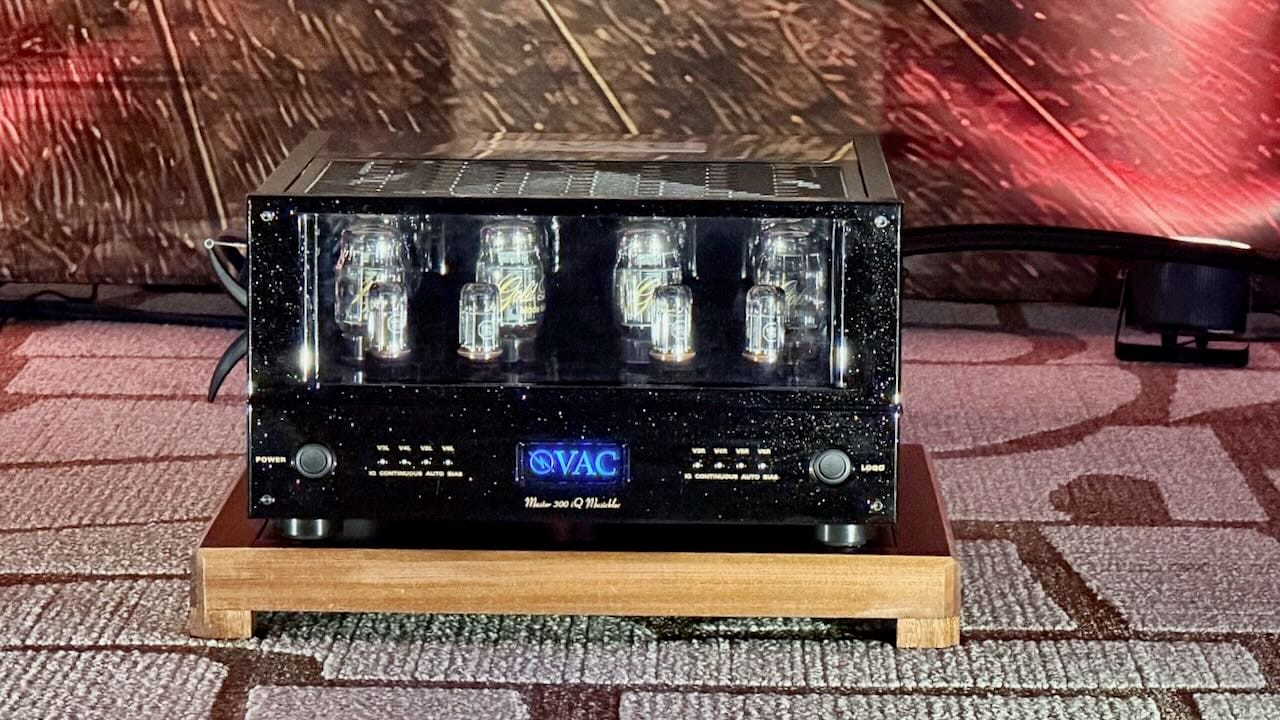
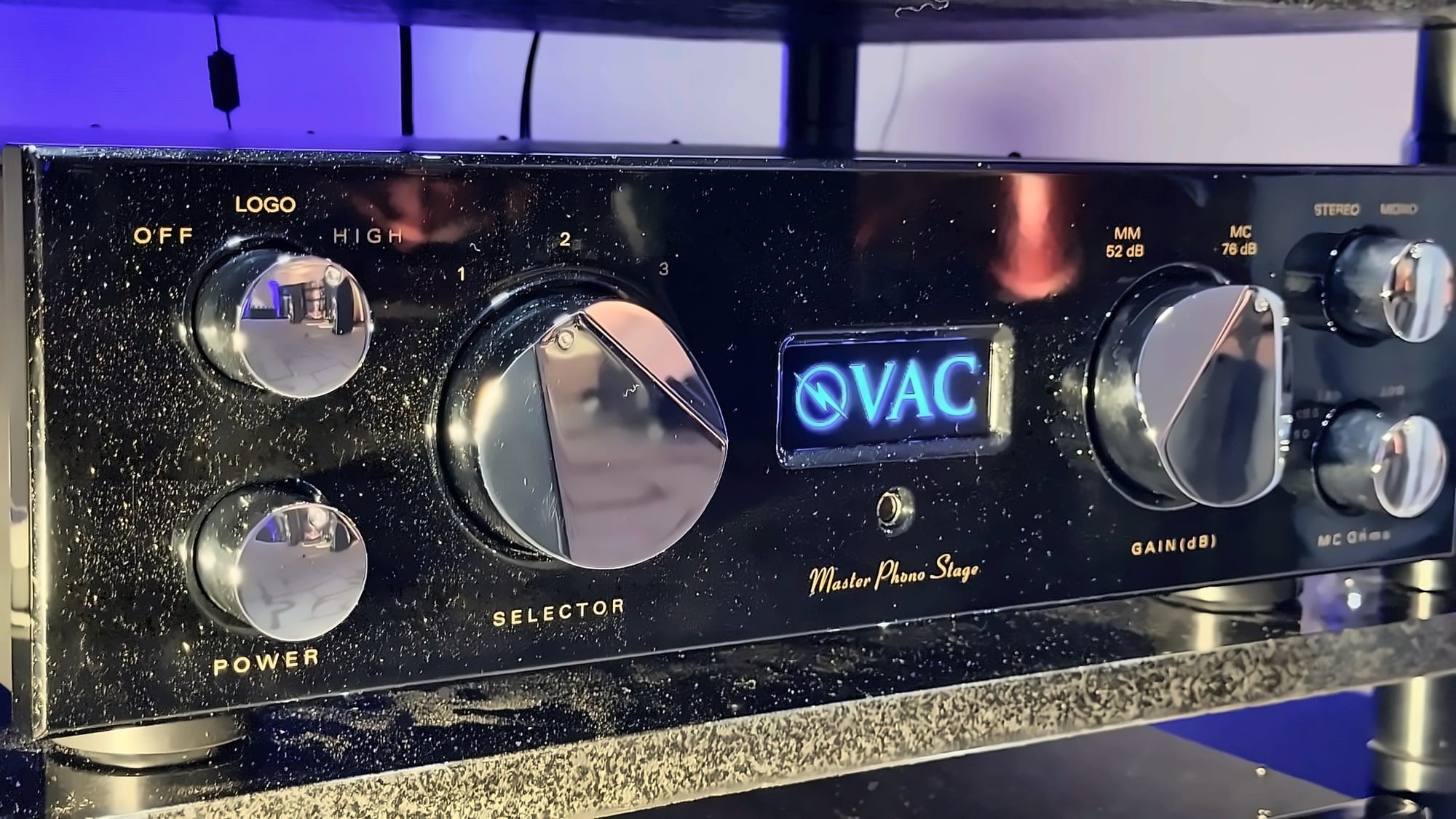
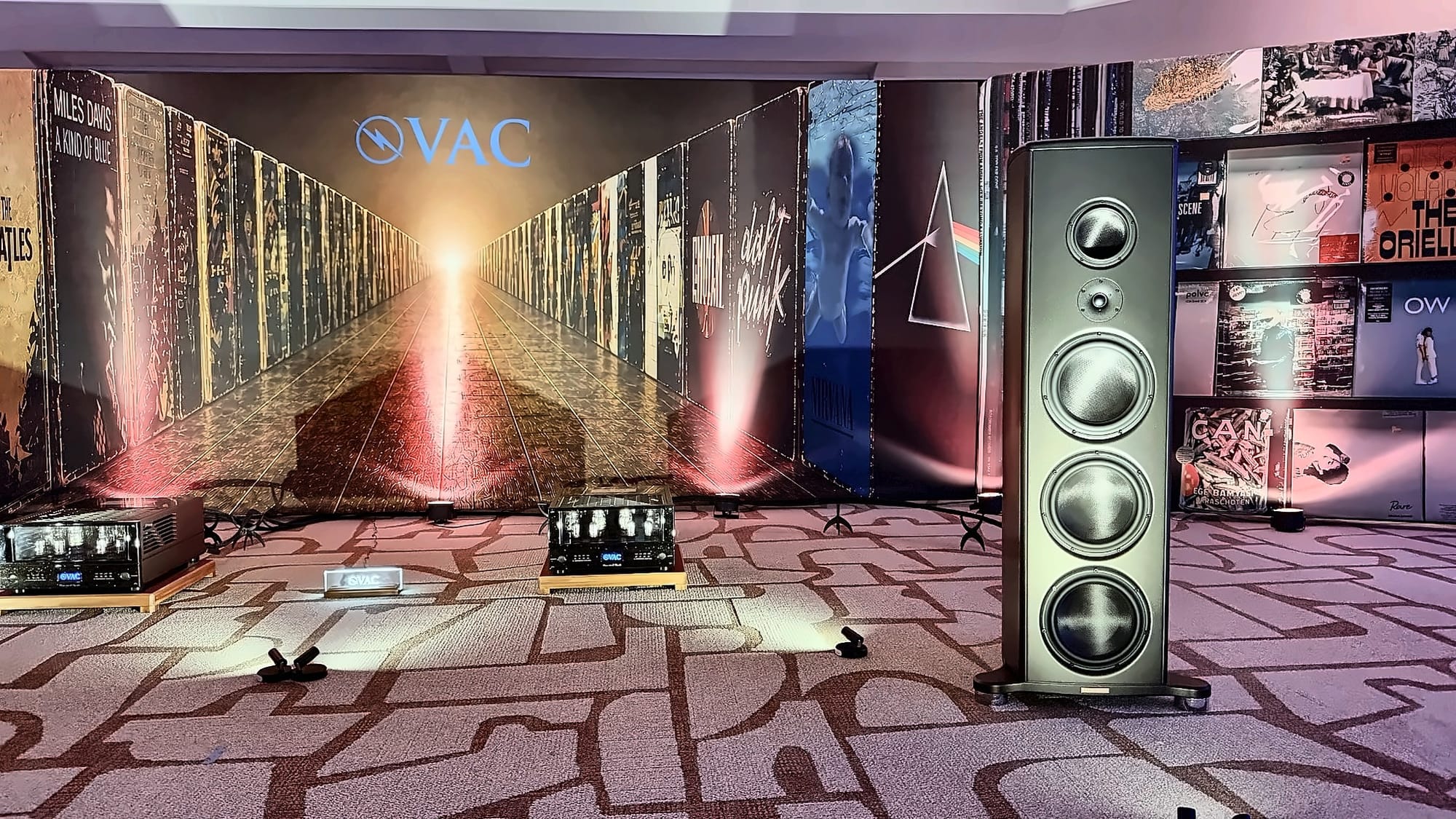
The VAC and Magico demonstration at Capital Audiofest 2026 paired $135,000 Magico S7 loudspeakers with VAC Master 300 iQ vacuum tube amplifiers and the new VAC Master Phono Stage. The system showcased modern loudspeaker engineering alongside sophisticated tube amplification and analog playback technology. Photos: Vinyl Latte, enhanced for publication.
What Day 2 Revealed About High-End Audio
After two days at Capital Audiofest, one observation stands out.
There is no universally accepted formula for reproducing recorded music.
Clayton Shaw approaches the challenge by reconsidering how loudspeakers interact with a room.
Margules is seeking to make its design philosophy accessible through a more affordable collection of components.
Estelon and Vitus emphasize ambitious mechanical, electrical, and acoustic engineering.
VAC and Magico demonstrate how modern loudspeaker technology can be combined with the continued development of vacuum tube amplification.
The differences in price are enormous, but that does not automatically tell us which approach will be most satisfying.
Nor should an audio show be treated as a definitive comparative test.
Room dimensions, placement, acoustic treatments, playback levels, music selections, and even the number of people listening can significantly influence what we hear.
A system costing $10,000 in one room cannot be directly compared with a $300,000 system in another under uncontrolled conditions.
What an event like Capital Audiofest provides is something different: exposure to ideas.
And for anyone genuinely interested in better sound, understanding those ideas can be just as valuable as listening to the equipment itself.
Looking Ahead to Day 3: More Vinyl, More Discoveries
With Sunday marking the final day of Capital Audiofest 2026, there are still several interesting demonstrations deserving attention.
One is the Dr. Vinyl room, featuring a Pear Audio Aras turntable, SUPATRAC Blackbird tonearm, and DS Audio W3 optical cartridge.
The Blackbird is particularly relevant to my own listening experience because I use one in my reference analog system. Seeing it paired with a different turntable and cartridge provides an opportunity to explore another approach to extracting information from a vinyl groove.
TriangleArt also has an extensive analog demonstration featuring its Hathor, Maestro, and Anubis turntables, along with several premium tonearms and cartridges.
And the Lockwood loudspeaker demonstrations offer another opportunity to investigate a more traditional approach to speaker design.
These are reminders that the audio industry continues to innovate across both new and established technologies.
Sunday should provide an interesting conclusion to a weekend that has already demonstrated just how varied the pursuit of better sound can be.
Follow Vinyl Latte's Capital Audiofest Coverage
Vinyl Latte is reporting from Capital Audiofest 2026 with firsthand coverage of notable listening rooms, new equipment, analog playback, and the people developing today's audio technologies.
From relatively attainable systems to extraordinary reference installations, our goal is to explore what makes these products interesting, how they work, and what they might mean for music lovers.
More coverage, videos, and interviews will follow.
If you enjoy independent audio journalism, consider subscribing to or supporting Vinyl Latte. Your support helps make continued show reporting, equipment evaluations, and music coverage possible.

Comments ()