
Does Hi-Fi Need to Stop Playing Led Zeppelin?
Hi-fi says it wants younger listeners, but too often it speaks through the same music, systems, and traditions. Is the hobby preserving its heritage, or losing touch with today’s music culture?
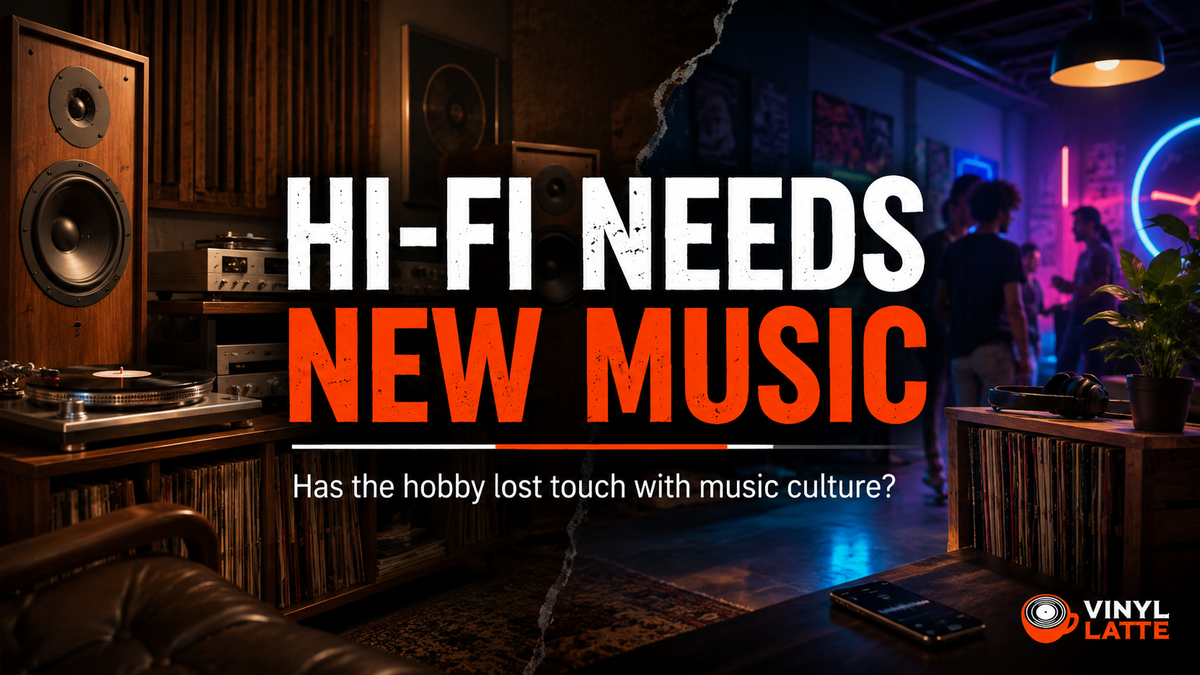
Walk into enough hi-fi demonstrations and you begin to notice a pattern.
The equipment changes. The room changes. The price tag may climb from a few thousand dollars to the cost of a new car. But the music often remains remarkably familiar.
Pink Floyd. Dire Straits. Steely Dan. Led Zeppelin. Perhaps a carefully selected jazz pressing for good measure.
These are great records. Many of them are essential. They have earned their place in music history and in countless record collections.
But if the hi-fi industry wants to attract a new generation of listeners, it may need to stop acting as though music culture ended sometime around 1982.
The Music Is Not the Problem
The problem is not Led Zeppelin.
The problem is hearing the same narrow group of records used repeatedly as proof that a system sounds good.
Classic rock has become a kind of shared language within the audiophile community. Dealers know the recordings. Reviewers understand what to listen for. Customers recognize the music. Familiarity makes comparison easier.
There is nothing inherently wrong with that.
But familiarity can slowly turn into predictability, and predictability can make the hobby feel closed to anyone who does not already share the same musical reference points.
A younger listener walking into an audio show may love music just as deeply as anyone else in the room. Their reference albums, however, might come from Billie Eilish, Kendrick Lamar, Tyler, the Creator, Charli XCX, Olivia Rodrigo, The Weeknd, or Fred again...
If none of that music is represented, the unspoken message is clear: your music is not what serious systems are built to play.
That message is not only unwelcoming. It is also wrong.
Modern Music Can Reveal a Great System
There is a lingering belief in some audiophile circles that contemporary popular music is too compressed, too digital, or too heavily produced to demonstrate high quality audio equipment.
Some recordings certainly are.
The same can be said of records from every decade.
Modern production can also be extraordinarily revealing. Billie Eilish’s recordings can test bass extension, vocal intimacy, spatial effects, and low level detail. Kendrick Lamar’s work can challenge a system with dense arrangements, rapid transitions, deep bass, and layered vocals. Electronic music can expose timing, dynamics, imaging, and a speaker’s ability to remain composed at high volume.
A system that only sounds impressive with pristine acoustic recordings is not necessarily a great system. It may simply be a selective one.
The best audio equipment should make people want to explore their entire music collection, not restrict them to a small shelf of approved demonstration records.
Hi-Fi Says It Wants Younger Customers
The audio industry frequently talks about attracting younger buyers.
That concern is understandable. Many established audiophiles are getting older, while the price of high end equipment continues to rise. Manufacturers and retailers know the hobby cannot grow indefinitely by selling increasingly expensive upgrades to the same audience.
Yet much of the industry still presents itself in the same way it did decades ago.
The language is technical. The rooms can feel intimidating. The systems often require multiple components, complicated setup, and a significant financial commitment. Even the music selected for demonstrations may reflect the tastes of existing customers rather than the people the industry hopes to reach.
You cannot claim to welcome a new audience while asking that audience to adopt every habit, preference, and ritual of the old one.
Younger listeners do not need to be convinced that music matters. Many are already deeply invested in artists, concerts, physical media, limited editions, headphones, and collecting.
The opportunity is not to teach them how to care about music.
It is to show them what better sound can add to music they already care about.
The Listening Café May Be More Important Than the Hi-Fi Store
Traditional hi-fi stores remain important. A knowledgeable dealer can provide something the internet cannot: careful setup, meaningful comparison, and long term guidance.
But the conventional showroom is not the only way to introduce someone to high quality sound.
Listening bars and music cafés offer a different path.
In those spaces, sound quality is part of the experience rather than the entire purpose of the visit. People can hear a serious system without scheduling a demonstration or feeling pressure to buy anything. They can enjoy music socially, perhaps with a drink or coffee, and gradually recognize what a well designed system can do.
That environment may be more effective than explaining specifications to someone who has never experienced convincing stereo imaging or full range dynamics.
A person may not initially care about amplifier topology, cartridge loading, or speaker sensitivity. They may care that a familiar song suddenly sounds larger, more emotional, and more alive.
That moment is where the hobby begins.
Convenience Is Not the Enemy
The industry may also need to accept that simplicity matters.
Many younger listeners are not going to begin with a turntable, phono stage, preamplifier, power amplifier, streamer, DAC, and separate speakers.
Nor should they have to.
A pair of well designed active speakers can provide an accessible entry into serious listening. So can a compact integrated amplifier with streaming built in. Headphones may be the first step for many people, especially those living in apartments or shared spaces.
The goal should not be to preserve complexity for its own sake.
The goal should be to help more people experience better sound.
Some listeners will eventually move toward separate components, vinyl playback, room treatment, and carefully matched systems. Others will not. Both groups can still value quality.
A hobby survives by creating more entry points, not by guarding the most complicated one.
Audiophiles Also Need to Broaden the Playlist
Manufacturers and dealers are not solely responsible.
Audiophiles often reinforce the same narrow musical culture.
We speak about reference recordings as though there were a universally agreed upon list. We dismiss popular music because it was digitally recorded, heavily produced, or purchased by millions of people. We sometimes evaluate records more by pressing quality than by the music itself.
That approach can turn hi-fi into an equipment hobby that happens to use music as test material.
For some people, that may be enough.
But it is not what drew most of us in.
Most audiophiles began with a song, an album, or an artist that made us feel something. Better equipment came later because we wanted to get closer to that experience.
The industry should remember that sequence.
Music first. Equipment second.
Do Not Abandon the Past
None of this means classic rock should disappear from audio shows.
A great pressing of Led Zeppelin II can still sound thrilling. Pink Floyd remains capable of revealing scale, atmosphere, and imaging. Steely Dan recordings continue to demonstrate precision and studio craft.
The answer is not to replace one narrow playlist with another.
It is to expand the musical vocabulary.
Play Led Zeppelin, then play Little Simz.
Play Fleetwood Mac, then play Billie Eilish.
Play Miles Davis, then play Kamasi Washington.
Show that a serious system is not a museum exhibit built to preserve the music of one generation. It is a vehicle for discovering what is possible across genres, decades, and production styles.
The Future of Hi-Fi Is Still About Emotion
The hi-fi industry often focuses on the measurable differences between products.
That information matters. Design, engineering, and performance matter.
But specifications rarely create lifelong enthusiasts on their own.
Emotion does.
The first time a voice appears between the speakers with startling realism. The first time a bass line gains weight without becoming bloated. The first time a familiar recording reveals an instrument that had always been buried in the mix.
Those experiences can happen with a record from 1971 or an album released last week.
Hi-fi does not need to abandon its heritage.
It simply needs to stop treating that heritage as the only music worth hearing.
And perhaps the next time a manufacturer wants to prove that its new speakers can truly connect someone with the music, it should ask a simple question before reaching for the same demonstration record:
What does the person in the room actually want to hear?

Comments ()