Before You Buy Vinyl on Prime Day, Ask Yourself This
Prime Day can make every vinyl deal feel urgent, but not every discounted record belongs in your collection. Before you click buy, here’s how to separate smart purchases from sale-driven impulse buys.
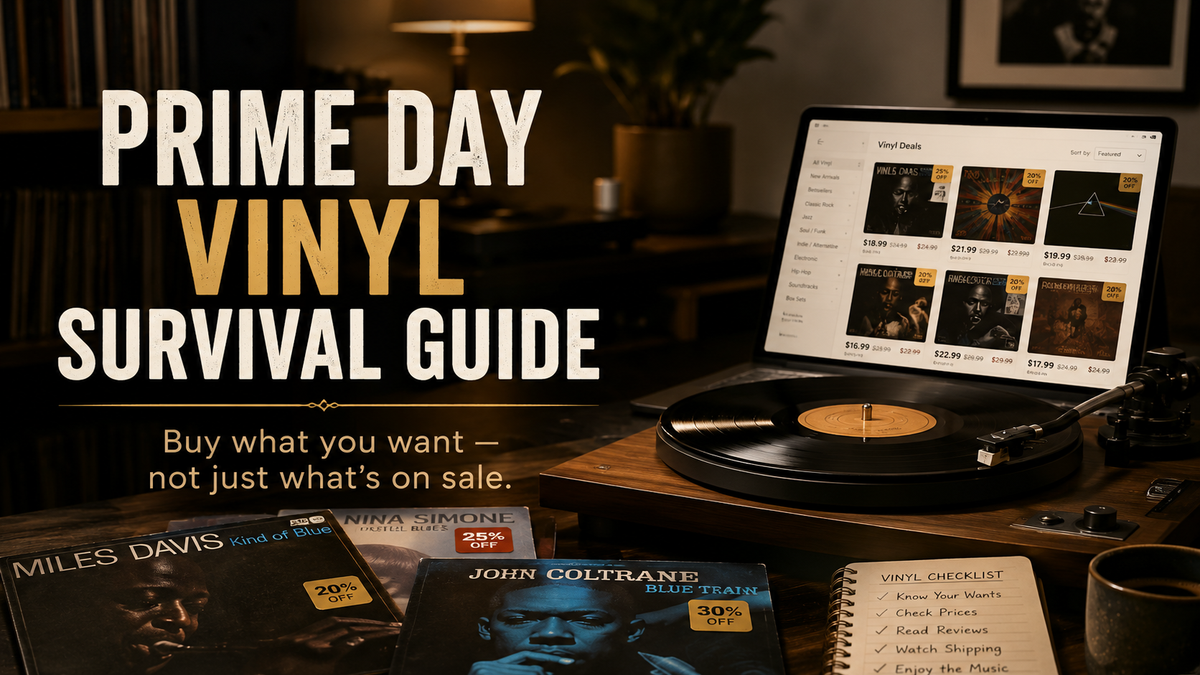
Prime Day is almost here, which means the internet is about to be flooded with limited time deals, countdown clocks, discount badges, and enough “add to cart” temptation to make even the most disciplined record collector lose focus.
For vinyl collectors, that can be dangerous.
Not because deals are bad. I love a good deal as much as anyone. There are plenty of records I would rather buy at $21 than $38. There are box sets I would happily grab if the price finally dropped into reasonable territory. And if there is an album you have wanted for months that suddenly gets marked down, great. That is exactly when a sale makes sense.
But there is a big difference between buying a record because it is the right record at the right price, and buying a record simply because the internet told you it was a deal.
That is where collectors get into trouble.
Vinyl is already an emotional hobby. We buy records because they remind us of a time, a person, a place, a band, a concert, a breakup, a summer, or a version of ourselves we are still trying to hold onto. Add discounts, scarcity, and a four day shopping event into that mix, and suddenly a record you had no interest in yesterday becomes something you feel like you need today.
So before Prime Day starts, maybe the better question is not “what records are on sale?”
Maybe the better question is “what records are actually worth buying?”
A Discount Does Not Automatically Create Value
This is the trap.
A record marked down from $39.99 to $24.99 looks like a good deal. Sometimes it is. But if you did not want that album before the sale, did the sale actually save you money?
Or did it just convince you to spend $25 you were not planning to spend?
I think every collector has been there. You see a record from an artist you kind of like. Maybe it is a reissue you have seen a few times. Maybe it is a color variant. Maybe it is a box set that has always seemed a little too expensive, but now the discount makes it feel like the moment has arrived.
Then it shows up, you open it, you play one side, and it goes on the shelf.
Not every record we buy needs to become a life changing experience, but there is a difference between building a collection and accumulating vinyl.
Prime Day is great at encouraging accumulation.
It rewards quick decisions. It makes you feel like waiting is risky. It puts pressure on you to buy before the price changes, before the deal expires, before someone else gets the copy you were never actually looking for in the first place.
That is not collecting. That is reacting.
Start With the Records You Already Wanted
The best way to approach Prime Day vinyl deals is simple: make your list before the sale starts.
Not a list of whatever Amazon tells you is discounted. Your list.
The records you already wanted. The albums sitting in your wantlist. The catalog titles you keep meaning to buy. The pressing you have been watching. The box set that has been too expensive, but would make sense at the right price.
That is where Prime Day can be useful.
Maybe there is a classic album you have never owned on vinyl. Maybe there is a Blue Note, Verve, Rhino, MoFi, Craft, Analogue Productions, or other reissue you have been waiting to buy. Maybe there is a box set you genuinely want, but the normal price has always felt inflated.
If the sale brings that record into your target range, that is a win.
But starting with the deal page is backwards. That is how you end up buying music based on discount percentage instead of desire.
The sale should serve your collection. Your collection should not serve the sale.
Be Careful With Box Sets
Box sets are where Prime Day can get especially tricky.
A $150 box set marked down to $99 can feel like a major victory. And sometimes it is. If it is an artist you love, an era you care about, and a set you will actually play, then that discount might be the push you were waiting for.
But box sets also have a way of making us justify purchases we would not make one album at a time.
Ask yourself a simple question: if these records were sold individually, would I buy each one?
If the answer is no, then the box set may not be the deal it appears to be.
There is also the shelf space problem. Box sets are beautiful, but they take up room. They are not casual purchases. Once they arrive, they become part of the physical footprint of your collection. And if you do not reach for them, they become very expensive decoration.
That does not mean avoid box sets. Some of my favorite releases are box sets. But the best ones earn their space. They are not just large. They are meaningful.
Check the Pressing Before You Buy
One of the biggest mistakes collectors make during sales is assuming all vinyl versions of an album are more or less the same.
They are not.
Two records can have the same album cover and completely different listening experiences. Different mastering. Different pressing plants. Different sources. Different quality control. Different packaging. Sometimes one version is excellent and another is completely forgettable.
Before buying, take a minute to check what you are actually getting.
Is this a well regarded pressing?
Is it cut by someone known for good work?
Are there complaints about noise, warps, non fill, or off center pressings?
Is it a standard black vinyl copy, a colored variant, a picture disc, or something more collectible than playable?
Is it a new reissue, an older repress, or just whatever stock happens to be sitting in the warehouse?
That extra two minutes can save you from buying records you end up replacing later.
A cheap bad pressing is not a good deal. It is just a future upgrade.
Colored Vinyl Is Fun, But Music Comes First
I like a nice variant. I understand the appeal. A well done color pressing, an alternate cover, or a limited edition package can be exciting. Part of collecting is enjoying the object, not just the sound.
But variants can also push us into strange behavior.
We start buying records we already own. Then we buy the same album again because the vinyl is a different color. Then another version appears with a different jacket. Then there is an exclusive pressing. Then a deluxe edition. Then a signed insert. And before long, the music becomes secondary to the chase.
Prime Day may not be the main driver of variant culture, but sales can still trigger the same collector impulse. The deal gives us permission to buy something we might otherwise skip.
The question is whether we are buying the record because we want to hear it, or because we want to own the idea of it.
That distinction matters.
A great collection should reflect your taste, not your susceptibility to marketing.
Do Not Forget Your Local Record Store
This is the part that can feel complicated.
Amazon is convenient. The prices can be good. The shipping is fast. Returns are easy. For many people, that is the entire point.
But local record stores still matter.
They are where many of us discovered records we were not looking for. They are where we had conversations that changed what we listened to. They are where the hobby feels less like a transaction and more like a culture.
So when a record is $26 at your local shop and $23 on Amazon, I think it is worth asking whether the three dollar difference really matters.
Sometimes it does. Budgets are real. Records are expensive. Nobody should feel guilty for buying where the price makes sense.
But if the gap is small, I would rather support the store that supports the community.
A healthy vinyl culture needs more than warehouses and algorithms. It needs people. It needs shops. It needs places where someone can walk in looking for one thing and leave with something completely unexpected.
Prime Day can be useful. It should not become the only way we buy music.
Use the Sale for Staples, Not Panic Buys
The best Prime Day vinyl purchases are usually not the loudest ones.
They are the records you know you will play.
The album you have streamed a hundred times but never owned. The classic title missing from your shelf. The clean replacement for a noisy copy. The gift for someone you know will love it. The reissue you have researched and waited for. The box set that finally dropped to the price you always said you would pay.
That is different from buying five random records because they were all under $20.
One builds a collection. The other builds clutter.
And clutter is not just physical. It changes how you interact with your records. When the shelves are full of impulse buys, the special records become harder to see. The collection gets bigger, but not necessarily better.
The best collections have a point of view. They tell a story. They reflect the person who built them.
Prime Day does not know your story.
You do.
My Prime Day Rule
Here is the rule I try to follow:
If I would not want the record at full price, I probably should not buy it on sale.
That does not mean I need to be willing to pay full price for everything. Price matters. But desire should come before discount.
If a sale helps me buy something I already wanted, great. If a sale creates the desire out of thin air, I try to be careful.
That little pause can make the difference between a smart buy and another record that sits unplayed.
Final Thought
Prime Day will probably have some good vinyl deals. Some records will be worth grabbing. Some box sets may finally hit the right price. Some catalog titles might become easy recommendations.
But the best deal is not always the biggest discount.
The best deal is the record you will actually play.
The one you will pull from the shelf on a Friday night. The one you will share with someone. The one that makes sense in your collection. The one that still feels like a good purchase after the sale is over and the tracking number has disappeared from your inbox.
So before you click buy, ask yourself one question:
Would I still want this record if it were not on sale?
If the answer is yes, enjoy the deal.
If the answer is no, maybe the best record you buy this Prime Day is the one you leave in the cart.

Comments ()