
Are Turntables Becoming Pop Culture Again?
Turntables are no longer just audiophile equipment. They are becoming design objects, lifestyle statements, and cultural symbols. But as vinyl moves further into pop culture, the real question is whether the music remains the point.
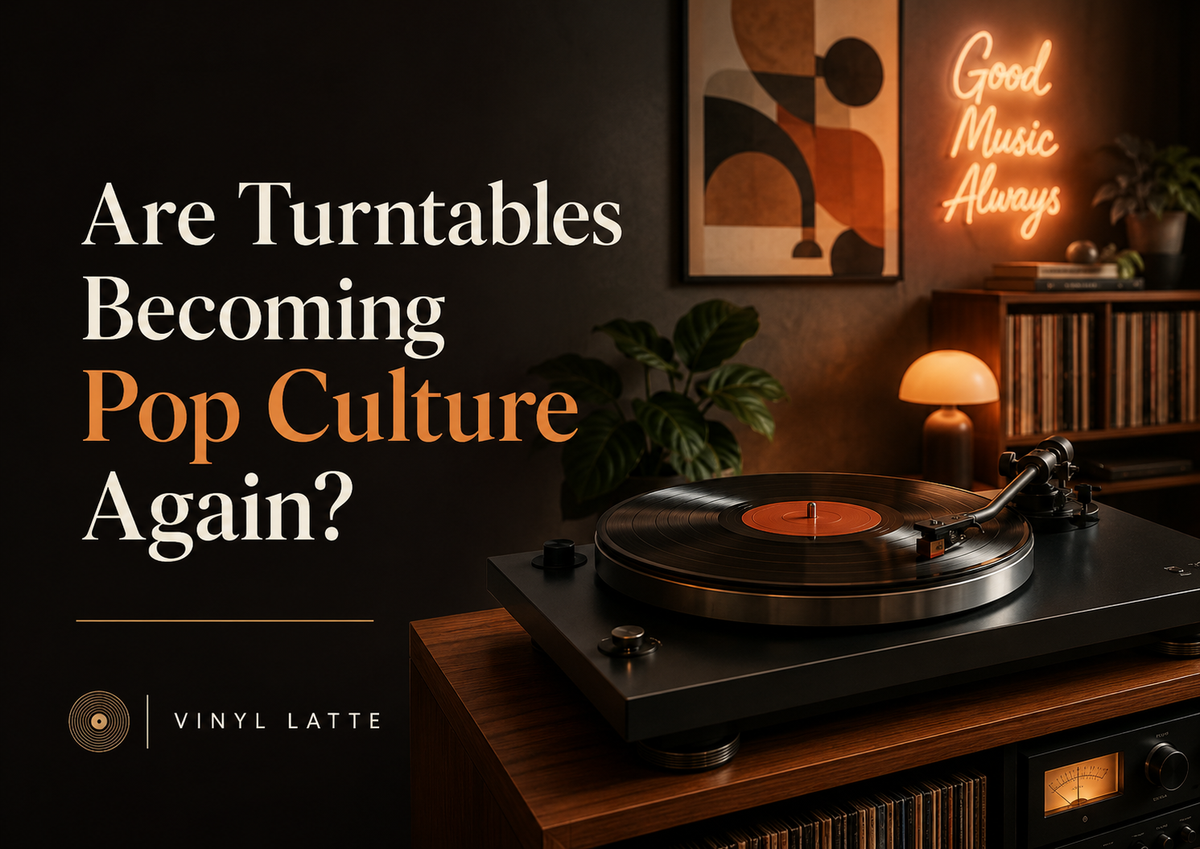
]There was a time when the turntable was treated like a serious piece of equipment.
It lived on a proper rack, needed careful setup, and usually came with a lecture about cartridge alignment, tracking force, isolation, and why the surface underneath it mattered more than most people realized.
That version of the turntable still exists.
In fact, it may be stronger than ever.
But something else is happening too.
The turntable is becoming pop culture again.
Not just as a playback device. Not just as a way to listen to records. The turntable is increasingly being marketed as a lifestyle object, a design statement, a collectible, a tribute piece, and in some cases, a conversation starter before the needle ever touches the groove.
The Turntable as a Statement Piece
Recent announcements from High End Vienna made that hard to ignore.
Clearaudio unveiled several new turntable concepts, including models tied to The Beatles, Rammstein, and even gaming culture. The Rammstein model leans into industrial design with integrated lighting, while the Beatles-inspired Innovation Revolver Special Edition is clearly aimed at collectors who see the turntable as both an audio component and a tribute object.
Clearaudio also introduced the GT Compass, a gaming-oriented design that suggests vinyl is now being positioned for audiences well outside the traditional audiophile lane.
That may sound strange if your relationship with vinyl begins and ends with sound quality. But it should not surprise anyone who has been watching the format over the last decade.
Vinyl’s comeback was never only about fidelity.
It was about ownership, ritual, nostalgia, artwork, identity, and the feeling that music should be more than something that disappears into the background.
Streaming made music easier.
Vinyl made music visible again.
Why That Visibility Matters
A record on a shelf says something about the person who owns it.
A turntable in a room says something too.
It says music has a place in the home. It says listening can still be intentional. It says the album still matters as an object, not just a collection of tracks buried inside an app.
For longtime audiophiles, that can be both exciting and slightly uncomfortable.
On one hand, more interest in turntables means more people are engaging with physical music. That is good for record stores, pressing plants, cartridge makers, phono stage manufacturers, accessory companies, and independent artists who still believe an album can be something worth holding.
A broader audience keeps the ecosystem alive.
On the other hand, there is a risk that the turntable becomes more fashion than function.
When Style Becomes the Point
When the visual statement becomes the point, sound quality can become secondary.
A turntable can look incredible, photograph beautifully, and still be poorly isolated, poorly set up, or connected to a system that never lets the record show what it is capable of. That is where the audiophile side of the hobby still matters.
Vinyl is not magic by default.
A record does not automatically sound better because it is heavier, more expensive, or more photogenic. A turntable does not become great because it glows, matches a room, or carries a famous band’s name.
The fundamentals still matter.
Speed stability matters. Tonearm quality matters. Cartridge matching matters. Resonance control matters. Setup accuracy matters. The quality of the record itself matters.
But I also think it would be a mistake to dismiss the lifestyle side of vinyl completely.
Most People Do Not Enter Through the Technical Door
Most people do not enter this hobby through technical obsession.
They enter because something pulls them in.
Maybe it is a favorite album. Maybe it is the artwork. Maybe it is the ritual. Maybe it is the look of a turntable spinning in the room. Maybe it is the simple pleasure of lowering the stylus and giving music your attention for twenty minutes at a time.
That first step does not need to be perfect.
The bigger question is what happens next.
If someone buys a turntable because it looks cool, that is not automatically a problem. The problem is if the journey stops there.
The opportunity is that style can become the doorway into better listening.
A person who starts with the object may eventually start caring about the pressing. Then the cartridge. Then the phono stage. Then speaker placement. Then cleaning records. Then the realization that every part of the chain matters more than they expected.
That is how hobbies grow.
The same pattern exists across many enthusiast categories.
Cameras often begin as lifestyle objects before people learn about lenses and lighting. Watches often begin as fashion before people learn about movements and finishing. Cars often begin as design attraction before people care about handling, engineering, and heritage.
Vinyl is no different.
The Problem Is Not Beauty
The danger is not that turntables are becoming beautiful or culturally relevant.
The danger is when the culture around them forgets that they are supposed to play music well.
That is why I find this moment interesting. We are seeing two versions of the turntable market grow at the same time.
One is deeply serious, where people chase better isolation, better tonearms, better cartridges, better pressing quality, and better system matching.
The other is more lifestyle-driven, where the turntable is part of the room, the identity, and the story someone wants to tell about their relationship with music.
I do not think those two worlds need to be enemies.
In fact, they may need each other.
Audiophiles and Lifestyle Buyers Need Each Other
The serious audiophile world gives vinyl credibility.
It reminds people that records can sound astonishing when the system is right and the pressing is good.
The lifestyle world gives vinyl visibility.
It brings new people into record stores, gets turntables into living rooms, and keeps physical music culturally relevant.
That balance matters because the future of vinyl cannot depend only on the already converted. If the format is going to remain healthy, it needs new listeners.
Some of those listeners will become collectors. Some will become audiophiles. Some will only buy a few records and enjoy them casually.
That is fine.
Not everyone needs to turn music listening into a full-time equipment evaluation.
At the same time, manufacturers have a responsibility. If they are going to sell turntables as lifestyle objects, they should still respect the basics of playback.
A beautiful turntable should still be a competent turntable.
A themed turntable should still treat the record with care.
A plug-and-play design should still introduce people to vinyl in a way that makes them want to keep listening.
The Modern Listener Wants Both
This shift is not limited to turntables.
Even outside of analog gear, you can see the industry adjusting to this broader audience. Cambridge Audio’s new Evo 300 streaming amplifier, for example, is a modern streaming hub with HDMI eARC, digital connectivity, app-based streaming, and a built-in moving magnet phono stage.
That combination says a lot.
The modern listener may want streaming convenience, TV integration, good industrial design, and still want a turntable connected to the same system.
That feels like the real story.
Vinyl is not replacing streaming. Turntables are not going back to being the default way people hear music.
But the turntable has regained a symbolic place in the home.
It represents a different pace. It represents ownership. It represents taste. It represents the idea that music deserves space.
And yes, sometimes it represents style.
I am okay with that, as long as the music remains the point.
The Best Version of This Trend
The best version of this trend is not a turntable that exists only to look good in a room.
The best version is a turntable that looks good enough to draw someone in, then sounds good enough to make them stay.
That is where pop culture and hi-fi can meet in a healthy way.
The turntable does not need to be hidden away as some sacred audiophile object. It can be beautiful. It can be personal. It can be part of the visual language of a home. It can celebrate an artist, an album, a scene, or a subculture.
But once the record starts spinning, everything else should fade into the background.
The lights, the branding, the design, the lifestyle appeal, all of it should lead to the same place:
Someone sitting down and actually listening.
If that is where this is going, then maybe the turntable becoming pop culture again is not a problem.
Maybe it is exactly what vinyl needs.


Comments ()