
Post Malone’s First Mixtape Lived Online for 10 Years. Now You Can Finally Own It on Vinyl
Post Malone’s August 26th finally arrives on vinyl 10 years after its digital debut, turning an internet era mixtape into a physical collectible for the first time.
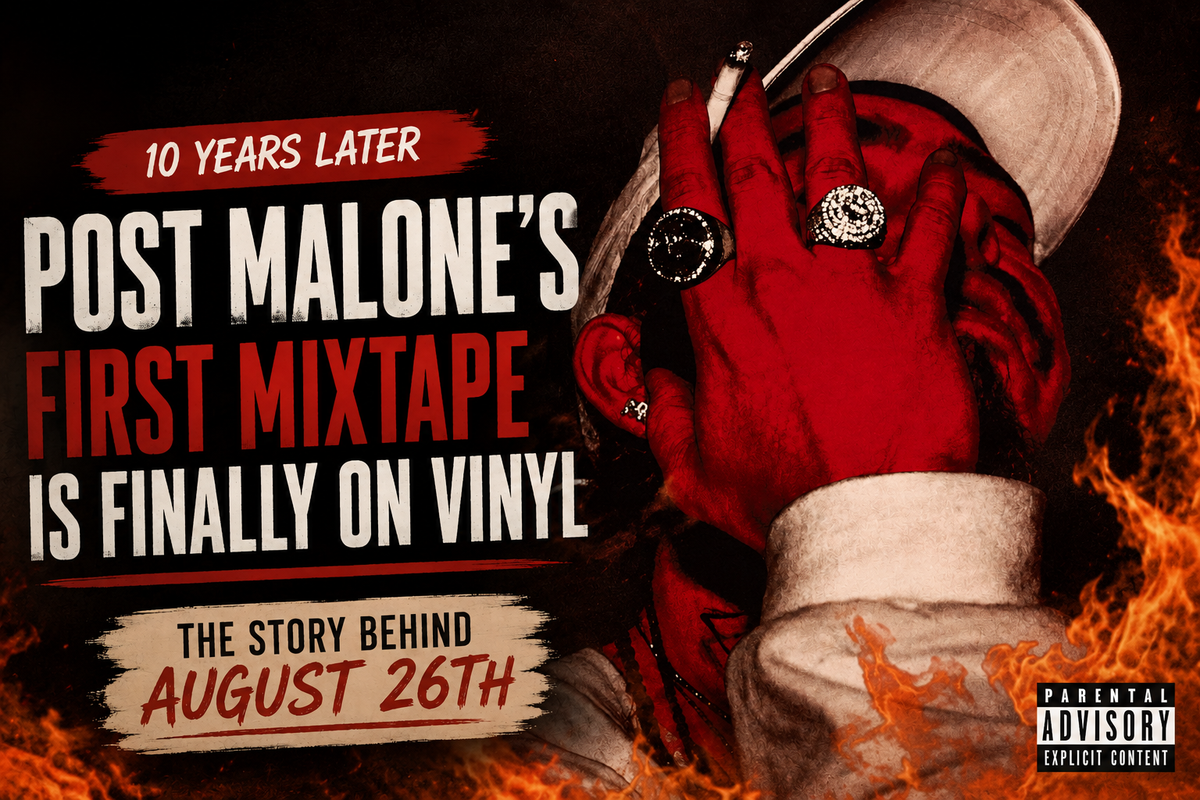
Before Stoney. Before "Congratulations." Before Post Malone became one of the biggest artists in the world, there was August 26th.
Released as a free mixtape in 2016, August 26th belonged to a very particular moment in music. It wasn't something you walked into a record store and bought. There was no vinyl edition to hunt down. No original pressing that quietly became valuable as Post Malone's career exploded.
It was an internet release.
Ten years later, that has finally changed.
August 26th has received its first official physical release, newly remastered for its tenth anniversary and available on vinyl.
For Post Malone fans, that's noteworthy enough.
For record collectors, though, there is something more interesting happening here.
We're beginning to reach the point where music from the streaming and mixtape era is old enough to become nostalgic. And unlike collectors chasing original pressings from previous generations, sometimes the original pressing simply doesn't exist.
Before Post Malone Became Post Malone
Post Malone released August 26th on May 12, 2016, following the breakout success of "White Iverson."
The title referred to the expected release date of his debut album. August 26 came and went without that album, and Stoney eventually arrived in December 2016.
But the mixtape captured Post Malone at a fascinating point in his career.
This wasn't yet the artist who would eventually fill stadiums and accumulate billions of streams. It was an early document of an artist whose identity was still taking shape, mixing hip hop, pop, rock and R&B influences in ways that would eventually become central to his career.
The project also included appearances from artists including 2 Chainz, Jaden Smith, Jeremih and Lil Yachty.
For the last decade, if you wanted to experience that chapter of Post Malone's career, you did it digitally.
There wasn't an official record to put on the shelf.
Now There Is
The tenth anniversary edition changes that.
The newly remastered August 26th is receiving its first official physical release, including a standard black vinyl edition and a spring leaf green pressing offered through independent retailers.
That phrase, "first official physical release," is what makes this particularly interesting.
Record collecting has traditionally placed enormous importance on original pressings.
Find an original Blue Note. An early Beatles pressing. A first pressing of a 1990s alternative album before vinyl production collapsed.
There is history attached to the object because the record existed alongside the music when it was originally released.
But what happens when there was no object?
For August 26th, the 2026 pressing isn't really a reissue in the traditional sense.
It is the first time the music has officially become something you can physically own.
The Streaming Generation Is Becoming Collectible
This is where the story becomes bigger than Post Malone.
A huge amount of culturally important music from the last 15 years was created during an era when physical media was no longer the default.
Mixtapes were uploaded to the internet. Artists broke through on SoundCloud. Albums were released directly to streaming platforms. Some projects received tiny vinyl runs years later, while others never received physical releases at all.
Collectors growing up with that music now have disposable income, turntables and record collections.
But their nostalgia works differently from someone hunting for a record released in 1975.
There may be no dusty original copy hiding in a used record store.
The physical artifact has to be created afterward.
That makes releases like August 26th an interesting new category of collectible: the first pressing of something that became culturally significant before a pressing existed.
Does a First Pressing Still Mean the Same Thing?
Collectors love terminology.
Original pressing. First pressing. First edition. Reissue. Remaster.
August 26th makes those definitions a little messy.
This is unquestionably the first official vinyl pressing of the mixtape.
But it arrives a decade after the music itself.
That separates the record from the historical moment that normally gives an original pressing some of its appeal.
Nobody bought this record in 2016, brought it home and discovered Post Malone before he became famous.
They couldn't.
At the same time, that may make this edition more meaningful to fans rather than less.
For someone who listened to August 26th online ten years ago, this record turns a digital memory into a physical object for the first time.
And that is a very different kind of nostalgia.
The Remaster Matters, Too
There is another question I would like to know more about: the remaster.
The anniversary release is being promoted as newly remastered, but I haven't seen enough information about the mastering process to make any assumptions about what collectors should expect sonically from the vinyl edition.
That matters because music created primarily for digital distribution isn't automatically going to benefit simply because someone puts it on vinyl.
A thoughtful vinyl master can make a meaningful difference. A digital master transferred to vinyl without much consideration for the format may offer little beyond the experience of owning the record physically.
Until we know more about how August 26th was prepared for vinyl, I would treat the physical release itself as the bigger story rather than making claims about sound quality.
But I would absolutely like to hear it.
This Could Become Much More Common
We have spent years watching the record industry revisit albums originally released during vinyl's dominant eras.
The next phase may be more interesting.
We're now entering anniversary territory for albums, mixtapes and independent releases born during the digital era.
Some were never pressed.
Others received extremely limited releases before vinyl's current audience existed.
That creates an enormous catalog of music that can effectively make its vinyl debut years after its original release.
And unlike pressing another version of an album collectors already own five times, these releases can actually fill holes that have always existed.
That's what makes August 26th worth paying attention to.
Yes, it's a tenth anniversary release.
Yes, there is a colored vinyl variant.
But underneath the familiar mechanics of the modern vinyl business is something genuinely different.
For ten years, Post Malone fans could listen to August 26th.
Now, for the first time, they can own it as a record.
And as the streaming generation gets older, I suspect we're going to see a lot more records like it.


Comments ()