
JBL's New L150 Classic Has a 15-Inch Woofer. Does Bigger Still Mean Better Bass?
JBL's new $9,999 L150 Classic brings back the 15-inch woofer. We examine the engineering, bass performance potential, and whether bigger speakers still have an advantage.
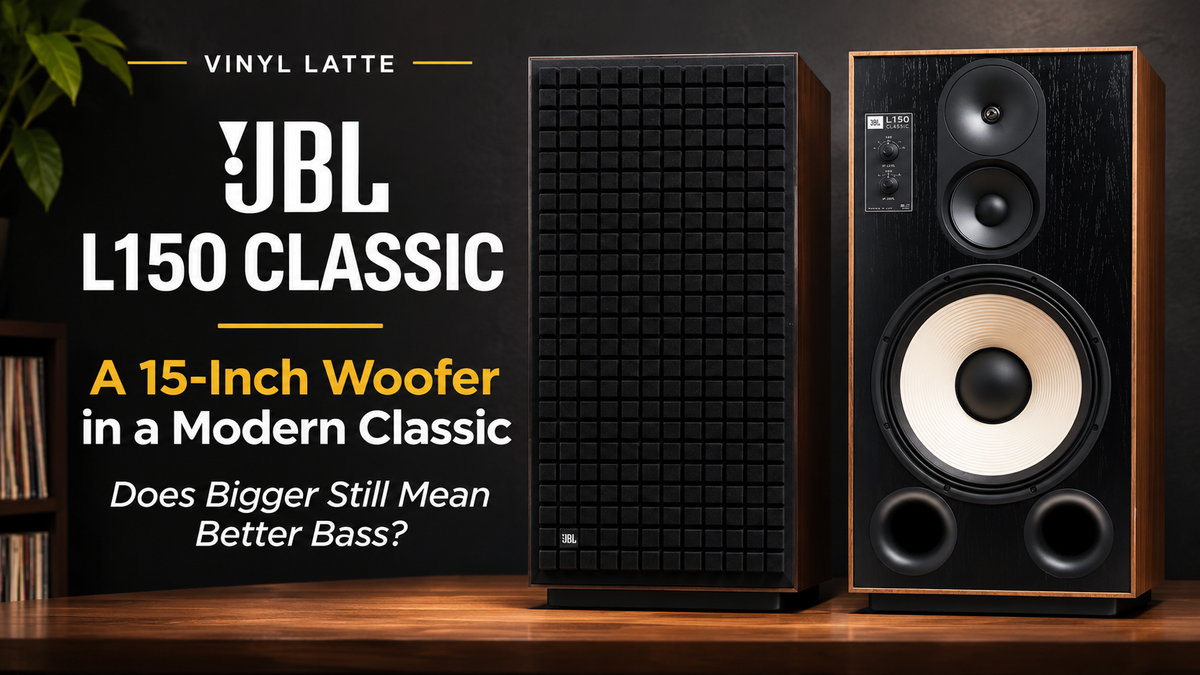
JBL is bringing the 15-inch woofer back to its Classic Series with a $9,999 flagship loudspeaker. But behind the vintage styling is a more interesting question: what can a large driver actually accomplish that smaller speakers cannot?
There was a time when a serious home stereo system often meant serious loudspeakers.
Big cabinets. Large woofers. Enough physical presence to make the speakers a defining feature of the room.
Over the decades, loudspeaker design has evolved considerably. Modern floorstanding speakers frequently use multiple smaller bass drivers, sophisticated cabinet engineering, and advanced crossover networks to produce impressive performance from relatively narrow enclosures.
JBL, however, has decided there's still a place for a traditional large-format design.
The new JBL L150 Classic is a three-way floorstanding loudspeaker built around a substantial 15-inch woofer, supported by a dedicated midrange driver and titanium-dome tweeter.
At $9,999 per pair, it's the new flagship of JBL's retro-inspired Classic Series, with availability planned for 2027.
And while its appearance celebrates the company's heritage, the engineering raises an interesting question.
In an era of sophisticated compact loudspeakers, what advantages does a 15-inch woofer still offer?
The answer is more complicated than simply saying bigger speakers produce better bass.
JBL Brings Back the Big Woofer
The L150 Classic made its public debut at Audio Video Show 2026 in Warsaw, Poland, in late October.
It becomes the first floorstanding model in JBL's current Classic Series, joining the smaller L100, L82, and L52 designs.
Visually, the family resemblance is unmistakable.
The natural walnut veneer, black Quadrex foam grille, and broad cabinet proportions recall JBL's iconic loudspeakers from the 1970s.
But the L150 Classic isn't simply a vintage design brought back into production.
JBL has equipped it with contemporary drivers, a modern crossover network, adjustable acoustic controls, and a cabinet designed around the requirements of its large bass driver.
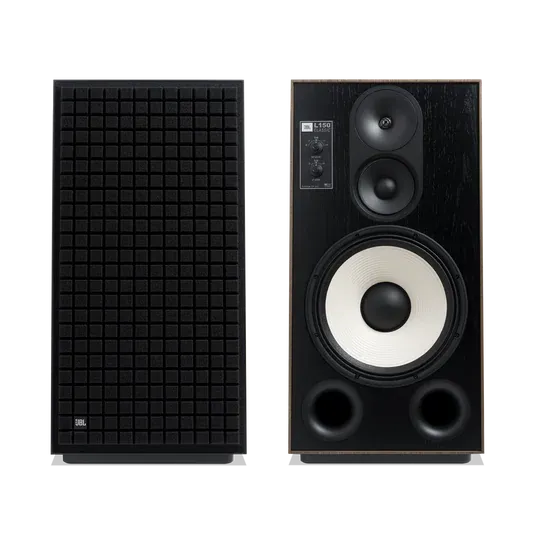
The specifications are substantial.
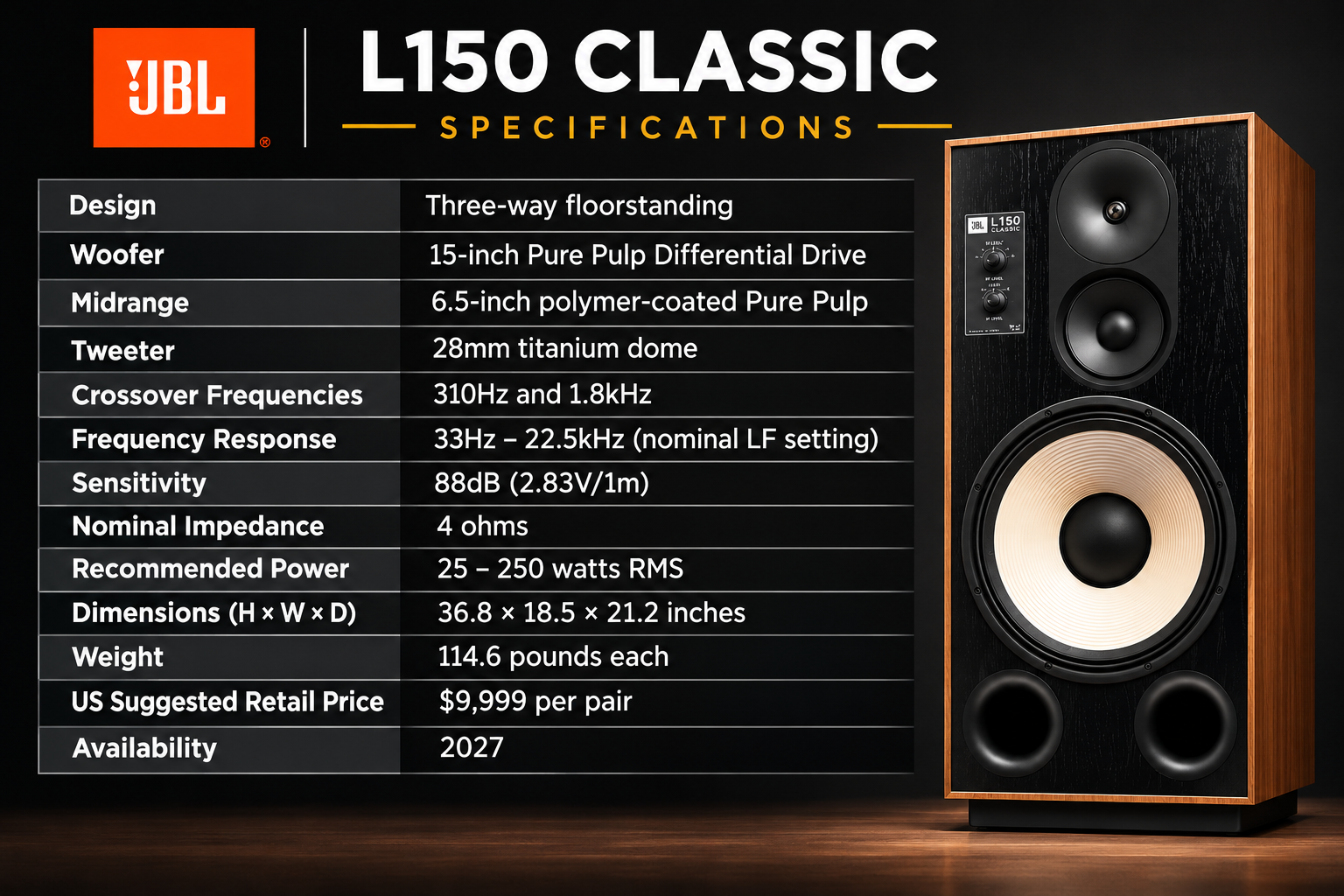
On paper, it's a serious loudspeaker.
But the most interesting specification is also the most obvious: that enormous woofer.
What Does a 15-Inch Woofer Actually Do Better?
To understand the appeal of a large woofer, we need to consider how a loudspeaker produces bass.
Low frequencies require moving air.
A driver accomplishes this by moving its cone back and forth, creating pressure changes that travel through the room as sound waves.
The amount of air a driver can displace depends primarily on two factors: the effective surface area of the cone and how far it can move.
This is where a larger woofer has a potential advantage.
A 15-inch driver has considerably more radiating area than a typical 6.5-inch or 8-inch driver.
For a given volume of displaced air, a larger cone may need less movement than a smaller one.
That can provide advantages when reproducing demanding bass passages at elevated listening levels.
However, there's an important qualification.
A large woofer doesn't automatically produce deeper, cleaner, or more accurate bass.
Its performance also depends on motor design, suspension, excursion capability, enclosure tuning, distortion behavior, and the way the driver integrates with the rest of the loudspeaker.
A well-designed system using smaller woofers can outperform a poorly engineered 15-inch system.
Likewise, multiple smaller drivers can collectively provide substantial cone area and displacement.
What matters is the complete design.
And that's where the L150 Classic becomes interesting.
JBL's Differential Drive Technology
The L150 Classic uses JBL's Pure Pulp Differential Drive woofer.
Differential Drive is a motor technology JBL has employed across various professional and high-performance loudspeaker designs.
The architecture uses a dual-voice-coil motor arrangement intended to improve control of the driver's moving system and manage thermal behavior.
Heat is an important consideration in loudspeaker design.
As a voice coil warms during demanding playback, its electrical resistance can increase. That can affect the driver's behavior and contribute to thermal compression, where additional amplifier power produces less additional acoustic output than expected.
Managing these effects can help a loudspeaker maintain more consistent performance under demanding conditions.
But the presence of Differential Drive technology alone doesn't tell us how much distortion or compression the finished L150 Classic produces.
Those questions require measurements.
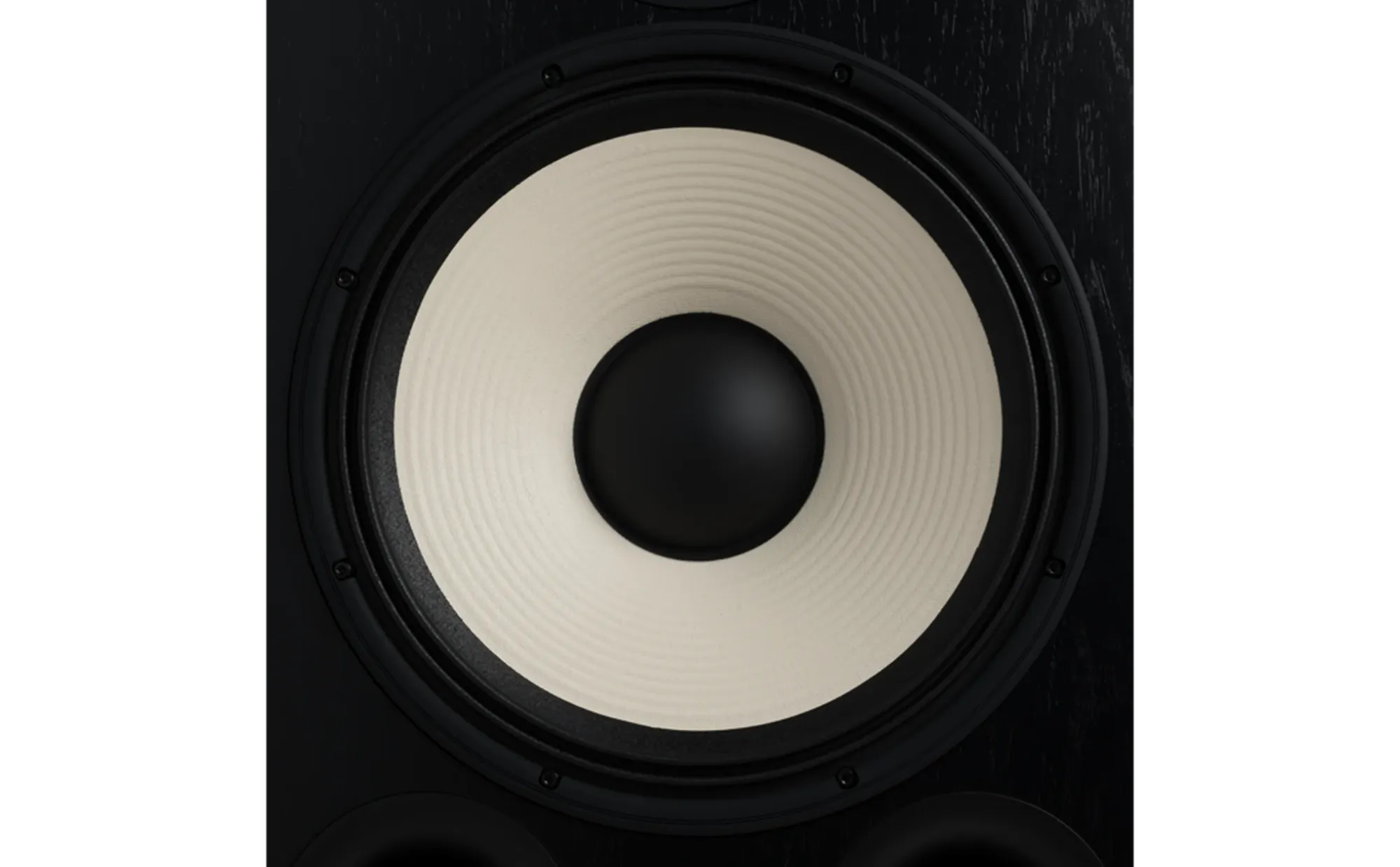
For us, the most interesting test would be how the speaker behaves when reproducing demanding music at realistic listening levels.
Does the bass remain controlled as volume increases?
How much distortion does the system produce at low frequencies?
And does the large driver offer meaningful advantages over smaller multiwoofer designs?
Those are questions that specifications alone cannot answer.
The 310Hz Crossover Is an Important Design Decision
One detail that deserves attention is JBL's decision to cross the 15-inch woofer over at 310Hz.
That's relatively low in the musical spectrum.
Rather than asking the large woofer to reproduce much of the vocal range, JBL assigns the midrange frequencies to a dedicated 6.5-inch driver.
The midrange then hands off to the titanium-dome tweeter at 1.8kHz.
This approach allows each driver to operate over a more focused frequency range.
The large woofer concentrates on bass and lower frequencies. The dedicated midrange handles much of the musical information associated with voices and instruments. The tweeter reproduces the upper frequencies.
There are potential benefits to this arrangement.
Large drivers become increasingly directional as frequency rises, and their behavior can become more complicated outside their intended operating range.
Crossing the woofer over at a lower frequency can help manage that transition.
But integrating three drivers is never trivial.
Crossover slopes, phase relationships, driver spacing, and acoustic behavior all influence how smoothly the system works as a whole.
A three-way design isn't inherently superior to a two-way speaker.
It's another engineering approach with its own advantages and compromises.
The success of the L150 Classic will depend partly on how effectively JBL has managed those transitions.
Why Doesn't a 15-Inch Woofer Guarantee Deeper Bass?
Here's one of the more surprising aspects of the L150 Classic.
Despite its enormous woofer, JBL specifies a low-frequency response extending to 33Hz with the bass control in its neutral position.
That's certainly useful bass extension, but it isn't an extraordinary figure for a large modern floorstanding loudspeaker.
Some considerably smaller speakers are specified to reach similar frequencies, while certain subwoofers extend substantially lower.
So what's going on?
The answer lies in the relationship between driver size, enclosure volume, tuning, efficiency, and output capability.
A large woofer doesn't necessarily have to be designed for the deepest possible bass.
It may instead be optimized to deliver greater output, lower distortion at a given level, or improved dynamic capability within its intended operating range.
JBL uses a dual front-ported bass-reflex enclosure, with the company specifying extension to 30.5Hz when the low-frequency control is set to +2dB.
However, published frequency-response figures don't tell the entire story.
Without knowing the measurement tolerance, output conditions, and distortion levels, it's difficult to make meaningful comparisons between manufacturers.
Bass extension and bass capability are not the same thing.
A speaker that reaches 30Hz at modest output may behave very differently from one that can reproduce demanding bass passages at considerably higher levels.
This is why measurements of maximum clean output, distortion, and compression are so valuable.
It's also why we should resist judging a loudspeaker based on a single frequency-response number.
What About Room Size and Placement?
There's another consideration with a speaker this large.
The L150 Classic measures approximately 18.5 inches wide and more than 21 inches deep.
Each cabinet weighs nearly 115 pounds.
These aren't loudspeakers that will disappear into a living room.
But physical size is only part of the placement question.
Low-frequency performance is heavily influenced by room dimensions, boundaries, and the relationship between the speakers and listening position.
A 15-inch woofer doesn't inherently require a huge room.
What matters is how the loudspeaker's output interacts with the acoustic environment.
Room modes can produce substantial peaks and dips in bass response, regardless of whether the sound originates from a large woofer or several smaller ones.
Moving a speaker or listening position by a relatively modest distance can sometimes produce a more significant improvement than changing the loudspeaker itself.
JBL has included front-panel controls for adjusting high- and low-frequency output.
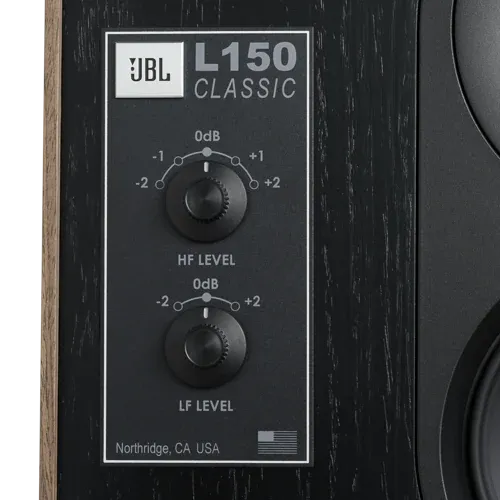
These controls offer a practical way to adjust the speaker's tonal balance.
However, they're not a substitute for proper room acoustics.
Broad tonal adjustments cannot independently correct the narrow peaks and deep cancellations that often occur in domestic listening rooms.
For anyone considering speakers of this size, room integration deserves as much attention as the driver technology.
Will You Need a Powerful Amplifier?
At first glance, the L150 Classic's large woofer might suggest an especially demanding loudspeaker.
But driver diameter alone doesn't determine amplifier requirements.
JBL specifies a sensitivity of 88dB at 2.83V measured at one meter, a nominal impedance of 4 ohms, and recommended amplifier power between 25 and 250 watts RMS.
The 4-ohm rating is important.
A 2.83V sensitivity measurement corresponds to approximately two watts into a purely resistive 4-ohm load, rather than one watt into 8 ohms.
That distinction matters when comparing sensitivity figures between loudspeakers with different impedances.
The published specifications suggest that the L150 Classic should be paired with an amplifier comfortable driving 4-ohm speakers.
But they don't establish how difficult the speaker's impedance and phase behavior may be across the audible spectrum.
Those details require additional measurements.
Likewise, the recommended amplifier power range doesn't mean every amplifier within that range will deliver identical results.
Listening distance, desired volume, musical dynamics, and the amplifier's current-delivery capability all influence the outcome.
The takeaway is simple.
Don't assume that a 15-inch woofer automatically requires enormous amplifier power, and don't assume that a modest sensitivity figure tells the complete story.
The Return of a Classic Design, Without the Vintage Limitations?
JBL's Classic Series has always traded partly on nostalgia.
The walnut cabinets and distinctive Quadrex grilles immediately recall an earlier era of home audio.
But there's an important difference between reproducing the appearance of a vintage loudspeaker and recreating its original engineering.
The L150 Classic combines familiar styling with contemporary drivers, modern crossover design, and updated acoustic controls.
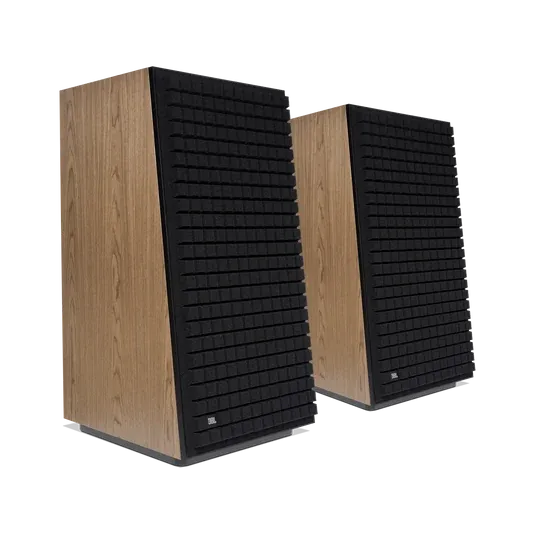
That's a sensible approach.
Loudspeaker engineering has advanced considerably in areas such as driver modeling, motor design, measurement techniques, and crossover optimization.
There's no technical reason a modern speaker must abandon a classic appearance to benefit from those developments.
At the same time, vintage styling doesn't establish anything about acoustic performance.
The L150 Classic deserves to be judged as a contemporary loudspeaker, not simply as a tribute to JBL's past.
And at nearly $10,000 per pair, expectations should be appropriately high.
What We'd Want to Hear Before Recommending It
The L150 Classic is an interesting design, but we're not prepared to make claims about its sound without hearing and evaluating it.
There are several questions we'd want answered.
First, how does the bass perform at different listening levels?
A large woofer should offer potential displacement advantages, but we'd want to know whether those advantages translate into lower distortion and better dynamic performance.
Second, how smoothly does the system integrate its three drivers?
The crossover design and off-axis behavior will play important roles in determining the speaker's tonal consistency.
Third, how sensitive is the speaker to placement?
The large cabinet, dual ports, and adjustable controls create several variables worth exploring.
Finally, how does it compare with modern speakers using smaller drivers?
Not necessarily in a simplistic contest to determine which is better, but in understanding the tradeoffs each design makes.
Those comparisons would be far more valuable than relying on a brief demonstration or manufacturer specifications.
The Vinyl Latte Take
The JBL L150 Classic is interesting because it challenges a common assumption about modern loudspeaker design.
For years, manufacturers have demonstrated that sophisticated engineering can produce impressive bass from increasingly compact cabinets.
And that's absolutely true.
But the laws of physics haven't changed.
Moving air remains fundamental to producing low frequencies, and larger drivers can offer meaningful advantages when properly implemented.
The question isn't whether a 15-inch woofer is inherently better than smaller drivers.
It's whether JBL has used that additional radiating area to deliver something worthwhile.
At $9,999 per pair, the L150 Classic needs to offer more than nostalgia and impressive physical dimensions.
It needs to demonstrate that its design choices produce meaningful performance benefits.
The specifications provide reasons to be interested, but they aren't enough to establish the result.
For now, what we have is an ambitious modern loudspeaker built around a traditional idea.
And that's something worth paying attention to.
The JBL L150 Classic is scheduled to become available in 2027, with a US suggested retail price of $9,999 per pair.
What Do You Think?
Do you believe large woofers still offer something that smaller, modern loudspeakers struggle to reproduce?
Or have advances in driver technology and cabinet design made traditional 15-inch speakers less necessary?
Let us know in the comments.
Sources and Further Reading
JBL official L150 Classic product page
https://www.jbl.com/L150-CLASSIC.html
HARMAN Luxury Audio announcement
https://www.harmanluxuryaudionews.com/2026/10/24/harman-luxury-update-18/
audioXpress: JBL Expands Classic Series With Modern Acoustic Engineering
Residential Systems: JBL Introduces L150 Classic Flagship Loudspeaker
https://www.residentialsystems.com/technology/audio/jbl-introduces-l150-classic-flagship-loudspeaker
Editor's note: This article examines the published engineering and specifications of the JBL L150 Classic. Vinyl Latte has not yet auditioned or measured the loudspeaker. Any discussion of potential acoustic advantages is based on established loudspeaker engineering principles, not firsthand evaluation of this model.



Comments ()