
Eric Schenkman’s Ten Smiles Is a Lifetime of Guitar Music Coming Together
Eric Schenkman of Spin Doctors opens up about Ten Smiles, a deeply personal solo album shaped by decades of guitar playing, songwriting, friendships, live performance, and stories that sometimes took years to become songs.
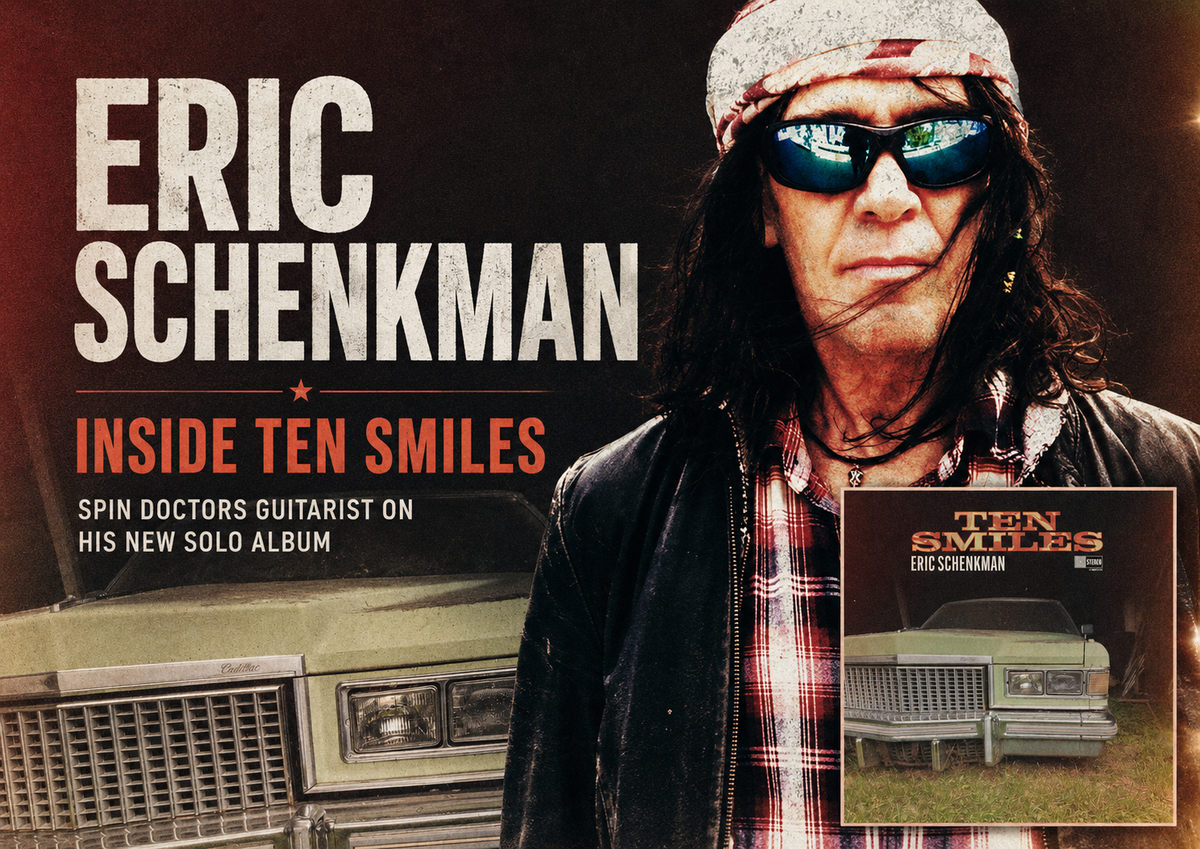
For most listeners, Eric Schenkman will always be connected to the Spin Doctors. He is the founding guitarist whose playing helped define songs like “Two Princes” and “Little Miss Can’t Be Wrong.”
But after listening to his new solo album, Ten Smiles, I came away thinking that association only tells part of the story.
This record feels like a much broader portrait of Schenkman as a guitarist, songwriter, singer, and bandleader. More importantly, it sounds lived in. These are not songs assembled inside a studio because it was time to make another album. Some have been developing for years. One took nearly three decades to finally become a song.
When I recently sat down with Eric, that history became the most interesting part of our conversation.
Ten Smiles is less about separating Schenkman from his past than showing us all the musical experiences that created him.
What Exactly Are Ten Smiles?
There are ten songs on the album, but the title has very little to do with counting tracks.
The idea actually began with two bull terriers Schenkman watched during the pandemic. The dogs would rate food with lip smacks, giving ten when they liked something.
The catch?
They seemed to like everything.
For Schenkman, that eventually developed into something closer to a philosophy.
The idea is that if you approach life capable of giving ten, you start from a place of positivity and adjust from there. Schenkman described Ten Smiles as something of a personal affirmation, an attempt to remind himself to continue moving forward even when everything does not necessarily feel positive.
Then the phrase unexpectedly appeared in one of his lyrics.
That was enough.
He had his album title.
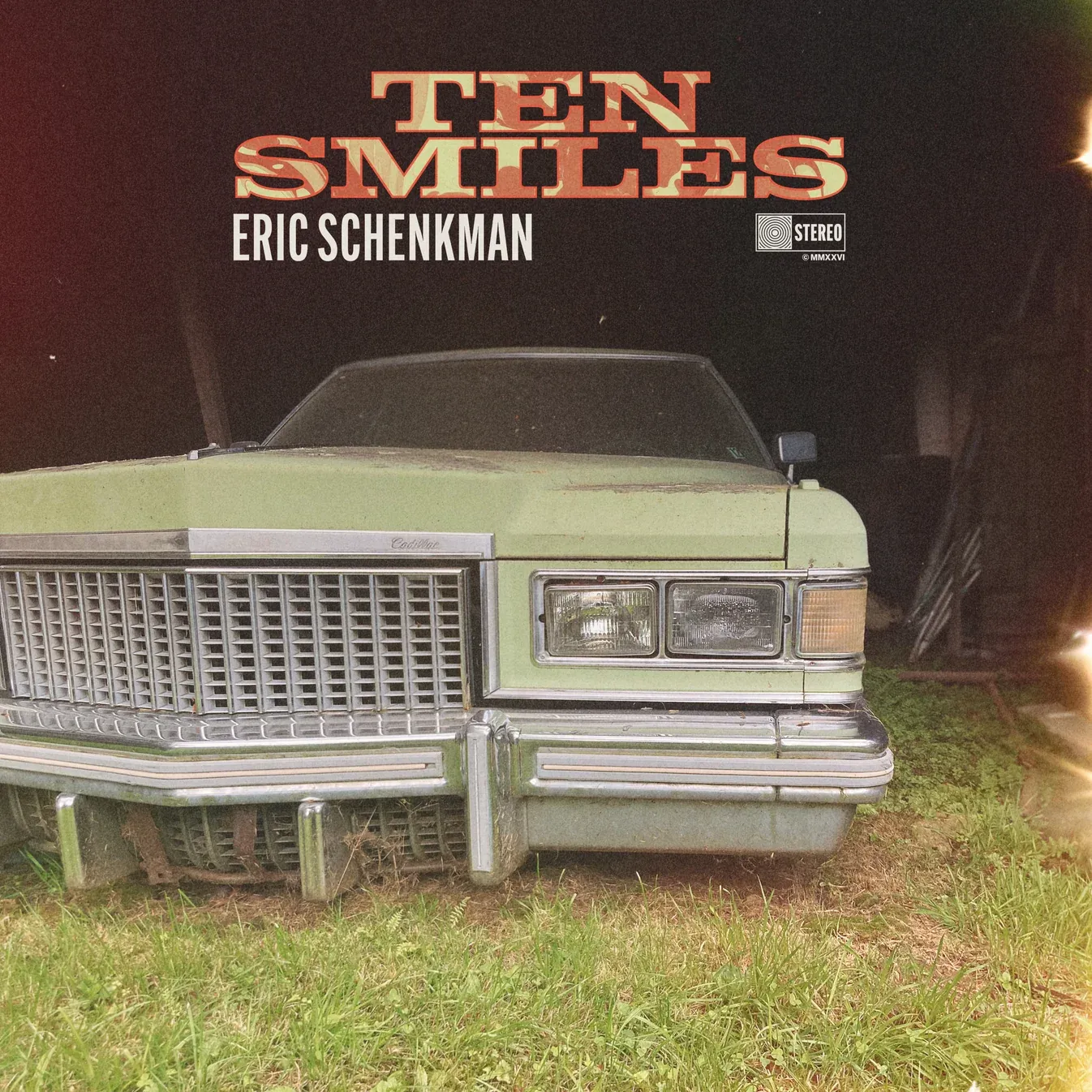
There was also another connection. The Cadillac pictured on the album cover belonged to his grandfather, and Schenkman pointed out that even the car’s grille appears to be smiling.
That Cadillac turns out to be one of the record’s most important characters.
A Song That Took Nearly 30 Years to Write
One of my favorite stories from our conversation involved “Avocado Eldorado.”
The story begins around 1995.
Schenkman was traveling through California with drummer Wally Ingram when they stopped at the home of guitarist David Lindley. Sitting outside was a blue Cadillac Eldorado with a white interior.
Schenkman mentioned that his grandfather owned the same car, except his was avocado colored.
Lindley immediately responded with what was essentially a songwriting assignment:
“Avocado Eldorado. That’s a song you should write.”
Schenkman remembered it.
For roughly 30 years.
The resulting song is much more personal than a clever title about an old Cadillac. Its central character became a combination of Schenkman’s grandfather and another older man from his past, while the automobile itself really was his grandfather’s car, one Schenkman remembers riding in as a child.
What started as a funny phrase eventually became autobiographical.
That long gestation period says something important about Ten Smiles. Schenkman did not suddenly decide what he wanted the album to say. Much of the material was already sitting somewhere inside his musical life, waiting for the right moment.
These Songs Were Seasoned on Stage
There is another reason Ten Smiles feels different from a record constructed entirely inside a recording studio.
Most of these songs had already been played.
Schenkman has maintained a regular gig in Toronto for roughly a decade, and many of the songs were developed through repeated live performance.
He told me he likes playing songs over and over so he can examine them from different angles and discover different ways of performing them.
I love the word he used for the process:
Seasoned.
That may be one of the best descriptions of what I hear on this record.
The arrangements do not sound overly calculated. The musicians sound like they are reacting to each other rather than simply executing individual parts.
That became especially important once Schenkman began recording with drummer Al Cross, bassist Stan Miczek, and co producer and recording engineer Aaron Goldstein.
The album was not even supposed to happen.
Schenkman initially entered the studio intending to record a couple of songs. After the session, everyone realized something was happening between the players.
So they kept going.
That chemistry became Ten Smiles.
“Recipe” Is Really About the Guitar
The opening track and first single, “Recipe,” initially sounds like a funky, accessible way into the album.
It is.
But its meaning is a little more interesting.
Schenkman explained that he did not completely understand what the song was about when he first wrote it. The groove and lyric arrived first.
While developing the video, he eventually realized the song was really about the electric guitar.
More specifically, it is about our relationship with guitars.
Guitar players understand this immediately.
Certain instruments come with pedigrees. A Stratocaster can evoke Stevie Ray Vaughan. A Les Paul carries another history. Players collect the instruments, learn their stories, chase tones, and sometimes even absorb parts of the identities associated with them.
But owning the guitar is not enough.
Eventually, you have to put yourself into it.
That is the “recipe.”
Your experience. Your personality. Your influences. Your technique.
Your expression.
For Schenkman, even his singing grew out of being a guitar player. Everything on the record ultimately circles back toward that instrument.
As someone who spends a lot of time thinking about how equipment, recordings, and musical history intersect, I found this part of the conversation particularly interesting.
The pedigree may belong to the instrument.
The expression has to belong to the player.
Familiar Without Simply Repeating the Past
While listening to Ten Smiles, I kept experiencing a strange sensation.
Many of these songs felt familiar even though I had never heard them before.
During our conversation, I finally understood why.
Schenkman is not hiding his musical vocabulary.
There are grooves that recall classic rock, blues, funk, psychedelia, R&B, and the music of the 1960s and 1970s. At moments you might catch the swagger of the Stones, a boogie groove, or the spirit of an old psychedelic jam.
But it does not feel like cosplay.
Schenkman described spending a lifetime working through these musical languages and figuring out where he exists inside them.
That distinction matters.
Influence becomes interesting when an artist stops reproducing it and starts speaking through it.
Ten Smiles frequently manages to do exactly that.
Writing Songs With Corky Laing
Two songs also reconnect Schenkman with longtime friend Corky Laing of Mountain, the drummer associated with “Mississippi Queen.”
Schenkman and Laing have been playing and writing together for decades, and their approach to songwriting sounds wonderfully unhurried.
Ideas can sit around for years before either musician decides to finish them.
Schenkman compared their collection of unfinished songs to pots sitting on a stove.
“Hit on Me” grew out of one of those ideas.
It originally revolved around the phrase “hit on it,” which made obvious sense coming from a drummer.
Eventually, Schenkman transformed the phrase into “Hit on Me,” and the song became something completely different.
The finished track carries a loose rock and roll swagger that again helps explain why parts of Ten Smiles sound instantly recognizable without feeling like copies of older records.
Schenkman and Laing have that musical history in their DNA.
They do not need to imitate it.
Then There Is “The Buffalo Song”
Perhaps the strangest songwriting origin belongs to “The Buffalo Song.”
It began partly with a picture of a bull terrier riding a whale.
Schenkman spends considerable time traveling, and the image slowly became part of the language between him and his girlfriend. Airplanes became whales. Boarding a flight became boarding the whale.
Then another idea arrived.
Late one night, Schenkman heard a story describing buffalo moving directly into storms rather than running away from them.
The image stuck.
The whale, the buffalo, travel, relationships, and various pieces of Schenkman’s life suddenly connected.
Once the lyric found its shape, he said the music essentially arrived with it.
The song became one of the album’s more psychedelic moments, complete with the kind of extended instrumental interplay that connects back to Schenkman’s history with the Spin Doctors.
Again, the past is present.
It just is not the entire story.
Capturing a Moment Before It Disappeared
Near the end of our conversation, I asked Eric what he hopes listeners feel after hearing Ten Smiles from beginning to end.
His answer brought the entire record into focus.
These songs come from different periods of his life. Some are recent. Some contain ideas that have existed for decades. Some were written with longtime collaborators. Others grew out of his weekly performances, relationships, travel, family memories, and conversations.
Together, Schenkman believes they tell his story better than anything he has previously assembled.
Perhaps even more importantly, he recognized something happening between the musicians while making the record and wanted to capture it before the moment disappeared.
He compared that feeling to the early Spin Doctors and Pocket Full of Kryptonite. Sometimes a group of musicians gets into a room and simply knows that something is happening.
You cannot manufacture that.
You can only recognize it and hit record.
More Than a Spin Doctors Side Story
That may ultimately be what makes Ten Smiles interesting.
This is not Eric Schenkman trying to escape the Spin Doctors. It is not an attempt to recreate the Spin Doctors either.
It is a guitarist taking everything that came before, the clubs, the riffs, the friendships, the old records, the airplanes, the Cadillac, the conversations, and decades spent learning how to make an electric guitar speak, and finally putting all of it in the same place.
Ten songs.
Ten smiles.
And maybe the clearest picture yet of the musician behind the guitar.
Watch the Full Eric Schenkman Interview
My conversation with Eric goes much deeper into the stories behind Ten Smiles, his songwriting process, his relationship with the electric guitar, working with Corky Laing, the musicians who shaped the record, and why this particular collection of songs feels so personal.
Watch the complete Eric Schenkman interview on Vinyl Latte below.
Ten Smiles is available for preorder on 180 gram vinyl through Experience Vinyl.



Comments ()