
Bob Seger’s Night Moves Gets Two New Analog Vinyl Editions. Which One Should You Buy?
Bob Seger’s Night Moves turns 50 with two new analog vinyl editions from Vinylphyle and Record Store Day. We compare the mastering, pressing plants, and packaging to help collectors decide which version is worth buying.

Fifty years after its original release, Bob Seger’s breakthrough album returns on two new vinyl pressings for Black Friday. Both promise a connection to the original analog tapes, but the differences go well beyond vinyl weight and color.
There is something fitting about Night Moves turning 50.
Released in October 1976, Bob Seger's breakthrough studio album captured something that few rock records manage quite so effectively: the tension between youthful confidence and the realization that those years are slipping away.
Songs like "Night Moves," "Mainstreet," and "Rock and Roll Never Forgets" helped establish Seger as one of America's defining rock voices.
Now, Capitol and Universal Music Enterprises are celebrating the album's 50th anniversary with two new vinyl editions arriving November 27, 2026, coinciding with Record Store Day Black Friday.
One is part of UMe's audiophile-focused Vinylphyle series, pressed on 180g black vinyl at Record Technology Incorporated (RTI). The other is a limited Record Store Day exclusive, pressed on 140g white vinyl at Third Man Records in Detroit.
Both editions feature new mastering work by Joe Nino-Hernes using original analog sources.
For collectors, that presents an interesting question.
When two editions share a mastering engineer and analog source material, how much does the pressing plant, vinyl formulation, and production process really matter?
And perhaps more importantly, which version deserves a place in your collection?
The Vinylphyle Edition: An Audiophile Approach
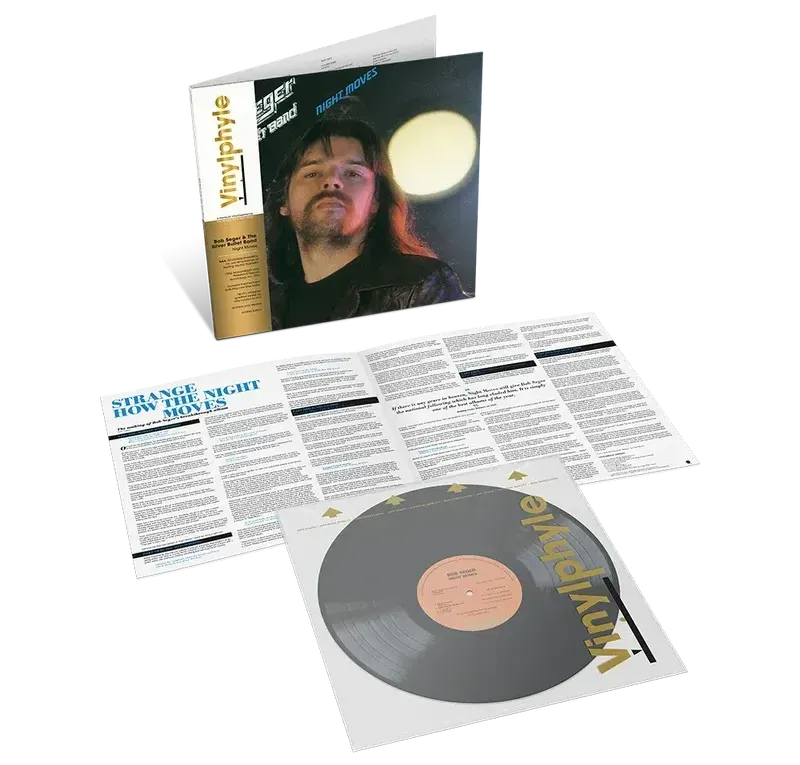
The first release comes from UMe's Vinylphyle series, which launched in 2025 with an emphasis on source transparency, analog mastering, premium packaging, and high-quality manufacturing.
For Night Moves, the label has provided particularly encouraging mastering information.
The official product listing identifies the source as AAA, using the 1976 flat Dolby masters, with lacquers cut by Joe Nino-Hernes.
For anyone who follows audiophile reissues, that is a significant detail.
AAA indicates an entirely analog recording, mastering, and cutting chain. It is an important distinction in a market where some vinyl releases are sourced from digital files, even when the original recordings were made on analog tape.
The use of the 1976 flat Dolby masters is also noteworthy. Rather than simply advertising the release as remastered from original tapes, UMe identifies the specific source material.
Of course, an analog mastering chain does not automatically guarantee superior sound. The condition of the tapes, mastering decisions, lacquer cutting, and quality of the finished pressing all contribute to the final result.
Still, this level of disclosure gives collectors something meaningful to evaluate.
The Vinylphyle edition features:
- AAA mastering from the 1976 flat Dolby masters
- Lacquers cut by Joe Nino-Hernes
- 180g black vinyl pressed at RTI
- A tip-on gatefold jacket with a satin matte finish
- Archival inner sleeves
- A four-panel insert with new liner notes by music journalist Rich Tupica
The album is currently listed for $39.98 through uDiscover Music.
RTI has an established reputation among audiophile labels and mastering engineers, and its involvement is certainly encouraging. But even a respected pressing plant cannot eliminate the possibility of individual pressing defects.
The real question will be whether this edition delivers the dynamics, instrumental separation, tonal balance, and low surface noise that collectors expect from a premium release.
The Record Store Day Edition: A Detroit Connection
The second edition takes a different approach.
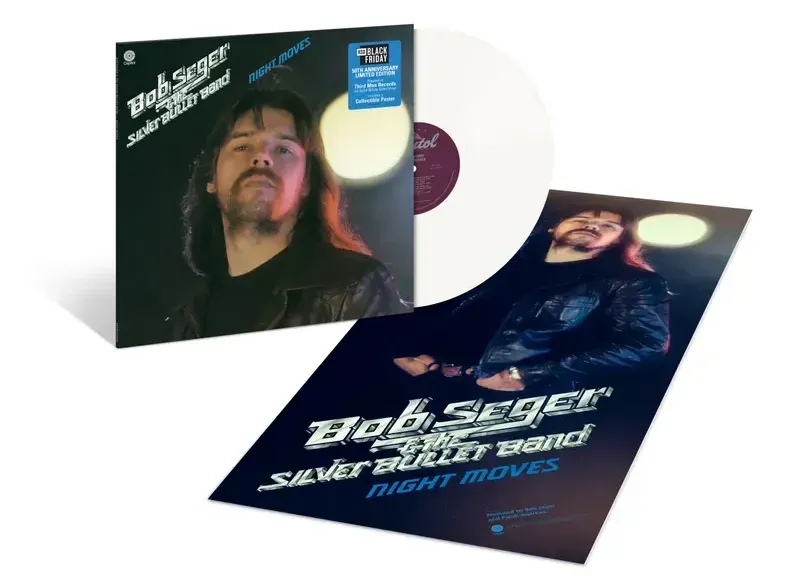
Available exclusively through participating independent record stores for Record Store Day Black Friday, this version is pressed on 140g solid white vinyl at Third Man Records in Detroit.
That location adds a fitting connection to the project.
Seger's musical identity is inseparable from Detroit, and having a 50th anniversary edition manufactured in his home city gives this release a little more significance than the usual limited colored vinyl pressing.
According to the official announcement, Joe Nino-Hernes cut the lacquers directly from the original analog source tapes.
The Record Store Day listing also confirms a vintage collectible poster and a limited quantity of 4,000 copies.
Interestingly, the release information does not establish whether this edition uses the same lacquer cut as the Vinylphyle version or a separately prepared cut.
That distinction matters.
Even when two records originate from the same analog tapes and involve the same mastering engineer, they are not necessarily sonically identical.
Different lacquer cuts, plating processes, or pressing conditions can produce differences in the finished records.
The Third Man edition offers another distinction: a more collectible presentation, thanks to its white vinyl, poster, and limited production run.
But collectors should not confuse limited availability with guaranteed sonic superiority.
Does 180g Vinyl Actually Sound Better Than 140g?
This is where the comparison becomes particularly interesting.
The Vinylphyle edition uses 180g vinyl, while the Third Man pressing weighs 140g.
It would be easy to assume that the heavier record should sound better, particularly when the 180g version is marketed toward audiophiles.
But vinyl weight alone does not determine sound quality.
A heavier pressing can feel more substantial and may offer handling advantages, but adding vinyl material does not inherently improve frequency response, dynamic range, or the information contained in the grooves.
Those qualities are influenced primarily by the recording, mastering, and cutting processes.
Pressing quality matters too. Centering, vinyl compound, cooling, handling, and manufacturing consistency can all affect playback.
A properly manufactured 140g record can outperform a poorly manufactured 180g pressing.
The same reasoning applies to colored vinyl.
White vinyl is not automatically inferior to black vinyl, although different formulations and manufacturing conditions can influence surface noise and pressing consistency.
In other words, the Vinylphyle edition should not be considered the sonic winner simply because it weighs 40 grams more.
The records need to be heard before that judgment can be made.
What I Would Listen for in a Comparison
Night Moves provides some useful material for evaluating the two editions.
The title track combines acoustic guitar, piano, percussion, and Seger's distinctive vocals. A well-executed pressing should preserve the intimacy of the quieter passages while allowing the arrangement to develop naturally.
"Mainstreet" offers another opportunity, particularly in the relationship between the guitar, saxophone, and vocal presentation.
Then there is "Rock and Roll Never Forgets," where the rhythm section and electric guitars can reveal differences in dynamics, transient impact, and tonal balance.
For a meaningful comparison, I would concentrate on several things.
First, level matching. Small differences in playback volume can make one pressing appear more dynamic or detailed, even when the actual mastering differences are modest.
Second, tonal balance. Does one cut bring greater presence to Seger's voice? Is the bass better defined? Are the guitars natural, or do they become overly aggressive?
Third, low-level information. Listen to quieter passages, vocal textures, and the decay of instruments rather than simply focusing on the loudest sections.
Finally, pressing quality. Surface noise, ticks, non-fill, and off-center pressings can interfere with the listening experience regardless of how carefully the lacquer was mastered.
Neither edition has been evaluated by Vinyl Latte, so these are listening criteria rather than findings about either release.
Which Edition Would I Buy?
Based on the information currently available, I would lean toward the Vinylphyle edition for an audiophile-focused collection.
The explicitly documented AAA mastering chain, RTI pressing, archival packaging, and detailed source information make it an appealing release for someone primarily interested in sound quality and long-term ownership.
At $39.98, it is also positioned within the price range of many premium single-LP audiophile reissues.
That is a recommendation based on production specifications, not a claim that it sounds better.
The Third Man edition has its own appeal.
Collectors who appreciate limited releases, Detroit music history, and Record Store Day exclusives may find the 4,000-copy white vinyl pressing more desirable.
And there is no reason to rule out the possibility that it could sound every bit as good as the RTI version.
If you already own a clean, well-mastered original pressing of Night Moves, I would not automatically recommend replacing it with either edition.
A new analog cut can offer a different presentation, but newer does not necessarily mean better.
The Bigger Picture: Source Transparency Matters
What makes this announcement more interesting than another anniversary reissue is the attention given to the mastering process.
The Vinylphyle edition identifies its 1976 tape source and AAA signal path. The Record Store Day edition also emphasizes its use of original analog sources.
That is the kind of information vinyl collectors should be asking for.
Too many reissues are promoted using vague references to original master tapes without explaining what source was actually used to cut the record.
Even when source information is available, it is important to distinguish the provenance of the recording from the quality of the final pressing.
An analog master does not automatically produce a great record. Neither does a premium jacket, heavyweight vinyl, or a recognizable pressing plant.
The strongest reissues combine careful source selection, thoughtful mastering, and consistent manufacturing.
Fifty years after Night Moves helped introduce Bob Seger to a national audience, these two editions provide an opportunity to revisit an important American rock album through two different vinyl production approaches.
Which one will sound better remains an open question.
And for anyone interested in the differences between mastering and pressing quality, that is what makes this release worth watching.
Release Information
Bob Seger & The Silver Bullet Band: Night Moves (50th Anniversary)
Release date: November 27, 2026
Vinylphyle Edition: 180g black vinyl, AAA mastering from the 1976 flat Dolby masters, pressed at RTI.
View the Vinylphyle edition at uDiscover Music
Record Store Day Edition: 140g white vinyl, cut from original analog source tapes, pressed at Third Man Records. Limited to 4,000 copies.
View the official Record Store Day release details
Both editions feature mastering work by Joe Nino-Hernes.
Vinyl Latte has not auditioned either 50th anniversary pressing. This article evaluates the announced mastering, manufacturing, and packaging details rather than making claims about their actual sound quality.



Comments ()